
By The Pulseline News Desk
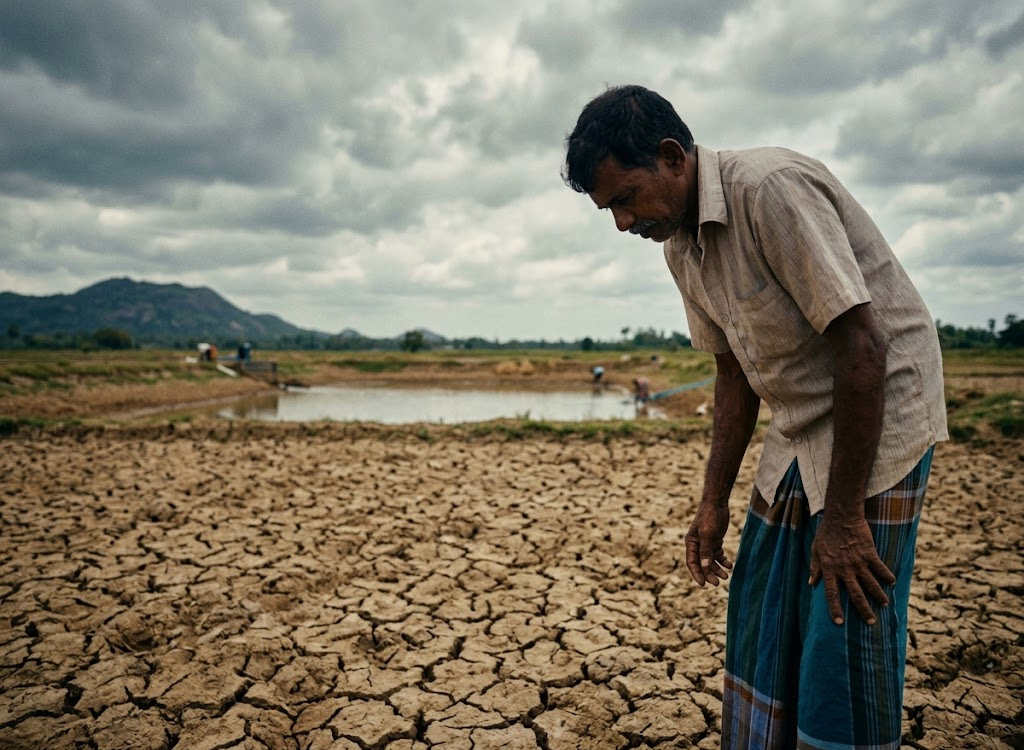
The Government is stepping up preparations for Sri Lanka’s upcoming Maha cultivation season as persistent dry weather and El Niño conditions raise concerns over water availability for agriculture and hydropower generation.
The Department of Agrarian Development is reportedly preparing to issue a special circular outlining measures to mitigate the impact of El Niño conditions, with the directive expected to be released shortly.
A key focus will be ensuring that minor irrigation systems are ready before the anticipated rains begin. Authorities have reportedly instructed that operation and maintenance work on these systems be completed ahead of the season, while irrigation canals, spillway inlets and spill canals are also to be renovated and made ready.
The Department of Agrarian Development manages minor irrigation systems supporting approximately 289,000 hectares of paddy cultivation. Around 154,000 hectares were cultivated during the Yala season, with harvesting currently underway.
Maha decision on September 18
The Government has decided to make a final determination on Maha cultivation on September 18, following an assessment of water availability in the country’s reservoirs.
The decision is expected to involve the agriculture and irrigation authorities, the Mahaweli Authority and the Department of Meteorology, reflecting the competing demands placed on limited water resources.
An initial meeting between the relevant institutions is scheduled for Tuesday (8), with the final decision to be based on the outcome of discussions and updated assessments of water availability.
Officials have already held discussions between the agriculture and irrigation sectors and begun preparing programmes for the Maha cultivation season.
However, authorities face a difficult balancing act, as water stored in reservoirs is required not only for cultivation but also for hydropower generation.
The Government is therefore expected to give particular attention to hydropower requirements when deciding the extent and timing of Maha cultivation.
Dry weather affects crops
Secretary to the Ministry of Agriculture, Livestock, Land and Irrigation D. P. Wickramasinghe has told the media that around 8,500 acres of paddy cultivation had been damaged as a result of reduced rainfall.
Despite the losses, he has said the Yala harvest was expected to be strong, with data indicating a good overall crop.
“We do not have a problem regarding rice,” Wickramasinghe has said, adding that permission had been granted to import a limited quantity of corn.
He has said Sri Lanka was also continuing to import commodities such as big onions, dhal and potatoes, while cautioning that reliance on a single source such as India could pose risks because El Niño-related conditions are also affecting other countries.
However, he has said imports from Australia and other countries would help prevent a food shortage.
The comments come as authorities attempt to manage the potential impact of prolonged dry conditions on domestic food production while maintaining adequate supplies through a combination of local production and imports.
Crop insurance payments begin
Meanwhile, the Agricultural and Agrarian Insurance Board has reportedly begun paying compensation to farmers whose crops have been damaged by drought conditions associated with El Niño.
Payments had commenced on September 4, with paddy, maize and other crops affected in districts including Hambantota, Ampara, Puttalam, Anuradhapura, Polonnaruwa and Monaragala.
According to the Board, once farmers report crop damage, officials visit the affected fields to inspect and assess the losses before compensation payments are processed.
The Board has said arrangements had been made to credit compensation to affected farmers in the Polonnaruwa District on September 4, while payments to affected farmers in other districts are expected to be completed before September 15.
The Government has allocated approximately Rs. 3 billion for crop-damage compensation under the programme.
Farmers affected by losses to six crops — paddy, maize, big onions, potatoes, soya and chilli — are eligible for compensation of Rs. 100,000 per hectare, subject to a maximum extent of five acres.
Water availability remains key
The Government’s approach to the Maha season will ultimately depend on the country’s water position in the coming weeks.
With agriculture competing with hydropower generation for reservoir water, authorities face pressure to make an early but carefully calibrated decision on cultivation targets.
The planned meeting on Tuesday is expected to provide the first coordinated assessment by the relevant sectors, while the September 18 decision will determine the Government’s broader cultivation strategy for the Maha season.
For farmers, the outcome will be particularly significant as preparations for the country’s main cultivation season proceed against the backdrop of uncertain rainfall and increasingly tight water management requirements.
The proposed agrarian development circular, meanwhile, is expected to provide practical measures for farmers and officials to prepare irrigation infrastructure and minimise the impact of El Niño-related weather conditions.











Leave a comment