
By The Pulseline News Desk
President’s Counsel and Parliamentarian Faiszer Musthapha has submitted a Private Member’s Bill seeking to strengthen legal protection and emergency assistance for Sri Lankan migrant workers facing distress overseas, including making State-funded legal representation and repatriation a statutory right.
The proposed Sri Lanka Bureau of Foreign Employment (Amendment) Bill seeks to amend the Sri Lanka Bureau of Foreign Employment Act, No. 21 of 1985, by introducing a new Section 48A that would impose specific obligations on the State to assist registered migrant workers encountering serious difficulties in their countries of employment.
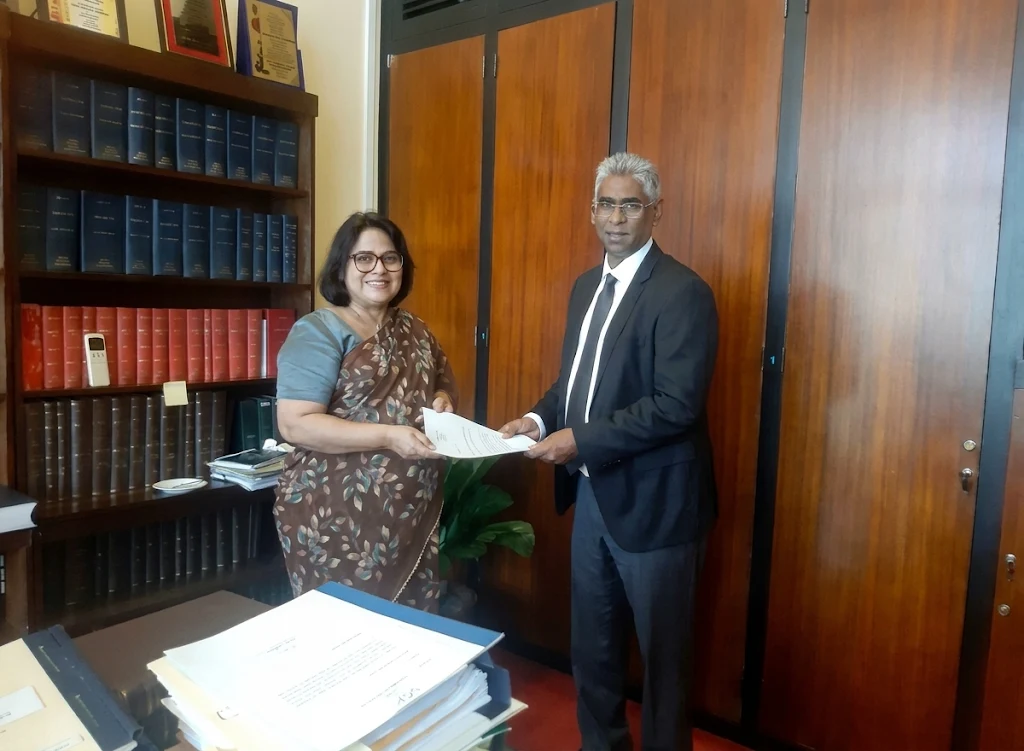
In a letter to the Secretary-General of Parliament, Musthapha formally notified his intention to introduce the proposed legislation as a Private Member’s Bill.
A key feature of the proposed amendments is the establishment of a statutory right to legal representation and safe passage for registered Sri Lankan migrant workers verified to be in distress.
Under the proposed provisions, the State would be required to provide legal representation through lawyers qualified to practise in the relevant host country, meet the associated legal expenses and arrange the worker’s safe return to Sri Lanka.
Such assistance would include economy-class air tickets, transit arrangements and emergency medical clearance where necessary.
The Bill also seeks to clearly define the circumstances under which a migrant worker could be recognised as being in distress and become eligible for State assistance.
These include the non-payment of contractual salaries for three consecutive months, documented physical, psychological or sexual abuse, premature or unlawful termination of employment contracts, and situations involving armed conflict, severe political unrest or natural disasters in the country of employment.
The proposed legislation also places considerable emphasis on preventing problems through better preparation before departure.
It seeks to make comprehensive pre-departure training compulsory for all registered migrant workers, with specific coverage of the cyber laws of destination countries, cultural literacy and legal restrictions governing the use of social media.
This provision is particularly relevant as migrant workers increasingly encounter legal and cultural challenges in foreign jurisdictions, where conduct that may be considered ordinary in Sri Lanka could potentially result in serious legal consequences.
The Bill further proposes empowering the Minister to introduce regulations governing applications for assistance, the provision of legal representation and arrangements for safe passage. A committee would also be established to examine and determine applications submitted by migrant workers seeking assistance.
The proposed amendments could mark a significant shift in the Government’s approach to protecting Sri Lankans employed overseas. Rather than relying primarily on administrative interventions or discretionary assistance through diplomatic missions, the legislation seeks to establish a legal obligation to provide support when specified conditions are met.
However, implementing such provisions would also place additional financial and administrative responsibilities on the Government. Effective coordination between the Sri Lanka Bureau of Foreign Employment, Sri Lankan diplomatic missions and relevant authorities in destination countries would be essential to ensure that workers receive timely assistance.
The amendments would apply to the recruitment of Sri Lankans for overseas employment by private-sector undertakings and public corporations.
Musthapha’s latest initiative is also a further step in his efforts to strengthen safeguards for Sri Lankans working overseas, following his involvement in the case of migrant worker Anojan Sivarasa, who faced the death sentence in Saudi Arabia.
Musthapha was part of the Sri Lankan legal delegation that travelled to Saudi Arabia to pursue an appeal in the case. The intervention resulted in the Saudi Supreme Court setting aside the death sentence, marking a significant development in efforts to secure justice for the Sri Lankan worker.
The proposed legislation seeks to extend such interventions beyond individual cases by creating a formal legal framework through which distressed migrant workers could claim assistance from the State.
If enacted, it could provide migrant workers and their families with greater legal certainty when dealing with emergencies overseas, while reinforcing the Government’s responsibility to protect Sri Lankan nationals seeking employment abroad.
Musthapha has requested the Secretary-General of Parliament to make the necessary arrangements to process the Bill in accordance with parliamentary procedures.











Leave a comment