
By The Pulselien News Desk
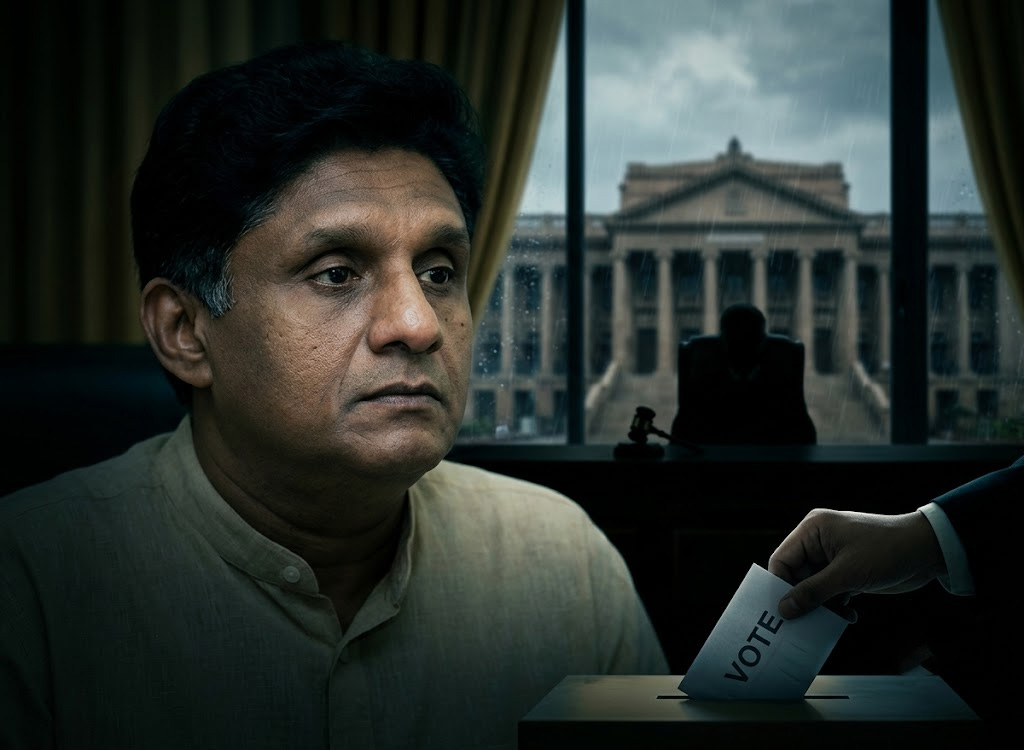
Opposition Leader Sajith Premadasa on Tuesday (4) challenged the government’s controversial plan to extend the retirement age of Supreme Court and Court of Appeal judges, arguing that any constitutional amendment affecting judges currently in office cannot be enacted without the approval of the people at a referendum.
Raising the issue in Parliament under Standing Order 27(2), Premadasa cited a previous Supreme Court determination to contend that the government’s proposal raises serious constitutional concerns in addition to the growing criticism it has attracted from the legal community.
Referring to the Supreme Court’s 2022 determination on the Inland Revenue (Amendment) Bill, Premadasa noted that the court had made it clear that the retirement age of Supreme Court and Court of Appeal judges is entrenched in the Constitution.
Quoting from the determination, he said the court had ruled that “any Constitutional amendment to the retirement age or the period of office impacting on incumbent judges, whether directly or indirectly, will impinge on the independence of the judiciary and be violative of Article 3, which requires a Referendum.”
The Opposition Leader questioned whether the government intended to proceed with a constitutional amendment despite this legal position, warning that altering the tenure of sitting judges could directly affect the constitutional principle of judicial independence.
Mounting opposition
The government’s proposal to raise the retirement age of superior court judges has already drawn strong objections from the Bar Association of Sri Lanka (BASL), senior lawyers and several local and international legal organisations, which have argued that the move could undermine judicial independence if applied to incumbent judges.
Premadasa said these concerns could not be ignored and urged the government to engage in meaningful consultations before proceeding with any constitutional changes.
Reform or temporary fix?
The Opposition Leader also questioned why the administration appeared focused on extending judges’ tenure instead of pursuing wider judicial reforms already identified by experts.
He pointed to a comprehensive 2023 report prepared for the Ministry of Justice with technical assistance from the Asian Development Bank, which examined structural reforms aimed at improving the efficiency of Sri Lanka’s court system.
Premadasa argued that the government had failed to explain why those recommendations had not been prioritised.
He further questioned how merely extending the retirement age of judges would resolve the country’s mounting judicial backlog, with more than 1.1 million cases currently pending before Sri Lankan courts.
Calling for a more comprehensive approach, he urged the government to present a clear strategy for judicial reform rather than relying on what he described as a limited constitutional amendment that could itself face significant legal and constitutional challenges.
The intervention adds further political pressure on the government’s proposed judicial reforms, with constitutional validity now emerging alongside concerns over judicial independence and the urgent need to address chronic delays in the administration of justice.












Leave a comment