
By The Pulseline News Desk
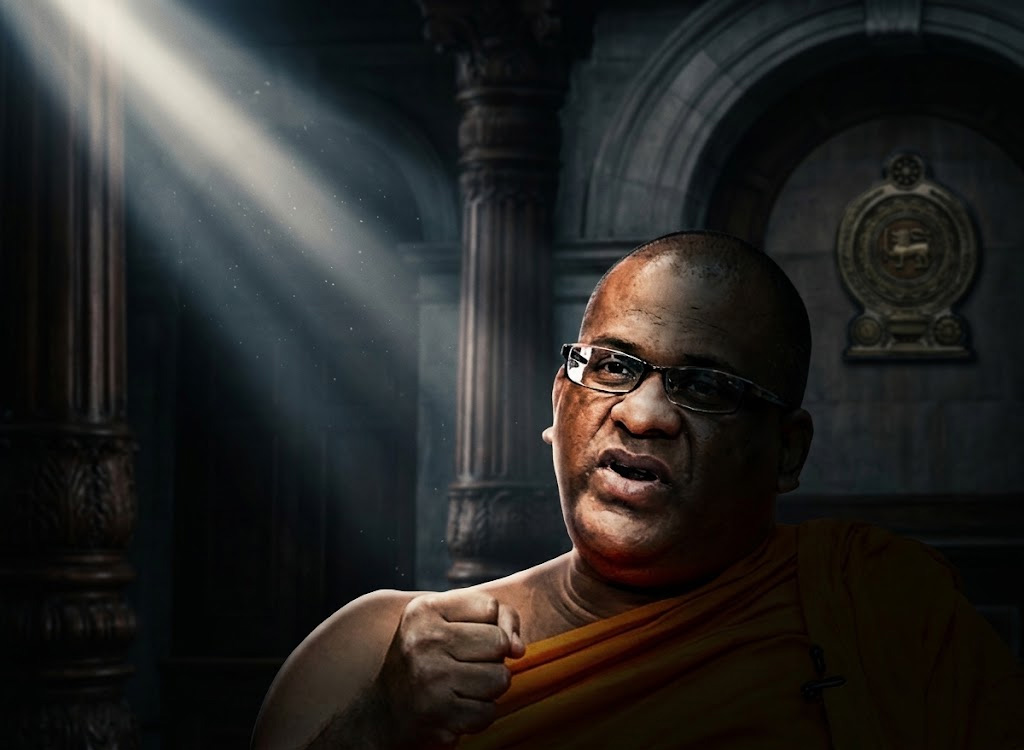
The Supreme Court has delivered a landmark ruling placing the presidential power to grant pardons under intense constitutional scrutiny, declaring invalid the pardon granted by former President Maithripala Sirisena to Bodu Bala Sena (BBS) General Secretary Ven. Galagoda Aththe Gnanasara Thero.
The ruling, delivered today (10), was by a three-judge bench of the Supreme Court, headed by Justice Janak De Silva, in response to fundamental rights petitions filed by the Centre for Policy Alternatives (CPA) and Sandhya Ekneligoda, the wife of missing journalist Prageeth Ekneligoda, challenging former President Sirisena’s decision to grant the pardon.
The case has brought renewed attention to one of the most powerful discretionary powers vested in the Executive President — the authority to release convicted persons from the consequences of a criminal conviction.
Gnanasara Thero was sentenced by the Court of Appeal in 2018 to six years’ imprisonment for contempt of court. He was later released after then President Maithripala Sirisena had granted him a presidential pardon.
The Supreme Court has now ruled that the pardon cannot be upheld, raising important questions about the constitutional boundaries within which a President can exercise the power of clemency.
The decision is significant because the presidential pardon is not simply a political privilege; it is a constitutional power that can override the consequences of a judicial conviction. The ruling therefore places the exercise of that power under greater judicial scrutiny, particularly where questions arise over whether constitutional and legal safeguards have been followed.
At the heart of the controversy is the balance between executive discretion and judicial authority. While the Constitution gives the President the power to grant pardons, the Supreme Court’s intervention underscores that the exercise of executive power is not necessarily beyond constitutional review.
The judgment could consequently have implications extending well beyond the case involving Gnanasara Thero. It may influence how future Presidents exercise the power to pardon convicted persons and how such decisions are assessed when challenged before the courts.
The ruling also comes amid a broader national debate over separation of powers, judicial independence and the limits of executive authority, making the decision particularly significant in Sri Lanka’s evolving constitutional landscape.
Viran Corea PC, with Luwie Ganeshathasan and Khyati Wikramanayake had appeared for the CPA. Counsel Asthika Devendra, with Pulasthi Hewamanne, instructed by Manjula Balasuriya had appeared for Sandhya Ekneligoda.
Counsel Thishya Weragoda, with Sanjaya Marambe and Iresh Senevirathne, had appeared for Gnanasara Thera, while Faiszer Musthapha PC, with Pulasthi Rupesinghe had appeared for former President Sirisena.







Leave a comment