
By The Pulseline News Desk
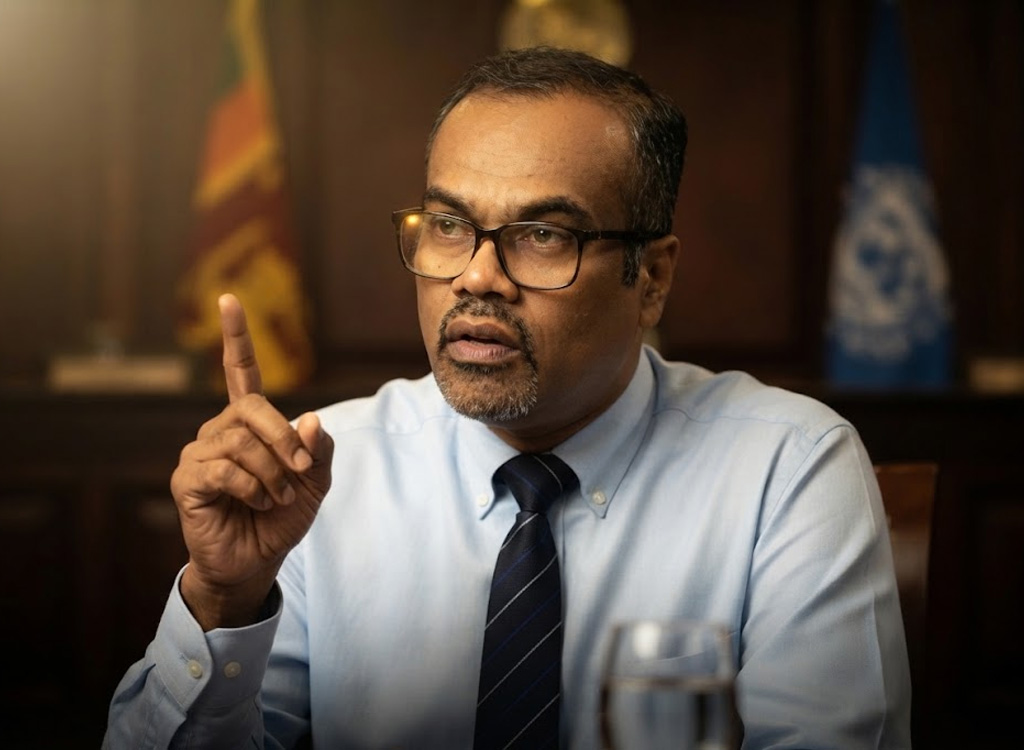
Sri Lanka is discussing options for a new programme with the International Monetary Fund (IMF) beyond the conclusion of its current four-year Extended Fund Facility (EFF) in March 2027, Deputy Finance Minister Anil Jayantha told Parliament on Thursday (8).
The Government is exploring a longer-term engagement with the IMF focused on sustainable economic growth, marking a potential shift from the crisis-driven assistance that followed Sri Lanka’s unprecedented economic collapse in 2022.
“The current IMF EFF programme is on track to conclude successfully in March 2027, marking the completion of its economic reform and recovery efforts under the arrangements,” Jayantha has said, responding to a question raised by the Opposition.
“In parallel, discussions are currently underway regarding the options beyond the current programme, reflecting a shift from crisis-driven support towards a more sustainable, long-term growth-targeted engagement model,” he has added.
The discussions come as Sri Lanka approaches the final stages of its current IMF-supported reform programme, which was designed to restore macroeconomic stability, rebuild foreign exchange reserves, strengthen public finances and address the country’s unsustainable debt burden.
From economic collapse to recovery
Sri Lanka turned to the IMF after the economic crisis culminated in its first-ever sovereign debt default in April 2022.
Years of fiscal imbalances, substantial tax cuts, declining foreign exchange reserves, the impact of the COVID-19 pandemic and disruptions to agricultural production contributed to the crisis, leaving the country unable to meet its external debt obligations.
The resulting economic collapse triggered severe shortages of fuel, medicines and essential food items, alongside a sharp deterioration in living standards and inflation that exceeded 70% at its peak. Widespread public protests eventually forced former President Gotabaya Rajapaksa and other senior Government figures from office.
In March 2023, the IMF approved a four-year EFF arrangement worth approximately US$3 billion to support Sri Lanka’s economic recovery and debt restructuring.
The programme required the Government to undertake extensive fiscal and structural reforms, including raising tax revenue, implementing cost-reflective energy pricing, controlling public expenditure and strengthening the independence of the Central Bank.
Sri Lanka also embarked on a complex debt restructuring process involving bilateral creditors, including China, India and members of the Paris Club, as well as holders of international sovereign bonds.
Recovery amid continuing challenges
The IMF programme has supported a significant improvement in Sri Lanka’s macroeconomic conditions, including a return to economic growth, greater exchange-rate stability and the rebuilding of official foreign exchange reserves.
However, the recovery has not eliminated the economic pressures facing households and businesses.
Higher taxes, cost-reflective electricity and fuel prices, and fiscal consolidation measures have remained politically contentious, while concerns over the cost of living, income inequality and the adequacy of social protection continue to shape the domestic debate.
The Government must therefore balance its commitments to fiscal discipline and revenue mobilisation with demands for economic relief, fairer taxation and stronger social safety nets.
Anti-corruption measures and improvements in public financial management also remain important issues in the broader debate over the sustainability and fairness of the country’s economic recovery.
What comes after the current programme?
The Deputy Minister’s statement signals that the Government is considering its future relationship with the IMF beyond March 2027, although the precise structure, financing arrangements and policy conditions of any successor programme have not been disclosed.
A new arrangement could provide a framework for continued engagement on economic reforms and longer-term growth objectives. However, the outcome will depend on the nature of the discussions and the policy priorities agreed upon by the Government and the IMF.
The conclusion of the existing EFF would mark the end of the current four-year arrangement, but it would not necessarily mean an end to IMF engagement.
For Sri Lanka, the challenge will be to sustain the gains achieved under the current programme while creating conditions for stronger investment, employment generation and productivity-led growth.
The Government’s approach to a potential successor arrangement will also be closely watched for indications of how it intends to reconcile continued fiscal discipline with public demands for tangible improvements in living standards.








Leave a comment