
By The Pulseline News Desk
The government’s latest expressway push is being framed as more than just another infrastructure drive. It is also being presented as a test of whether Sri Lanka can finance and deliver major highway projects using its own resources, without relying on foreign loans.
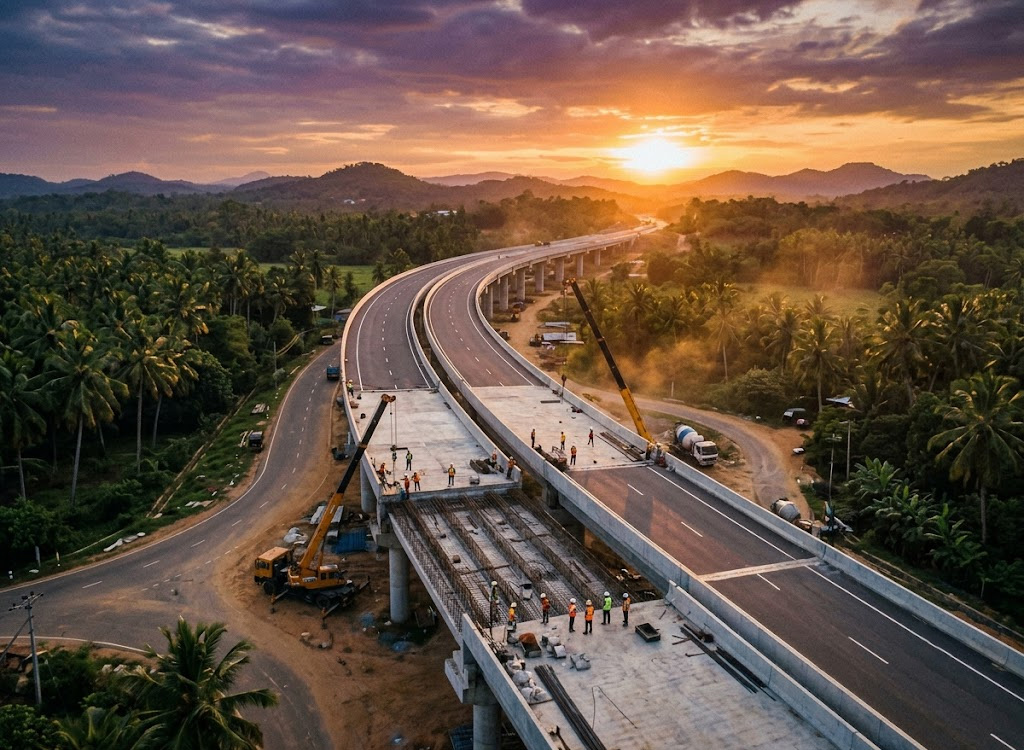
The Ministry of Transport and Highways says the country’s expressway network will expand by 132 kilometres by 2030 through four key projects currently under construction or scheduled to begin within the next year.
The expansion comes as successive governments have sought to improve connectivity between key economic centres while reducing travel times and easing congestion on major road corridors. However, many expressway projects have faced delays in recent years due to funding constraints, legal disputes and the country’s economic crisis.
Four projects in the pipeline
Two sections of the Central Expressway are already under construction.
These include the 37-kilometre Kadawatha-Meerigama stretch under the first phase of the Central Expressway and the 33-kilometre Pothuhera-Galagedara section under its third phase.
The ministry also announced that construction of the long-awaited Kurunegala-Dambulla Expressway Project is expected to begin before the end of 2026.
The first stage will cover the 38-kilometre Kurunegala-Galewela section, with an estimated investment of Rs. 233 billion.
Officials said the project will be implemented through a transparent tender process divided into 12 construction packages, allowing local construction companies to undertake the work while accelerating project delivery.
Meanwhile, work on the initial 24-kilometre section of the Ruwanpura Expressway is also scheduled to commence this year.
If completed according to schedule, the combined projects will increase Sri Lanka’s expressway network by 132 kilometres by 2030.
A shift in financing
Perhaps the most significant aspect of the government’s announcement is not the roads themselves, but how they will be funded.
According to the Ministry of Transport and Highways, these projects will mark the first time Sri Lanka has financed expressway construction entirely through domestic government funds, rather than relying on external borrowing or foreign-funded infrastructure programmes.
The announcement reflects the government’s broader effort to pursue infrastructure development while maintaining tighter control over public debt following the country’s economic crisis and debt restructuring process.
Whether the ambitious construction timeline can be maintained will depend on sustained funding, efficient procurement and the ability of local contractors to deliver projects on schedule. For now, the government is positioning the expressway programme as both an investment in national connectivity and a milestone in financing large-scale infrastructure through dom











Leave a comment