
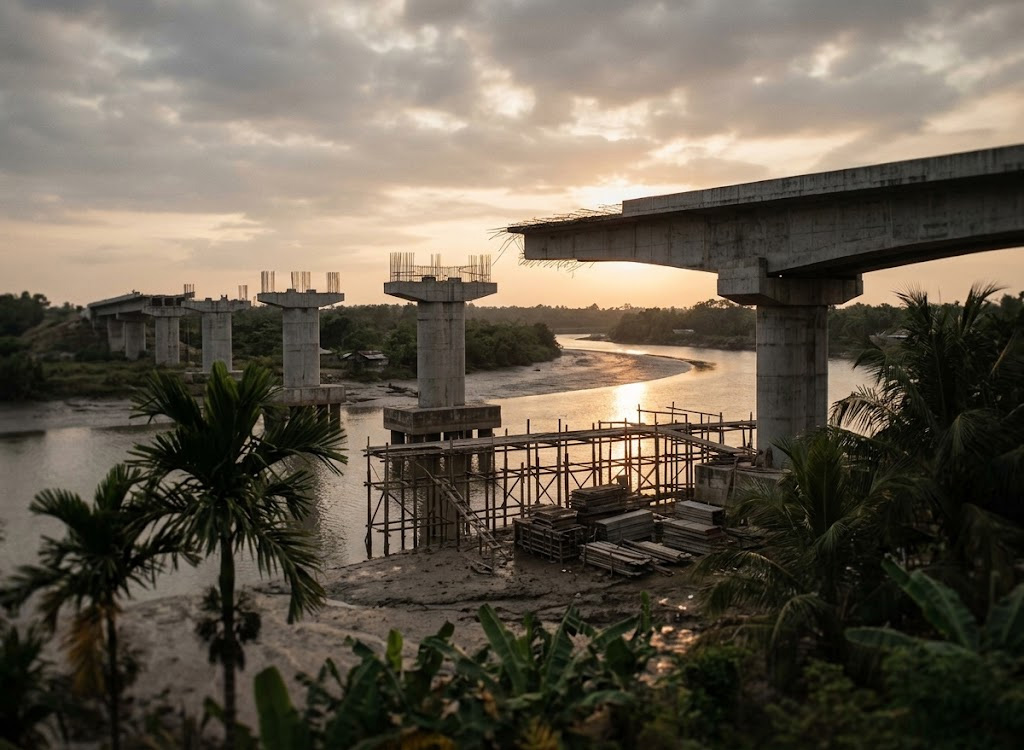
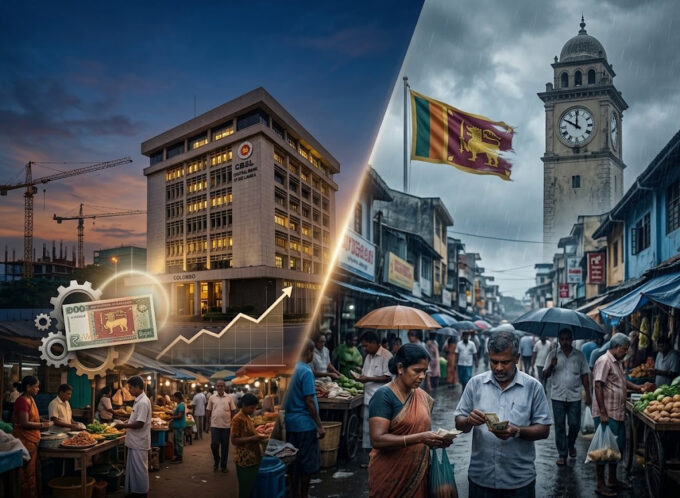
World Bank flags weak project execution as revenue rises 27.2%; only 8% of Ditwah reconstruction funds disbursed by mid-2026
By The Pulseline News Desk
Sri Lanka recorded a rare overall budget surplus of Rs. 9.5 billion in the first half of 2026, as strong tax revenue growth coincided with sluggish government spending, including delays in disbursing funds for post-Cyclone Ditwah reconstruction, the World Bank has reported.
In its latest Sri Lanka Development Update – October 2026, titled From Recovery to Transformation, the World Bank has said the Government had disbursed only around 8% of the Rs. 500 billion allocated for reconstruction by mid-year, highlighting persistent weaknesses in public investment management and implementation capacity.
Capital expenditure has also remained subdued, with only 16.7% of the full-year capital budget spent during the period. Meanwhile, less than half of the Rs. 100 billion relief package introduced in response to the economic fallout from the Middle East conflict had been disbursed.
“This under-execution reflects weaknesses in public investment management, including project selection, procurement, and implementation capacity — rather than financing constraints,” the report has said.
The spending delays came as government revenue continued to strengthen, enabling the country to record a substantial improvement in its fiscal position compared with the first half of 2025.
Revenue growth drives fiscal turnaround
Total government revenue increased 27.2% year-on-year in the first half of 2026, while tax revenue grew 25.9%, primarily driven by Value Added Tax (VAT) and duties on vehicle imports following the lifting of import restrictions.
With overall government expenditure increasing by just 7.9%, the primary surplus reached Rs. 1,233.1 billion, while the overall budget balance shifted to a surplus of Rs. 9.5 billion.
This marked a significant turnaround from the Rs. 406 billion budget deficit recorded during the corresponding period last year.
The primary surplus represents the difference between government revenue and expenditure excluding interest payments, while the overall budget balance includes those payments.
The World Bank has attributed the revenue gains partly to tax policy changes and improvements in tax administration. New tax laws certified in June increased capital gains taxes, introduced VAT on foreign digital service providers and raised VAT on financial services.
The Government is also piloting a national electronic invoicing system as part of efforts to strengthen tax compliance and revenue collection.
The continued growth in revenue provides support for fiscal consolidation efforts, but the report has indicated that the Government’s ability to translate available resources into effective public investment remains a key concern.
Reconstruction funds remain largely unspent
Despite the allocation of substantial funds for recovery following Cyclone Ditwah, implementation has lagged significantly behind budgetary commitments.
The disbursement of only around 8% of the Rs. 500 billion reconstruction allocation by mid-year raises questions about the pace at which affected communities and damaged infrastructure can receive the intended support.
The slow release of funds for reconstruction and economic relief also points to broader challenges in the execution of public expenditure.
According to the World Bank, the problem is not primarily a shortage of financing but weaknesses in the processes required to turn budget allocations into completed projects and delivered assistance.
Project selection, procurement procedures and limited implementation capacity were identified as key constraints.
The low capital expenditure rate further underscores the gap between budgeted investment and actual spending, potentially delaying infrastructure development and other public investment priorities.
Interest payments continue to constrain finances
Despite the improvement in the budget balance, high debt-servicing costs remain a major pressure on Sri Lanka’s public finances.
Interest payments consumed around 46% of government revenue in 2025, although this was a substantial improvement from the peak of nearly 80% recorded between 2022 and 2023.
The World Bank expects the share of revenue absorbed by interest payments to decline further to around 34% by 2028.
The projected reduction would provide greater fiscal space for other government priorities, although the pace of improvement will depend on revenue performance, debt dynamics and expenditure management.
The challenge for the Government is to sustain fiscal consolidation while ensuring that essential public services, reconstruction and investment programmes receive adequate funding.
Spending efficiency becomes critical
The World Bank has also highlighted the implications of the legal ceiling on primary government expenditure, which is capped at 13% of gross domestic product (GDP).
With primary spending constrained by this limit, the Government faces pressure to improve the allocation and execution of available resources rather than relying on increases in expenditure.
“This spending ceiling increases the importance of improving spending quality rather than simply increasing spending levels,” the report has said.
The warning comes as Sri Lanka seeks to maintain fiscal discipline while addressing reconstruction needs and supporting economic recovery.
The first-half surplus demonstrates the impact of stronger revenue collection and restrained expenditure on the Government’s fiscal position. However, the slow execution of capital projects and emergency relief allocations highlights the limitations of achieving fiscal targets without effective public spending.
The World Bank’s assessment suggests that Sri Lanka’s next fiscal challenge will be to ensure that stronger revenue collection translates into timely reconstruction, more effective public investment and improved delivery of government services.











Leave a comment