
By The Pulseline News Desk
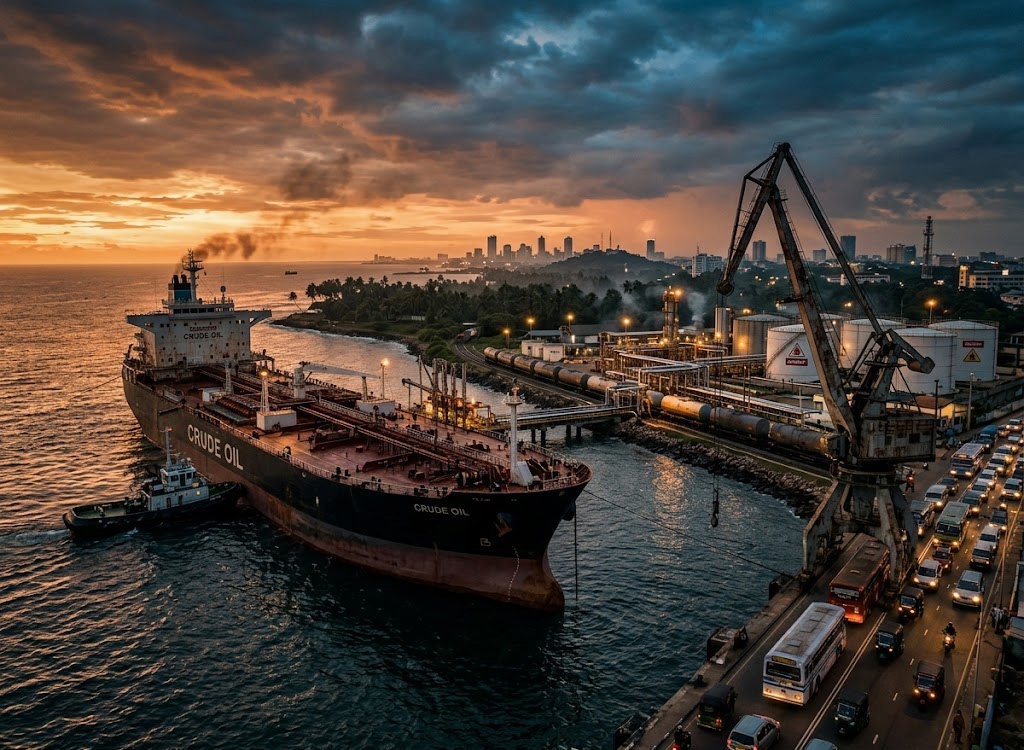
Sri Lanka’s expenditure on fuel imports could reach a record high of approximately US$5.5 billion this year as elevated global oil prices, driven by the ongoing conflict in the Middle East, continue to place pressure on the country’s external finances, despite a recent decline in monthly import expenditure.
According to reports, the country has already spent US$4,487.2 million on fuel imports during the first nine months of 2026, marking an increase of more than 51% compared to the US$2,961.3 million recorded during the corresponding period last year.
If the current geopolitical tensions persist until the end of the year, analysts expect the annual fuel import bill to approach US$5.5 billion, potentially surpassing the previous record of US$5,040 million recorded in 2012.
The 2012 figure was registered during a period of mounting external sector pressures, which eventually led Sri Lanka to seek assistance from the International Monetary Fund (IMF).
According to the Central Bank’s latest external trade performance report, expenditure on fuel imports has declined for the fifth consecutive month in September 2026. However, the cumulative expenditure for the first nine months indicates that the country remains significantly exposed to international energy market fluctuations.
The rising import bill also comes amid renewed pressure on the Sri Lankan rupee, which has depreciated by approximately 6.8% so far this year, adding to the cost of servicing external obligations and financing essential imports.
Structural dependence on imported fuel
Sri Lanka’s exposure to global oil price movements reflects longstanding structural weaknesses across its energy, transport and industrial sectors.
With no domestic petroleum production, the country remains almost entirely dependent on imported fuel to meet its energy requirements.
Despite successive governments pursuing renewable energy development, thermal power generation continues to play a critical role in maintaining electricity supply, particularly during dry periods when hydropower generation declines.
The electricity sector consequently remains dependent on imported fuel, including heavy fuel oil and diesel, to meet demand and maintain grid stability.
Meanwhile, the transport sector continues to account for a substantial share of domestic petroleum consumption. Limited electrification of public transport, alongside the expansion of the vehicle fleet, has sustained demand for imported petrol and diesel.
These structural dependencies make it difficult for Sri Lanka to substantially reduce its fuel import requirements, even when international prices moderate.
Lessons from the previous fuel crisis
Sri Lanka’s experience with high international oil prices has previously demonstrated the risks associated with maintaining fuel prices below market levels.
Successive governments provided extensive fuel subsidies during periods of elevated global prices, placing considerable financial pressure on the state-owned Ceylon Petroleum Corporation (CPC).
The resulting financial losses and accumulated liabilities contributed to the corporation’s debt burden, becoming part of the wider fiscal and external sector vulnerabilities that preceded the country’s 2022 economic crisis.
Under the current IMF-supported programme, the Government is required to maintain a cost-reflective fuel pricing mechanism, limiting the scope for politically driven price subsidies that could recreate similar financial pressures.
However, global commodity price volatility and geopolitical instability continue to expose the economy to external shocks.
The challenge is further complicated by weaknesses in the systems required to identify vulnerable households and deliver targeted assistance. In the absence of effective subsidy delivery mechanisms, governments have historically relied on broader price interventions to cushion consumers against sudden increases.
A continuing foreign exchange challenge
The prospect of another record fuel import bill highlights the difficulty of reducing Sri Lanka’s dependence on imported energy while maintaining economic stability.
Higher petroleum import expenditure increases demand for foreign exchange, potentially putting additional pressure on the rupee and the country’s external reserves.
Although the recent consecutive monthly declines in fuel import expenditure could indicate some easing of import costs, the substantial year-on-year increase in cumulative spending suggests that the broader external vulnerability remains.
For Sri Lanka, reducing this exposure will require more than responding to short-term movements in international oil prices. Accelerating renewable energy development, improving energy efficiency, expanding electric mobility and strengthening public transport will be essential to reducing the country’s long-term dependence on imported petroleum.
Until such structural changes gather momentum, Sri Lanka’s fuel import bill will remain highly vulnerable to geopolitical developments and price movements in international energy markets, leaving the country’s external finances exposed to shocks beyond its control.












Leave a comment