
By Marianne David
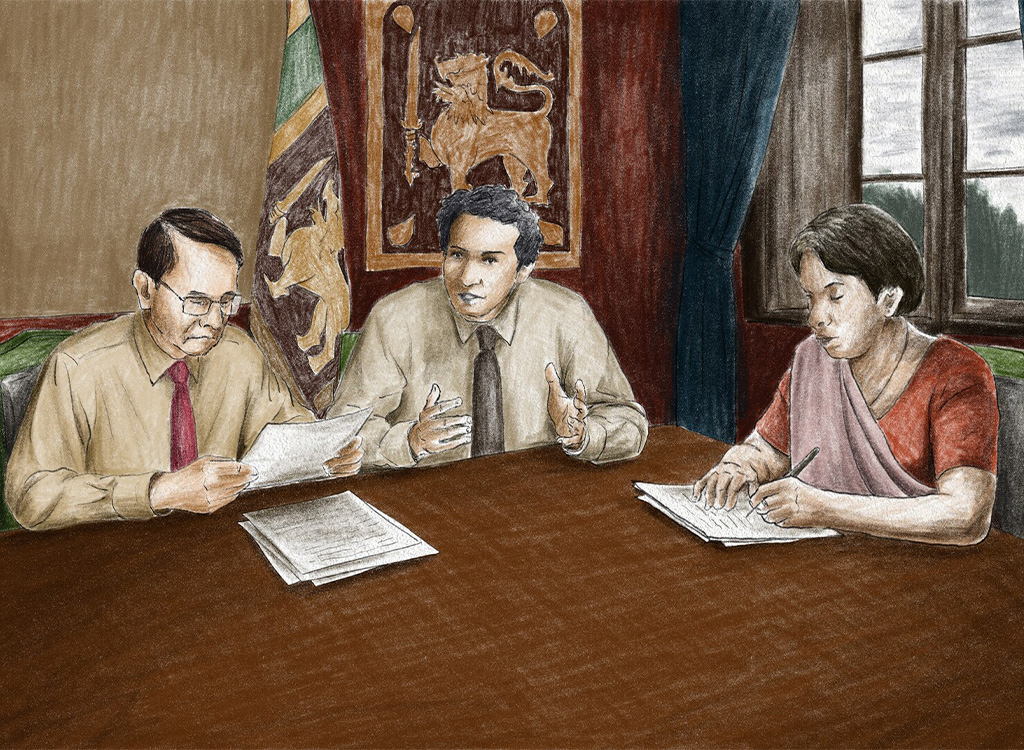
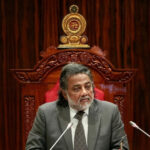
In a country where political violence has continually silenced moderate voices and narrowed the space for democratic dissent, the legacy of Dr. Neelan Tiruchelvam remains deeply relevant. Tiruchelvam believed that Sri Lanka’s ethnic conflict could be resolved through democratic reform and an inclusive political settlement that protected the rights of all communities. Yet his advocacy for a peaceful alternative to separatism and majoritarianism made him a target of the LTTE, which assassinated him in 1999.
In this interview, Pitasanna Shanmugathas, the filmmaker behind ‘Neelan: Unsilenced,’ reflects on the nine-year journey of bringing Tiruchelvam’s life and ideas back into public consciousness. “The more I read about Dr. Tiruchelvam, the more I wanted to understand why someone who had offered such a serious plan for peacefully ending the war was no longer being talked about… One of the things that compelled me to make this film was learning about the injustice of how Neelan had been treated, both in life and in death,” he said, speaking to Pulse Line.
“He was a Sri Lankan Tamil who spent his career fighting for the rights of minority communities, particularly his own Tamil community, yet he was vilified by large parts of the Tamil community. Because he opposed the LTTE’s demand for a separate state and worked within democratic institutions to reform the constitution, he was branded a ‘throgi,’ a traitor… In the climate of that period, the word ‘traitor’ was not just an insult. It was a death sentence,” he added.
In the course of this wide-ranging interview, Shanmugathas discusses the inspiration behind the documentary, the effort to challenge the propaganda that sought to discredit Neelan, his contributions to Sri Lanka’s constitutional history and international democratic movements, the importance of making the film freely accessible, and why Tiruchelvam’s vision deserves to be rediscovered by a new generation.
“Unsilencing Neelan means correcting the record, letting the evidence of what he actually said and did answer the accusations made against him. It also means bringing his ideas back into public life at a time when Sri Lanka is once again debating constitutional reform. His voice is not only a matter of history. It is still relevant to the choices the country faces today.”
Following are excerpts of the interview:
What initially inspired you to make a documentary about Dr. Neelan Tiruchelvam? Why did you feel his life and legacy deserved greater attention?
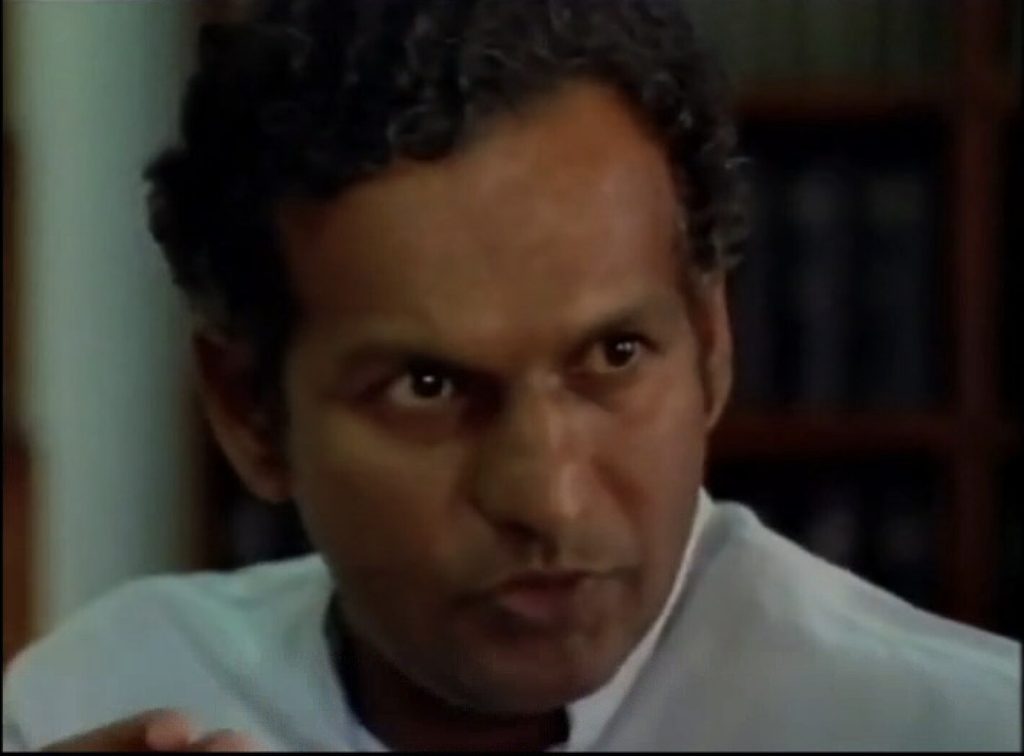
I first came to really know of Neelan Tiruchelvam through the writings of Sri Lankan Tamil journalist D.B.S. Jeyaraj. His articles introduced me to the constitutional proposals Neelan helped formulate to bring a peaceful end to the Sri Lankan civil war, and showed me just how bold and inclusive those proposals were.
Publicly released on 3 August 1995, in addition to abolishing the Executive Presidency, the proposals would have replaced Sri Lanka’s ‘unitary state’ with a ‘Union of Regions’ and given the Tamil, Muslim, and Sinhala dominated regions of Sri Lanka real, constitutionally protected power over land, education, policing, finance, and other vital areas, power the central government could not simply take back. Most notably, the proposals Dr. Tiruchelvam co-authored rectified the flaws of the 13th Amendment to Sri Lanka’s Constitution, which had created Provincial Councils in 1987 but kept them firmly within the unitary state, allowing the centre to take back with one hand the powers it appeared to give with the other. No Sri Lankan government had ever offered the country’s minority communities anything so far-reaching, and nothing since has matched it.
The more I read about Dr. Tiruchelvam, the more I wanted to understand why someone who had offered such a serious plan for peacefully ending the war was no longer being talked about. Around the same time that I read D.B.S. Jeyaraj’s articles I watched Canadian filmmaker Helene Klodawsky’s documentary ‘No More Tears Sister,’ about Dr. Rajani Thiranagama, a Tamil academic and human rights defender who was also assassinated by the LTTE. That film gave Rajani her voice back and returned her legacy to public view. It convinced me that the same could and should be done for Neelan, and that decision started a journey that took nine years.
One of the things that compelled me to make this film was learning about the injustice of how Neelan had been treated, both in life and in death. He was a Sri Lankan Tamil who spent his career fighting for the rights of minority communities, particularly his own Tamil community, yet he was vilified by large parts of the Tamil community. Because he opposed the LTTE’s demand for a separate state and worked within democratic institutions to reform the Constitution, he was branded a ‘throgi,’ a traitor. That label was spread through LTTE propaganda, which falsely portrayed him as a government collaborator who did not care about Tamil civilian suffering. In the climate of that period, the word ‘traitor’ was not just an insult. It was a death sentence, and it had already been used to justify the killing of other democratic Tamil politicians such as Appapillai Amirthalingam, V. Yogeswaran, and Sarojini Yogeswaran. On 29 July 1999, the LTTE used a suicide bomber to kill Neelan as well.
His killing was followed by a second kind of silencing. In large parts of the Tamil diaspora, speaking positively about Neelan remained unwelcome for years, and the traitor narrative went largely unchallenged. Within Sri Lanka, the constitutional reform proposals he helped formulate never became law, because the rival United National Party, led by Ranil Wickremesinghe, refused to provide the votes needed for the required two-thirds majority in Parliament. In the years that followed, Tiruchelvam’s name slowly faded from public discourse in the country. Many young Sri Lankans, Tamil and Sinhala alike, have grown up without knowing who Dr. Tiruchelvam was or what he offered the country. His legacy was not simply forgotten by accident. It was suppressed, first by those who killed him and their fanatical acolytes, and then by a political culture that found it easier not to remember him.
As my research deepened, I realised that the constitutional proposals were only one part of Dr. Tiruchelvam’s achievements, and that much of his other work had been almost entirely forgotten. Neelan was not only a constitutional scholar. He was one of Sri Lanka’s great institution builders. In 1982 he founded the International Centre for Ethnic Studies and the Law and Society Trust, two institutions that still promote pluralism, human rights, and legal reform more than four decades later. He was also a pioneer of democratic election monitoring across the Global South, observing elections at historic turning points such as Chile’s 1988 plebiscite, which helped bring Augusto Pinochet’s brutal dictatorship to an end. After Kazakhstan gained independence from the Soviet Union, Dr. Tiruchelvam, at the request of the Kazakh Government, gave key input into the draft of its new constitution. Very few people know about this work, and I wanted the documentary to tell the whole story of a man whose commitment to democracy reached well beyond the constitutional proposals he is best known for in Sri Lanka. That was the heart of why I made the film.
As one of Dr. Tiruchelvam’s mentees academic Dr. Vasuki Nesiah mentions in the film, here was a Harvard-trained constitutional lawyer who could have built a safe and prestigious career anywhere in the world but he chose instead to return to a country at war and devote himself to building a democratic framework in which all of Sri Lanka’s communities could live together as equals. He paid for that commitment with his life. I felt that someone with that depth of courage and moral consistency deserved to be remembered accurately.
Why did you choose the title ‘Neelan: Unsilenced’? What does the title mean to you, particularly given the circumstances surrounding his assassination?
The title responds directly to the purpose behind his assassination. The LTTE did not kill Neelan by accident or as collateral damage. A suicide bomber targeted him in Colombo to silence a progressive democratic Tamil voice, because as long as Neelan was alive and advocating for constitutional reform, he undermined the LTTE’s claim that armed struggle was the only path available to Tamils. As Sharika Thiranagama, a Professor of Anthropology at Stanford University and the daughter of Rajani Thiranagama, told me in her interview for this documentary, Neelan had viable proposals that could have delivered a democratic solution, and “the LTTE never wanted a democratic solution”. Killing him was meant to end the possibility of such a solution.
‘Unsilenced’ means that the LTTE’s attempt to silence Neelan did not succeed. In the documentary he speaks again in two senses. Literally, viewers hear his own voice and see him speak through archival footage of interviews he had given, setting out his ideas in his own words. Figuratively, he is brought back through the testimony of the people who knew him best, including his brother Vasudevan, his son Mithran, his university roommate, his academic colleagues, and the politicians and scholars who worked alongside him. Together these voices rebuild a picture of the man that propaganda tried to erase.
Importantly, unsilencing Neelan does not mean silencing anyone else. The film also gives voice to his opponents, including LTTE leaders and their supporters. I believe the truth about Neelan is best served by placing his words alongside theirs and allowing viewers to weigh them.
To me the title also carries an obligation. Unsilencing Neelan means correcting the record, letting the evidence of what he actually said and did answer the accusations made against him. It also means bringing his ideas back into public life at a time when Sri Lanka is once again debating constitutional reform. His voice is not only a matter of history. It is still relevant to the choices the country faces today.
For audiences who may not be familiar with Dr. Tiruchelvam, how would you describe his contributions to Sri Lanka’s political, intellectual, and constitutional history?
Neelan Tiruchelvam was born on 31 January 1944, into a family with a deep commitment to public service. His father, Senator Murugeysen Tiruchelvam, was a lawyer, Solicitor General, and Cabinet Minister who worked closely with the Tamil leader S.J.V. Chelvanayakam, and was a firm advocate of federalism. Neelan studied at the University of Ceylon and went on to Harvard Law School, where he later returned as a visiting professor.
One of his most lasting contributions was as an institution builder. The documentary places this in the context of a dark moment in Sri Lankan history. In 1981 an organised mob burned the Jaffna Public Library, destroying irreplaceable manuscripts and leaving a deep wound in the Tamil community. While others were inflaming ethnic tensions, Neelan responded by building institutions for understanding and reconciliation. In 1982 he co-founded the International Centre for Ethnic Studies (ICES) and the Law and Society Trust. The Law and Society Trust was created to carry out human rights research and advocacy, based on his belief that law does not operate in a vacuum and that citizens should be actively involved in analysing and shaping legislation. ICES brought lawyers and anthropologists together to study how other societies had managed ethnic diversity, and it became a rare space where scholars, activists, and policymakers from different communities could debate the country’s most divisive questions openly and with mutual respect.
As Dr. Vasuki Nesiah observes in the film, Neelan believed that an institution in the Global South, in Colombo, could generate knowledge and serve as a centre of intellectual exchange in its own right, rather than relying on the universities of the Global North. Mario Gomez, the Executive Director of ICES, describes it as one of the few institutions in Sri Lanka that has consistently promoted pluralism and diversity in all its forms, whether ethnic, religious, linguistic, or sexual. Through these institutions Neelan mentored a whole generation of Sri Lankan scholars and activists.
Constitutionally, his most significant contribution in Sri Lanka was his role in co-authoring a series of constitutional reform proposals under President Chandrika Kumaratunga’s Government, most notably the August 1995 proposals. His vision of constitutional reform also extended to the protection of every individual citizen. He pointed out that “the right to life, for example, is not expressly protected in the Constitution; nor is the right to privacy”. He argued for incorporating the rights recognized in the International Covenant on Civil and Political Rights into Sri Lankan law, for securing procedural protections such as the right to counsel and the right to remain silent on arrest, and for narrowing emergency powers that allowed fundamental rights to be suspended. Many constitutional lawyers and human rights activists considered those emergency powers too sweeping.
Contrary to the false allegations repeatedly made by LTTE supporters, Dr. Tiruchelvam used his platform as a member of Parliament to condemn human rights abuses against Tamil civilians, even when doing so put him at odds with the very government he was working with on reform. Dr. Tiruchelvam spoke out against both the mass displacement of Tamil civilians in Vavuniya and the extrajudicial, summary and arbitrary executions being carried out at the time.
In July 1998 he raised allegations of a mass grave at Chemmani in Jaffna and demanded a credible investigation be pursued as well as accountability for the perpetrators. Excavations at the site have since uncovered human remains, and they have recently drawn renewed international attention. In August 1998, Tiruchelvam brought attention to the food situation facing civilians in the Vanni before Parliament. In repeated debates on the renewal of the state of emergency, Dr. Tiruchelvam spoke out against disappearances, torture, arbitrary arrests, and the denial of due process. In his final months, he opposed the attempted reintroduction of the death penalty. His defence of human rights also reached beyond ethnicity. At a time when few Sri Lankan politicians would touch the issue, he spoke out against the oppression of the country’s gay and lesbian community.
Henry Steiner, a colleague of Dr. Tiruchelvam’s at Harvard Law School, notes in the film that the first and last speeches in the published collection of his parliamentary addresses are both titled ‘Emergency Debate,’ a sign of the temper of the times in which he served.
The content of the documentary does not stop at Sri Lanka’s borders, because Neelan’s legacy did not either. He was a pioneer of democratic election monitoring in the Global South. The National Democratic Institute invited him to observe Chile’s 1988 plebiscite, which helped end Pinochet’s dictatorship, and he brought those lessons back to South Asia. At a time when many South Asian governments refused Western election observers, he organised South Asian monitoring missions, many of them through ICES, including a mission to Bangladesh in 1991 after the fall of General Ershad. He also served as part of a three-member international panel that reviewed Kazakhstan’s draft constitution after its independence from the Soviet Union, working alongside American law professor Steve Kanter, who appears in the film.
Henry Steiner also reminds viewers that Neelan chaired the London-based Minority Rights Group and was an important figure in the growth of the international human rights movement. The documentary features many of the people who worked with him abroad, including Larry Garber, a former senior official with the United States Agency for International Development (USAID), Ken Wollack, former president of the National Democratic Institute, and David Collenette, former Canadian Minister of National Defence, who served alongside Neelan on the delegation that observed the Chilean plebiscite. Through them, viewers can see how the same principles of democratic accountability and minority protection guided him everywhere he went.
What do you believe made Neelan Tiruchelvam such an important figure in the search for a political solution to Sri Lanka’s ethnic conflict?
Neelan stood in the narrow and dangerous space between two extremes. He rejected Sinhala majoritarianism, which had denied Tamils equal rights since independence, and he rejected Tamil separatism, which he believed would only bring endless war. Instead, he championed a third path: a power-sharing arrangement within a united Sri Lanka in which Sinhalese, Tamils, Up-Country Tamils, Muslims, Burghers, and every other community could live with equal rights and constitutional protection.
What made him especially important was that he turned that vision into precise constitutional design. He understood exactly why earlier attempts at devolution had failed. Dr. Tiruchelvam pointed to agrarian services, education, and transport as areas where the authority of the Provincial Councils “has been legislatively and administratively overridden”. He also believed Sri Lanka’s executive presidential system compounded the problem, observing that “in the presidential system, power tends to gravitate towards the Centre”. The 1995 proposals were built to address these issues. The proposals abolished the concurrent list that allowed Parliament to override provincial authority, created exclusive spheres of power for the centre and the regions, and established an arbitration mechanism to settle disputes that would arise between the regions and centre. These were not vague promises. As Dr. Tiruchelvam asserted, these “are not marginal or modest changes; rather, they envisage a fundamental reconstruction of the distribution of powers”. They were safeguards meant to make peace durable regardless of who held power in Colombo.
His work as an institution builder and his international experience gave that vision a foundation. Through ICES and the Law and Society Trust, he spent years building the research, the networks, and the public dialogue that serious constitutional reform depends on. His work abroad gave him first-hand knowledge of how democratic institutions succeed or fail in deeply divided societies. As Ken Wollack, former President of the National Democratic Institute, observes in the film, Neelan brought to Chile his own experience of trying to find a middle road between extremes.
He also brought moral credibility to the search for a political solution, through his consistent defence of the human rights of Tamil civilians. That combination of constitutional expertise, institutional vision, international experience, political courage, and principle made him uniquely placed to bridge communities. It is also why he was so threatening to those who believed only violence could deliver change. As Sri Lankan Tamil politician M.A. Sumanthiran says in the film, the path Neelan showed is the only one available to the Tamil people as they look towards a solution.
Do you think Dr. Tiruchelvam’s legacy has been adequately recognised within Sri Lanka, particularly among younger generations?
No, I don’t believe it has. For many years the dominant story told about Neelan, particularly within parts of the Tamil community, was the one created by those who opposed him. The traitor label outlived him, and it discouraged people from looking honestly at his record. At the same time, the collapse of the Kumaratunga Government’s constitutional reform initiative and the long years of war that followed pushed constitutional reform out of the national spotlight, and his contributions were largely forgotten along with it.
There is a striking irony here. The institutions Dr. Tiruchelvam founded, the International Centre for Ethnic Studies and the Law and Society Trust, are still active and respected today, yet many people who benefit from their work, or who have heard of them, do not know who helped create them or why. His institutional legacy has survived, but the man behind it has been largely forgotten.
Many younger Sri Lankans have never heard of Dr. Tiruchelvam. Young Tamils, especially in the diaspora, have often grown up with a narrative of the conflict in which democratic Tamil leaders barely appear, or appear only as traitors. Young Sinhalese have rarely been taught that a Tamil democratic politician offered a detailed plan to keep the country united while protecting the rights of all its communities. Both gaps make reconciliation harder, because they leave people without knowledge of a shared, constructive alternative from their own history.
I have seen this gap first-hand, both in Sri Lanka and in the diaspora. I was fortunate to have screenings of the documentary in Sri Lanka, particularly in Colombo, and after the screening a number of young people told me they had never heard of Neelan Tiruchelvam. Others said they had never understood the enormous contribution he made to their country.
In Canada, I was fortunate to be interviewed about the documentary by young Sri Lankan Tamil diaspora students at the University of Toronto’s Munk School of Global Affairs, my alma mater, where I completed my master’s degree. None of them had even heard of Dr. Tiruchelvam. Those conversations confirmed how much of his legacy had been lost. Such conversations have also been a source of enormous personal joy, because they showed me that the documentary is doing what I hoped it would do. It is educating a new generation about a man they were never taught about and giving them the chance to discover his vision for themselves.
This is exactly why recognition matters now. Sri Lanka is again at a constitutional crossroads. President Anura Kumara Dissanayake’s Government holds a rare parliamentary supermajority and campaigned on a new constitution. Neelan’s ideas speak directly to that moment. Recognising his legacy is not only about honouring the past. It is about giving a new generation a serious, tested blueprint they can use to hold their leaders accountable.
Your documentary explores a deeply polarised period in Sri Lankan history. How did you approach telling this story while navigating the competing narratives surrounding the ethnic conflict?
From the beginning I knew the film would only be credible if it reflected the points of view of every side to the conflict. A one-sided tribute would have been easy to dismiss, especially for viewers who already distrusted Neelan. So, I set out to build a mosaic of voices that was diverse ethnically, geographically, and ideologically.
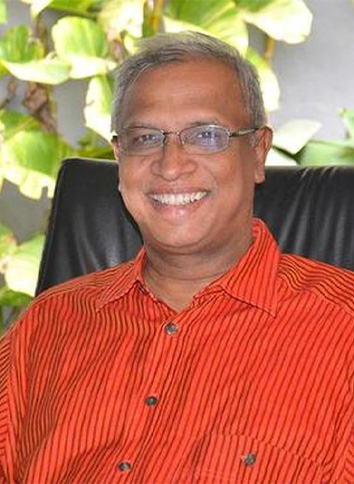
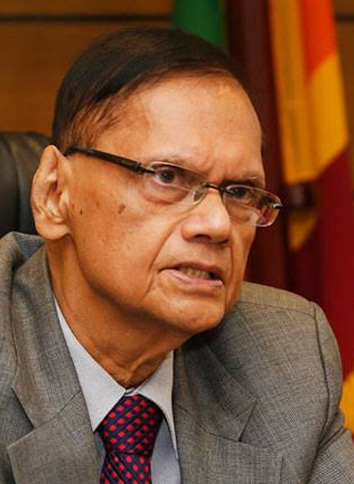
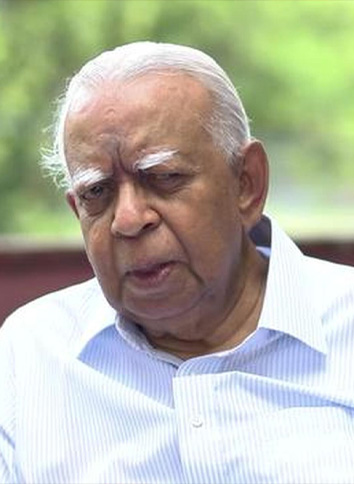
The film includes constitutional scholars such as Rohan Edrisinha and G.L. Peiris, civil society leaders such as Dr. Paikiasothy Saravanamuttu and Mario Gomez, Tamil political leaders such as R. Sampanthan, M.A. Sumanthiran, and V. Anandasangaree, academics such as Sharika Thiranagama, Dr. Devanesan Nesiah, Dr. Vasuki Nesiah, Henry Steiner, and Roberto Unger, and international figures such as Norwegian peace facilitator Erik Solheim, law professor Steve Kanter, former USAID senior official Larry Garber, former National Democratic Institute President Ken Wollack, and former Canadian Minister of National Defence David Collenette. It includes Neelan’s family, who knew him as a brother, father, and friend. It also includes archival footage of Sri Lankan State leaders such as Chandrika Kumaratunga and Lakshman Kadirgamar.
Just as importantly, the documentary gives space to the LTTE’s own perspective. It includes archival video footage of, and statements from, LTTE leader Velupillai Prabhakaran and the movement’s chief ideologue and negotiator, Anton Balasingham. For example, the film sets out Prabhakaran’s own stated reasons for breaking the ceasefire with the Kumaratunga Government in April 1995, including his claim that the Government had failed to lift the economic embargo and other restrictions causing enormous suffering for Tamil civilians. The documentary also features my interview with former pro-LTTE Member of Parliament M.K. Eelaventhan, who portrays Neelan and his father as collaborators, along with archival footage of pro-LTTE figure Kumar Ponnambalam. I made a deliberate choice never to put words in anyone’s mouth. Every side speaks in its own recorded words, and viewers can see how other witnesses respond on the strength of the record.
Alongside the interviews, I relied heavily on primary sources, especially Neelan’s own parliamentary speeches and the text of the constitutional reform proposals he co-authored. Grounding the film in what people actually said and wrote allowed the evidence to speak rather than my opinions. In a way, this approach reflects the spirit of the institutions Neelan built. ICES was created as a place where competing ideas could be aired and debated with respect, and I wanted the documentary to offer viewers something similar. My goal was not to tell viewers what to think, but to give them enough context to understand why Neelan was admired by some and attacked by others, and to reach their own conclusions about which account the record supports.
What do you hope Sinhalese, Tamil, and Muslim audiences take away from watching this documentary?
Above all, I hope every community in Sri Lanka comes away believing that a just and lasting peace is possible through dialogue and inclusive governance. Neelan’s vision was never for one group alone. He wanted a constitutional framework that protected all of Sri Lanka’s communities, Sinhalese, Tamils, Muslims, Burghers, and others, so that no one would have to depend on the goodwill of whoever happened to be in power.
For Sinhala audiences, I hope the film eases some of the fear that has long surrounded federalism. As Rohan Edrisinha explains in the documentary, the Sinhala language has historically blurred the distinction between ‘unitary’ and ‘united,’ and that confusion helped turn a segment of public opinion against the Kumaratunga Government’s constitutional reform proposals, even though they explicitly described Sri Lanka as an indissoluble union. I hope viewers see that power-sharing is not a step towards division but a way of holding the country together.
For Tamil audiences, I hope the film challenges the traitor narrative and shows Neelan for who he was: one of the community’s most principled and effective advocates, who fought for Tamil rights through constitutional reform rather than with a gun. For Muslim audiences, I hope it shows that his framework was designed to protect every minority, and that he took their concerns seriously. On the issue of the Eastern Province, Dr. Tiruchelvam insisted that “there is clearly a need to have meaningful and adequate institutional arrangements for the Muslims there if we are to evolve a durable solution”. He considered several options, including proportionate Muslim representation in the Legislature and Executive, equitable sharing of land, development, and educational resources, and the possibility of devolving power to a contiguous Muslim area. A constitutional settlement built on his principles would safeguard their rights as well.
Across all communities, I hope viewers see that Neelan built institutions that belong to everyone, and that they take pride that a Sri Lankan helped safeguard democratic transitions abroad. And I hope they recognise how much was lost when his work was cut short, and how much could still be gained by returning to it.
What was the research process like when putting together the documentary? And what was the most challenging aspect of documenting such a politically sensitive and historically consequential subject?
The research took many years. It involved reading Neelan’s parliamentary speeches and published writings, studying the constitutional reform proposals he co-authored and earlier reform efforts in detail, and gathering archival footage of Neelan and the political figures of his era. Much of that reading was possible because the International Centre for Ethnic Studies (ICES) did a great job preserving and publishing many of his writings and texts of his speeches. Without the efforts undertaken by ICES, much of what he said and wrote might have been lost, and the film would have been far poorer for it. The archival work also included footage and public statements from every side of the conflict. It also meant tracking down and interviewing people across several countries, from family members and former colleagues in Sri Lanka to scholars at Harvard, Stanford, and New York University.
In Sri Lanka, I interviewed political leaders who worked alongside Dr. Tiruchelvam, including Professor G.L. Peiris, the former Minister of Constitutional Affairs who co-authored the 1995 proposals with him. I also interviewed Tamil political leaders who worked alongside Dr. Tiruchelvam, including the late R. Sampanthan, former Leader of the Opposition, who spoke with Neelan just minutes before his assassination, V. Anandasangaree, Leader of the Tamil United Liberation Front, and M.A. Sumanthiran, former Member of Parliament for the Tamil National Alliance.
To document his work as an institution builder, I spoke with people connected to the International Centre for Ethnic Studies and the Law and Society Trust, including Mario Gomez in Colombo. Because the documentary also covers his international legacy, I interviewed people who worked with him abroad. Larry Garber, a former senior American USAID official, Ken Wollack, former President of the National Democratic Institute, and David Collenette, former Canadian Minister of National Defence, could all speak to his role in observing Chile’s 1988 plebiscite. Steve Kanter, Emeritus Dean and Professor of Law at Lewis & Clark Law School in the United States, served with him on the international panel that reviewed Kazakhstan’s draft constitution. Some of those interviews took years to arrange.
The research also produced surprises. One of the most striking was how often the documentary record contradicted LTTE propaganda about him. The LTTE claimed he was silent about Tamil suffering, but texts of his parliamentary speeches show the opposite, as he repeatedly condemned abuses against Tamil civilians. I was equally struck by the breadth of his work. His election monitoring and his work on Kazakhstan’s draft constitution showed that his commitment to minority rights within democratic frameworks was a universal principle and not just a local strategy.
The most challenging part of making this documentary was to fit Neelan’s enormous legacy within a single documentary. One of the reasons why the documentary is nearly two-and-a-half hours long is because Tiruchelvam achieved an extraordinary amount in 55 years, from founding lasting institutions and shaping constitutional reform at home to monitoring elections and advising on constitution-making abroad, and there was a vast amount of ground to cover.
I chose to begin with his personal story, especially the influence of his mother and father, before moving into his institutional, constitutional, and international work. Navigating the sensitivity of the subject was also difficult. Some people were reluctant to speak, and others held strong views against him. Presenting the perspectives of all sides fairly, including those of the people who opposed and ultimately killed him, while staying faithful to the evidence, was the hardest and most important part of the work.
You interviewed individuals who knew or worked with Neelan Tiruchelvam. Was there an interview that particularly changed your understanding of his personality or political convictions?
The interview with Erik Solheim, the Norwegian peace facilitator, stands out. Solheim recounted that Anton Balasingham told him Neelan was killed by the LTTE because they viewed him as a tool of the Government, and that the LTTE had warned Neelan to leave the country before his death. It confirmed that Neelan knew the danger he faced and chose to stay and continue his work anyway. His belief in a democratic solution was not abstract. It was something he was willing to risk his life for.
Solheim also showed me how forward-looking Neelan was. Although Neelan was working with the Government, he fully understood, in Solheim’s words, “that peace could never ever happen without the Tamil Tigers,” and he strongly advocated third-party involvement in a peace process between the Government and the LTTE. What I found remarkable was that when Solheim met him in 1999, Neelan was “extremely supportive, trying to encourage us to come in as a third party, but he didn’t know that we already were”. Norway’s early involvement was so secret that, according to Solheim, only President Kumaratunga and Foreign Minister Lakshman Kadirgamar knew of it in Colombo. Norway’s role became public only after Neelan’s death, and Norway went on to broker the 2002 Ceasefire Agreement between the LTTE and the Sri Lankan Government. Neelan had seen the need for that role before almost anyone else.
Other interviews revealed the man behind the politics. His brother Vasudevan was deeply genuine and authentic. In his interview I saw raw emotion and the love he still holds for his older brother. “We haven’t coped with [the assassination] well yet,” he told me. Vasudevan told me that his brother Neelan was always there for the family. Vasudevan also expressed to me his disappointment that the Tamil community did not give Neelan the recognition and respect he deserved. Vasudevan also shared a childhood memory of Neelan playfully declaring himself a “Bodhisattva,” which in hindsight seems almost prophetic for someone who devoted his life to peace. In this documentary, Neelan’s university roommate, Arum Kandiah, described Neelan as someone who was humble despite his privileged upbringing and who treated everyone as an equal regardless of social status.
One side of Neelan that did not make the final cut of the documentary, but that I was delighted to discover, was how playful and full of humour he could be. That surprised me and moved me, because he lived surrounded by so much violence and death, and he lost so many of his democratic TULF colleagues to assassination by the LTTE. Dr. Vasuki Nesiah, who worked with him at ICES, told me how much he loved being playful with children. When Vasuki brought her young daughter to ICES, Neelan would try to impress her by playing nursery rhymes on his computer. Whenever the little girl asked for a song he didn’t have, he would find it and have it ready by her next visit. On another occasion, at a reception following a conference on federalism in Delhi, Neelan picked up Vasuki’s daughter, then about two years old, and carried her around a room full of legal luminaries from across India. Neelan convinced her that the whole reception was a party in her honour. As Vasuki put it, he had a “human humbleness that made it a pleasure to work with him”.
Vasuki also described how Neelan insisted on the need for a pluralism of democratic Tamil voices. As she says in the film, “he basically made an argument for why there needs to be pluralism within the Tamil community about a range of different kinds of opinions,” and he engaged with people sympathetic to the LTTE “even when he knew that he was on their hitlist”. She described that openness as a “deeply organic part of him.” These personal recollections helped me see that Neelan’s political commitments grew out of genuine character. The warmth, humour, openness, and fairness people saw in him privately were the same qualities that shaped his public vision for Sri Lanka.
Finally, the poet Indran Amirthanayagam gave the film its closing note. The film closes with a beautiful elegy Amirthanayagam wrote for Neelan and it felt like the most fitting way to conclude the documentary. After hours of history, argument, and testimony, the film ends with poetry, a reminder that what was lost was not only a political vision but a human being who was deeply loved.
In the documentary’s end credits, you give special thanks to D.B.S. Jeyaraj. Could you explain how his writings influenced your understanding of Sri Lanka’s ethnic conflict and, in particular, Neelan Tiruchelvam’s legacy?
Quite simply, without D.B.S. Jeyaraj, this documentary would not exist. His writing was my introduction to Neelan Tiruchelvam’s work and to the significance of the 1995 proposals. He wrote about Neelan with clarity and honesty at a time when few others in the Tamil media were willing to do so.
His influence on me went beyond Neelan. He was the first Sri Lankan Tamil journalist I encountered with the moral courage to expose atrocities committed within his own community, including the LTTE’s killings of Tamil dissidents. Doing that carried real personal risk, and it set him apart. His work showed me that standing up for justice means holding everyone accountable, including those who claim to speak for your own people. That moral framework has shaped my own writing, my activism, and the way I approached this film.
I have been fortunate to correspond with D.B.S. Jeyaraj personally, conveying to him the deep influence he had on my moral and political outlook as it relates to Sri Lanka’s ethnic conflict, so thanking D.B.S. Jeyaraj in the credits was the least I could do to acknowledge how much the film owes to his work.
A few months ago, on the 27th anniversary of Neelan Tiruchelvam’s assassination, you released a Director’s Cut featuring previously unseen interview footage. What motivated you to revisit the original documentary and what new material did you include in the Director’s Cut?
Several things came together that made a Director’s Cut necessary. The first was feedback from audiences. After a number of screenings, some viewers, particularly those who were not Sri Lankan, told me they would have preferred English subtitles. The original release a year earlier did not have them. Because the film features speakers from many different backgrounds, subtitles make it far easier for international audiences to follow every word. Since one of my central goals has always been to bring Neelan’s story to audiences well beyond Sri Lanka, I included English subtitles in the Director’s Cut.
The second, and perhaps most significant, reason was new footage of Professor G.L. Peiris, which had not been available to me before. Professor Peiris is a former Minister of Constitutional Affairs who co-authored the 1995 proposals with Neelan. When I interviewed him for this documentary years earlier at his home in Colombo, he was the Chairperson of the Sri Lanka Podujana Peramuna (SLPP), the party led by the Rajapaksas. The SLPP was not actively open to devolving power or reforming the unitary state, and Mahinda Rajapaksa had been an opponent at the time of the Kumaratunga Government’s proposals, the very proposals Professor Peiris co-authored. He still wanted to pay tribute to his friend and former colleague, so he agreed to the interview, but he spoke only in limited detail about what the proposals actually contained. I suspect that, given his position at the time as Chairperson of such a party, it was not politically advantageous for him to discuss them in depth during my interview with him.
Years later, with the Rajapaksas out of power, Professor Peiris was invited to deliver the S.J.V. Chelvanayakam Memorial Oration at Jaffna Central College, marking the 49th anniversary of the death of the Founder of the Federal Party. There, for the first time in a very long time, he went into great depth about the substance of the 1995 proposals. His speech was captured on film. Including it in the Director’s Cut gives viewers a detailed account of the proposals from one of their co-authors, something the original release could not offer.
Third, after the original release I felt there were key lines from other speakers that brought greater understanding about Neelan’s legacy that I had wanted to include but did not get the chance to. The Director’s Cut restores those moments.
Finally, I noticed some minor technical issues in the original release that I wanted to correct.
For all these reasons, I felt a Director’s Cut was necessary. The 27th anniversary of Neelan’s assassination felt like the right moment to release it, marking the anniversary not only with remembrance but with a fuller and more complete version of the film.
My hope is that it gives both returning viewers and new audiences a deeper understanding of who Neelan was, what the proposals he helped formulate actually contained, and why his work still matters.
You have made the documentary freely available online. Why was it important to you that audiences should be able to access the film without financial barriers?
From the start, ‘Neelan: Unsilenced’ was a non-profit educational project. Its purpose was never commercial. It was meant to inform and to reach as many people as possible. Placing it behind a paywall would have contradicted the whole idea of unsilencing Neelan, because it would have limited who could hear him. It would also have gone against the spirit of his own work. The institutions he built were founded to make knowledge about law, human rights, and ethnic relations available to the public and to get ordinary citizens engaged in those debates. Making the film free felt like a natural extension of that vision.
Timing also mattered. With Sri Lanka once again at a constitutional crossroads, I wanted the film to serve as both a tribute to Neelan and a call to action. If citizens are going to hold their government accountable, they need to understand what meaningful constitutional reform actually looks like and why it affects their daily lives, from who controls schools, hospitals, and policing to whether minority communities have real protection under the law.
Free access also reaches the audiences who need the film most. Students, young people in Sri Lanka, and members of the diaspora who may never have heard Neelan’s name can watch it without cost. Because the film also covers his international work, it speaks to viewers far beyond Sri Lanka who are interested in democratic transitions and constitution-making. It can be shared in classrooms, community groups, and online discussions without barriers. For a film about a man who believed that knowledge and dialogue could overcome division, making it freely available felt like the only right choice.
If a young Sri Lankan watches ‘Neelan: Unsilenced’ without having any prior knowledge of Neelan Tiruchelvam, what is the one thing you hope they learn?
I hope they learn that there was always another path. Even in the darkest years of the war, when violence seemed like the only language anyone understood, a Tamil leader showed that the rights and dignity of every community could be secured through democratic and constitutional means within a united Sri Lanka.
At the heart of that path was Neelan’s deep belief in the sanctity of human life. In fact, you hear and see him say those very words in the documentary. Shortly before his assassination, he called on both sides of the civil war to recognise “the sanctity of human life,” and he refused to accept that political killings and destruction were simply an unavoidable part of Sri Lanka’s history. He held the State and the LTTE to the same standard, opposing violence whoever committed it and whatever cause it claimed to serve.
The constitutional path Neelan offered was not naive or unrealistic. It was carefully designed by some of the country’s finest legal minds, it came remarkably close to succeeding, and even the LTTE’s own chief ideologue Anton Balasingham later acknowledged its merit. It failed not because the ideas were flawed, but because of political rivalry between the SLFP and UNP and the violence of the LTTE who feared it. Young Sri Lankans should know that the path of peaceful, democratic constitutional reform that Neelan championed still exists, and that it is theirs to take up. The future of the country does not have to repeat its past.
What do you hope the long-term impact of ‘Neelan: Unsilenced’ will be?
In the long term, I hope the film restores Neelan Tiruchelvam to his rightful place in Sri Lankan history. I want him to be remembered not through the lens of propaganda, but as one of the country’s most important constitutional thinkers, one of its great institution builders, and one of its bravest advocates for peace.
When I was interviewed about the documentary by Canadian graduate students of Sri Lankan Tamil origin at the University of Toronto’s Munk School of Global Affairs, I described Dr. Tiruchelvam as the Martin Luther King Jr. of Sri Lanka, and I stressed that this isn’t hyperbole. Both men spoke out against militarism and advocated for peaceful coexistence among their nation’s diverse communities, and both were killed by their own countrymen for that very reason. Both also sought to work with their national governments to improve the welfare of their own communities.
Dr. King worked with President Lyndon B. Johnson to usher in the Civil Rights Act and the Voting Rights Act, both of which tremendously advanced the rights of Black Americans. Dr. Tiruchelvam worked with President Chandrika Kumaratunga’s Government to help formulate the boldest and most progressive constitutional reform proposals in Sri Lanka’s history. Because of that willingness to work with their governments, both were maligned as traitors by the most reactionary elements of their own communities. Dr. King was derided as an “Uncle Tom” by figures such as Malcolm X, and Dr. Tiruchelvam was branded a traitor by extreme Tamil supporters of Prabhakaran. Sri Lanka, with its unresolved ethnic, political, and constitutional grievances, needs the vision of its Martin Luther King Jr. more than ever before.
I hope the film becomes a lasting educational resource for students, scholars, policymakers, and ordinary citizens who want to understand both the conflict and the alternatives that existed. Because it presents the perspectives of all sides, I hope it can also serve as a shared starting point for honest conversations across communities that have long told very different stories about the war.
I also hope the film renews appreciation for the institutions Dr. Tiruchelvam left behind. The International Centre for Ethnic Studies and the Law and Society Trust have carried his work forward for more than four decades, promoting pluralism, human rights, and informed public debate. If the film encourages more people to engage with and support these institutions, and to build new ones in the same spirit, that would be a meaningful part of his legacy living on.
I hope it contributes to informed public pressure for real constitutional reform as well. Sri Lanka has a rare opportunity right now, and I want the film to help people understand what a just and inclusive constitution could look like, one that reflects the principles Neelan championed. He described devolution as “critical to resolution of the most vexed problem facing Sri Lanka, the national question,” and insisted that “any approach to this problem must be predicated on the inextricable link between peace, ethnic reconciliation and development in Sri Lanka”. Those words remain as true today as when he said them. For the Tamil diaspora in particular, I hope the film encourages support for democratic voices and realistic reform rather than maximalist positions that leave no room for compromise.
Beyond Sri Lanka, I hope the film secures recognition of Neelan’s international legacy, which has been even less known than his work at home. His pioneering election monitoring across the Global South and his input into Kazakhstan’s draft constitution showed that he saw power-sharing, free elections, and minority protection as universal principles. If the film inspires even a few people, in Sri Lanka or anywhere in the world, to believe that peaceful coexistence through democratic institutions is possible and to work for it as he did, then it will have honoured his legacy.






Leave a comment