
By The Pulseline News Desk
Sri Lanka’s inflation continued its upward trend in July, with rising food prices pushing the cost of living higher and adding fresh pressure on households just as the country seeks to consolidate its fragile economic recovery.
The latest figures released by the Department of Census and Statistics show that the Overall Rate of Inflation, measured by the Colombo Consumer Price Index (CCPI) on a year-on-year basis, rose to 7.3% in July 2026, up from 6.8% in June.
The increase marks another month of accelerating inflation, suggesting that price pressures are gradually re-emerging after the sharp disinflation experienced during the past year.
Food prices lead the increase
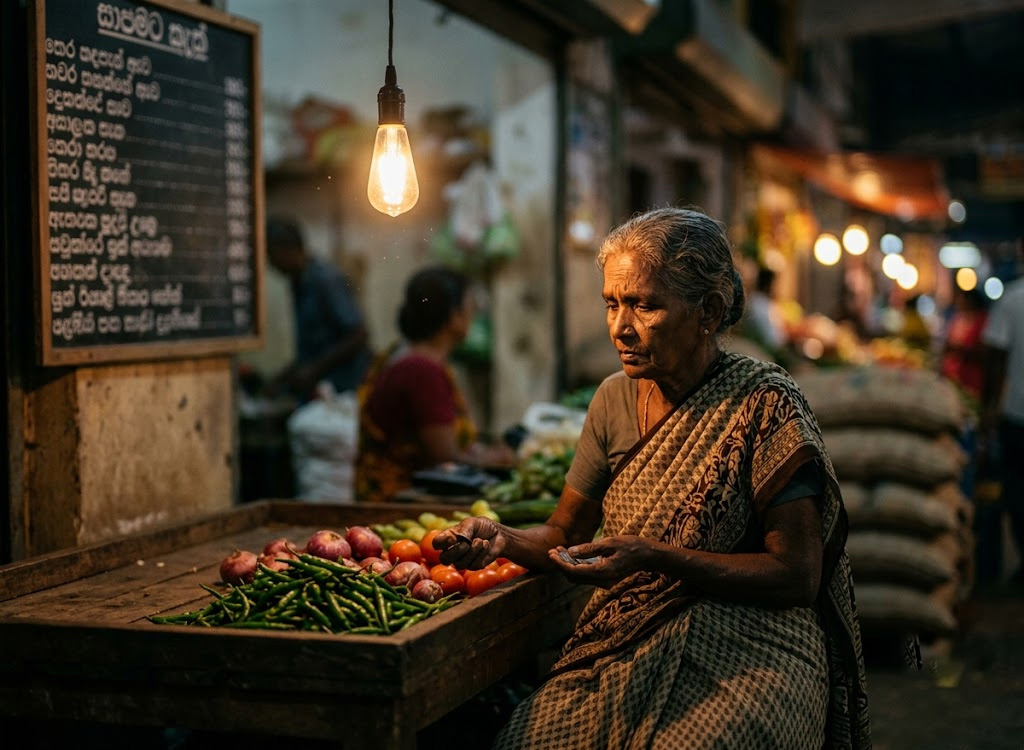
The biggest contributor to the latest rise was food inflation, which climbed sharply to 6.3% in July, compared with 3.6% in June.
The jump indicates that essential household items are becoming more expensive, a development that is likely to be felt most acutely by low- and middle-income families, for whom food accounts for a significant share of monthly expenditure.
While the Department has yet to provide a detailed breakdown of individual price movements, the latest figures suggest that food costs have become the principal driver of overall inflation.
Mixed picture beneath the headline
Despite the overall increase, non-food inflation eased slightly, falling to 7.8% in July from 8.4% a month earlier.
The decline points to moderating price pressures in sectors outside food, although non-food inflation remains elevated enough to keep overall consumer prices well above recent levels.
The contrasting trends underscore that inflationary pressures are becoming increasingly concentrated in essential goods rather than across the broader economy.
Fresh challenge for economic managers
The latest data presents another challenge for policymakers attempting to balance economic recovery with price stability under Sri Lanka’s ongoing reform programme.
Although inflation remains far below the crisis-era peaks seen in 2022, its steady rise in recent months is likely to intensify concerns over the cost of living, particularly if food prices continue to outpace wage growth.
For the Government, the renewed acceleration in inflation also complicates efforts to convince the public that economic stabilisation is translating into tangible relief for ordinary citizens.
With household budgets already under strain, the trajectory of food prices in the coming months is expected to be closely watched as a key indicator of whether inflationary pressures are becoming entrenched once again.













Leave a comment