
By The Pulseline News Desk
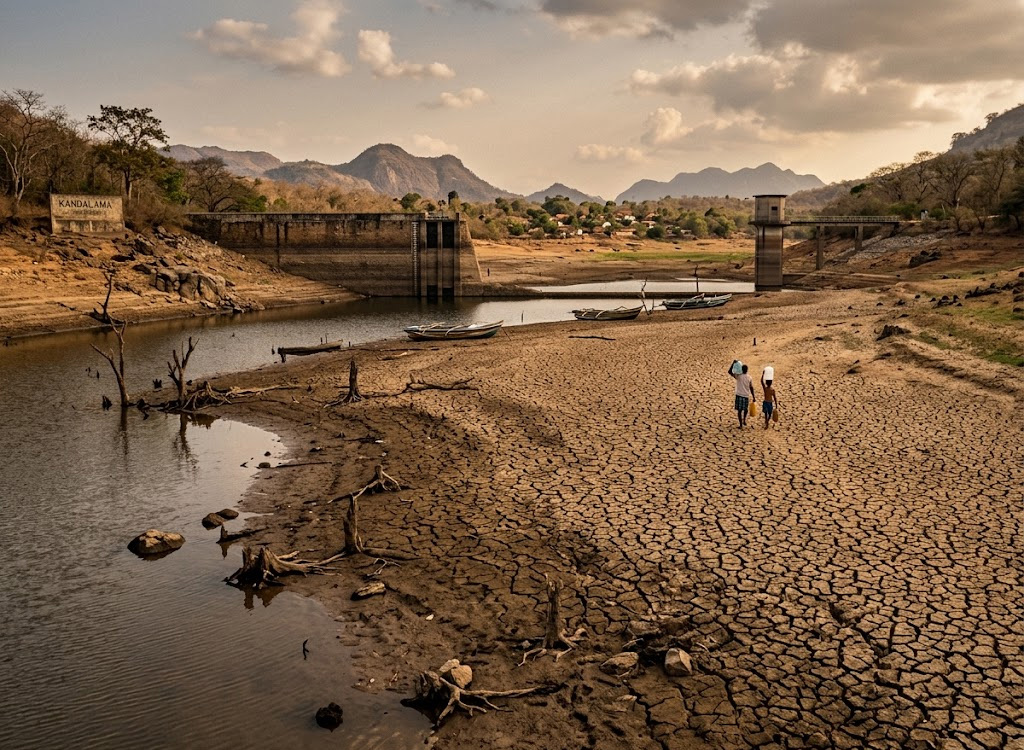
Sri Lanka’s major reservoirs are coming under increasing pressure as dry weather persists across several parts of the country, with the latest figures showing that the 74 major reservoirs held only 37.2% of their combined effective storage capacity as of August 16.
According to Director of Irrigation (Water Management) Eng. H.M.P.S.D. Herath, the reservoirs held around 1.106 million acre-feet of effective water storage, compared with a combined effective capacity of 1,248,382 acre-feet.
The figures, covering the period from August 10 to 16, highlight a marked variation in water availability across districts and individual reservoirs. While some reservoirs remain close to full capacity, several others have fallen to critically low levels, raising concerns over drinking water supplies and the potential impact of prolonged dry conditions on agriculture and other water-dependent sectors.
Kurunegala has recorded the highest district-level effective storage at 76.6%, followed by Puttalam at 67.8%, Kandy at 63.3% and Monaragala at 59.5%.
At the individual reservoir level, Deduru Oya was at 98.2% of its effective storage capacity, while Wan Ela stood at 98% and Rajangana at 86%.
However, the picture is sharply different in several other reservoirs. Manankattiya was at just 2.8% of effective capacity, Muruthawela at 2.4% and Ethimale at 5.7%.
Despite the uneven distribution of water resources, none of the 74 major reservoirs was reported to be spilling during the week under review.
The situation has prompted the Government to prepare a special programme to provide drinking water to communities in districts already experiencing the effects of the dry spell.
The President’s Media Division has said a drinking water distribution programme would be implemented in affected districts including Batticaloa, Monaragala and Ampara.
The decision was taken at the third meeting of the Special Ministerial Sub-Committee and Officials’ Committee appointed to address the impacts of the El Niño climate phenomenon. The meeting was held at the Presidential Secretariat under the chairmanship of Environment Minister Dammika Patabendi.
Under the proposed programme, water distribution will be coordinated through the respective District Secretaries, while relevant government officials will be informed of the necessary arrangements.
The authorities are also preparing for the possibility that the dry conditions could persist.
The committee has discussed measures that may need to be introduced if rainfall remains inadequate and groundwater levels decline further, a development that could place additional pressure on communities already dependent on alternative sources for drinking water.
The concern extends beyond household water supplies. Action plans submitted by the plantation, agriculture, wildlife and water resources management sectors were reviewed at the meeting, given their vulnerability to prolonged dry conditions.
Agriculture in particular remains closely linked to reservoir availability, while declining water levels could also affect livestock, ecosystems and plantation activities if the dry spell intensifies.
The committee has also considered weather forecasts issued by the Department of Meteorology and has discussed measures to safeguard sectors that could be affected by the El Niño-related climate conditions.
Authorities have meanwhile stressed the importance of keeping the public informed about developments associated with El Niño, including changes in weather patterns, water availability and possible measures that may be required in affected areas.
The current reservoir figures do not indicate an immediate nationwide water crisis, but the wide disparity between districts and reservoirs underscores the uneven nature of the dry spell.
With several reservoirs already recording very low storage levels, the Government’s immediate priority is likely to be ensuring drinking water for vulnerable communities while closely monitoring rainfall, groundwater levels and reservoir inflows.
The coming weeks will therefore be critical. If dry conditions continue and groundwater reserves decline, the pressure on the Government to expand water distribution and introduce further conservation measures is likely to increase.
For Sri Lanka, the issue is not simply how much water remains in its reservoirs, but where that water is located and whether it can meet the needs of communities and economic sectors facing increasingly dry conditions.









Leave a comment