
By The Pulseline News Desk
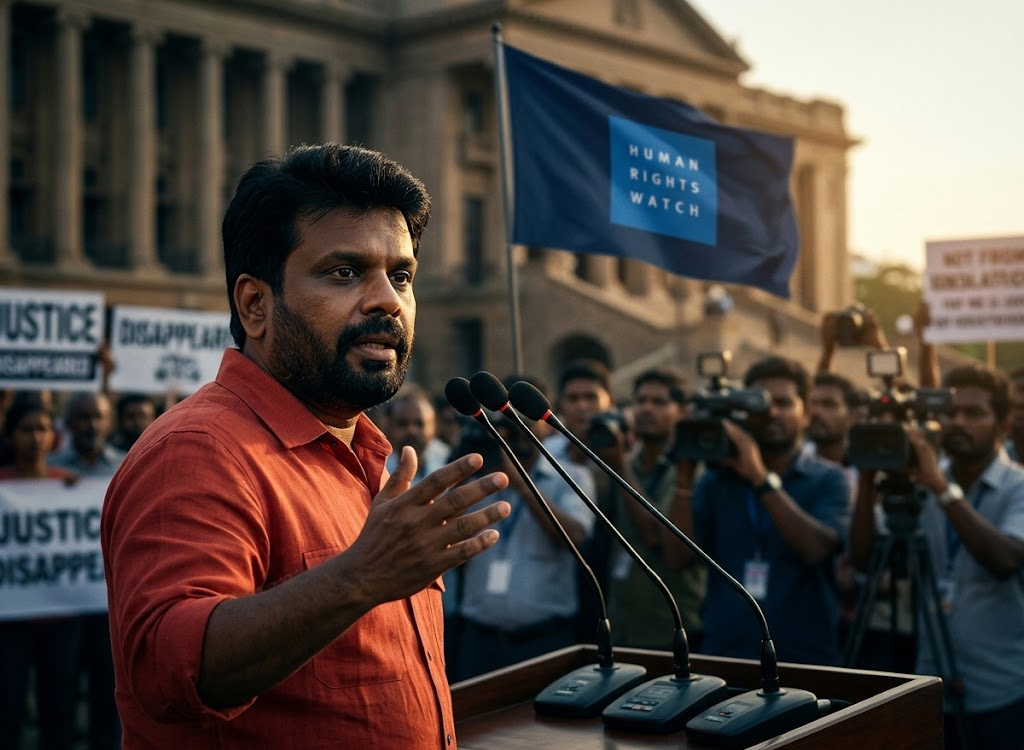
Sri Lanka’s long-running struggle to hold perpetrators of grave human rights abuses accountable is once again under international scrutiny, with Human Rights Watch (HRW) warning that the Government of President Anura Kumara Dissanayake (AKD) has made only limited progress in delivering justice for past crimes.
In a 49-page report released on September 1, HRW has said the Government’s prosecution of emblematic cases has lagged, raising concerns about whether the country is finally prepared to break with decades of impunity.
The report, titled “Not Genuine with Justice: Sri Lanka’s Lack of Will to Prosecute Past Abuses,” has examined seven prominent cases involving killings, enforced disappearances and other grave abuses, including cases where the AKD administration has made some progress since taking office.
HRW has said the Government needs to demonstrate greater determination in pursuing accountability and has urged United Nations officials and member states at the UN Human Rights Council (UNHRC) to press Colombo to take credible action.
“The Dissanayake administration needs to break from past government practice of delaying and denying justice for grave abuses,” Lucy McKernan, HRW’s UN Human Rights Council director has said.
The criticism presents a fresh challenge for a Government that came to power promising a break from the political practices of the past, including the culture of impunity surrounding serious human rights violations.
Some cases move, others remain frozen
The HRW assessment is not entirely negative.
The organisation has acknowledged progress in several investigations that had previously stalled or been derailed under successive administrations.
These include investigations into the 2009 assassination of newspaper editor Lasantha Wickrematunge, the 2010 enforced disappearance of journalist Prageeth Ekneligoda, and the disappearance of 11 young men who were allegedly abducted and held for ransom by naval intelligence personnel in 2008 and 2009.
The investigation into the 2019 Easter Sunday bombings has also advanced since AKD had assumed office.
The attacks killed 269 people and have remained one of Sri Lanka’s most politically sensitive unresolved security and accountability questions.
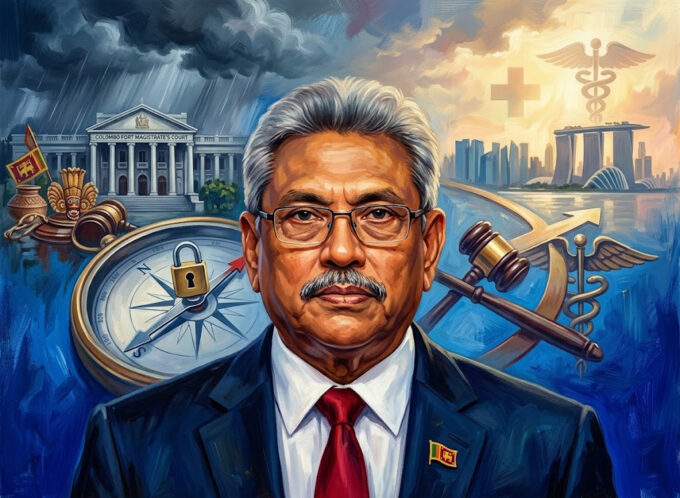
In February 2026, police arrested former military intelligence chief Suresh Sallay over allegations linked to the attacks. In June, a court imposed a foreign-travel ban on former President Gotabaya Rajapaksa and two former military intelligence officers in connection with the continuing investigation.
For HRW, however, such developments are insufficient to demonstrate a broader shift towards accountability.
The cases that remain unresolved
Some of the most politically sensitive cases remain largely stagnant.
HRW has highlighted the 2006 killing of five Tamil students in Trincomalee and the massacre of 17 mostly Tamil employees of the French aid organisation Action Contre la Faim in Muttur.
Two decades after the Muttur killings, no one has been arrested or prosecuted, according to the organisation.
The report has also raised questions over the fate of thousands of people who had disappeared during Sri Lanka’s conflicts.
Among the most recent developments is the excavation of a mass grave at Chemmani near Jaffna, where investigators have recovered the remains of 582 people.
But the discovery of remains is only the beginning. “Excavations alone will not provide justice,” a family member of a disappeared person in Jaffna had told HRW, questioning whether those responsible would ultimately be held accountable.
The issue goes to the heart of Sri Lanka’s unresolved post-war trauma: finding remains can establish evidence of what happened, but without identification, investigation and prosecution, families are still left without answers.
A familiar cycle of commissions
Sri Lanka’s record provides ample reason for skepticism.
Successive governments have established more than 10 commissions since the 1990s to investigate human rights violations and disappearances.
Yet few have translated their findings into successful prosecutions, while thousands of families have continued to search for information about missing relatives.
Previous administrations have either made little progress or, according to HRW, intervened to obstruct criminal investigations.
The AKD Government therefore faces a particularly important test.
It came to power promising systemic political change and that promise now extends beyond corruption and economic governance to whether the State is prepared to confront its own past.
UN mechanism remains a point of contention
Another major concern raised by HRW is the Government’s position on international accountability mechanisms.
The AKD administration has not accepted the Sri Lanka Accountability Project, established by the UNHRC to collect and preserve evidence of serious human rights violations.
The Government has also yet to establish the promised Directorate of Public Prosecution, which was intended to provide an independent mechanism for prosecuting past abuses.
Instead, HRW has said the administration has continued to support institutions created by previous governments, including the Office on Missing Persons (OMP) and Office for Reparations (OR).
Many victims’ families have rejected these mechanisms, arguing that they risk becoming substitutes for criminal justice rather than pathways towards it.
This leaves the Government facing a difficult balancing act where pursuing domestic accountability while responding to international demands for stronger mechanisms to investigate and prosecute alleged abuses.
The political cost of unfinished justice
The question is no longer simply whether Sri Lanka should address the crimes of its past.
It is whether the NPP Government will be different from the governments that preceded it.
For decades, successive administrations have promised truth, reconciliation and accountability, only for investigations to stall, commissions to produce limited results and families to remain without answers.
The AKD administration has an opportunity to change that pattern.
But HRW’s latest assessment has suggested that opportunity has not yet been fully seized.
The Government can point to movement in several high-profile investigations as evidence that the old culture of impunity is beginning to change. Yet the continued lack of progress in other emblematic cases, particularly those involving alleged state involvement, remains a serious weakness.
For families of victims, the distinction between an investigation and justice is crucial.
An arrest is not a conviction. An excavation is not an answer. A commission is not accountability.
And a promise of reform is not the same as delivering justice.
Pressure builds ahead of Geneva
The issue is also likely to remain on the international agenda as the UNHRC continues to scrutinise Sri Lanka’s human rights record.
HRW has called on the Council and the Office of the UN High Commissioner for Human Rights to continue monitoring the AKD Government’s progress and press for action to address decades of impunity.
The organisation is effectively challenging the Government to match its rhetoric with action.
“The Dissanayake government should jumpstart its efforts to obtain genuine accountability for the killings and disappearances in the past conflicts,” McKernan has said.
For AKD and the NPP, this is more than another international human rights report. It is a test of the Government’s claim that it represents a fundamental departure from Sri Lanka’s political past.
If the Government cannot deliver credible movement on the country’s most notorious unresolved cases, it risks facing an uncomfortable accusation, which is that the faces in power may have changed, but the State’s reluctance to confront its past has not.








Leave a comment