
By The Pulseline News Desk
Concerns over the quality of medicines supplied to Sri Lanka’s public health system remain in sharp focus, with official data reportedly showing that 39 medicines have already failed quality tests during the first seven months of 2026.
According to the Medical Supplies Division of the Health Ministry, the latest figures indicate that while regulatory surveillance continues, the problem of substandard medicines has not been fully resolved despite heightened scrutiny following the pharmaceutical controversy that gripped the country in 2023.
Of the 39 medicines that failed quality testing this year, 18 were reportedly manufactured in India, while four were produced locally. The remaining products had originated from China, Bangladesh, France, the Netherlands and Ireland.
Health authorities have said the affected medicines have either been withdrawn from use, withheld pending further evaluation, or permanently discontinued, depending on the nature of the quality failure.
The latest figures also reveal the scale of the challenge facing regulators. Since 2017, the Medical Supplies Division has recorded 650 medicine quality failures, highlighting that the issue predates the country’s recent pharmaceutical crisis.
The highest number of failed medicines was reported in 2019, when 96 products did not meet quality standards. Another 86 medicines had failed testing in 2022, indicating that quality concerns have persisted over several years despite changes in procurement practices and regulatory oversight, according to reports.
While health officials maintain that routine laboratory testing is designed to identify defective medicines before they pose widespread risks, each quality failure raises questions about manufacturing standards, procurement procedures and post-market surveillance.
The issue became one of the most controversial public health concerns in Sri Lanka in 2023 after allegations that several substandard medicines had entered the state health system. Reports linking certain pharmaceuticals to severe complications and deaths sparked public outrage, parliamentary investigations and demands for sweeping reforms in drug procurement and regulation.
The controversy also intensified political scrutiny of the National Medicines Regulatory Authority (NMRA) and the Health Ministry, with calls for greater transparency in the approval, procurement and monitoring of medicines supplied to government hospitals.
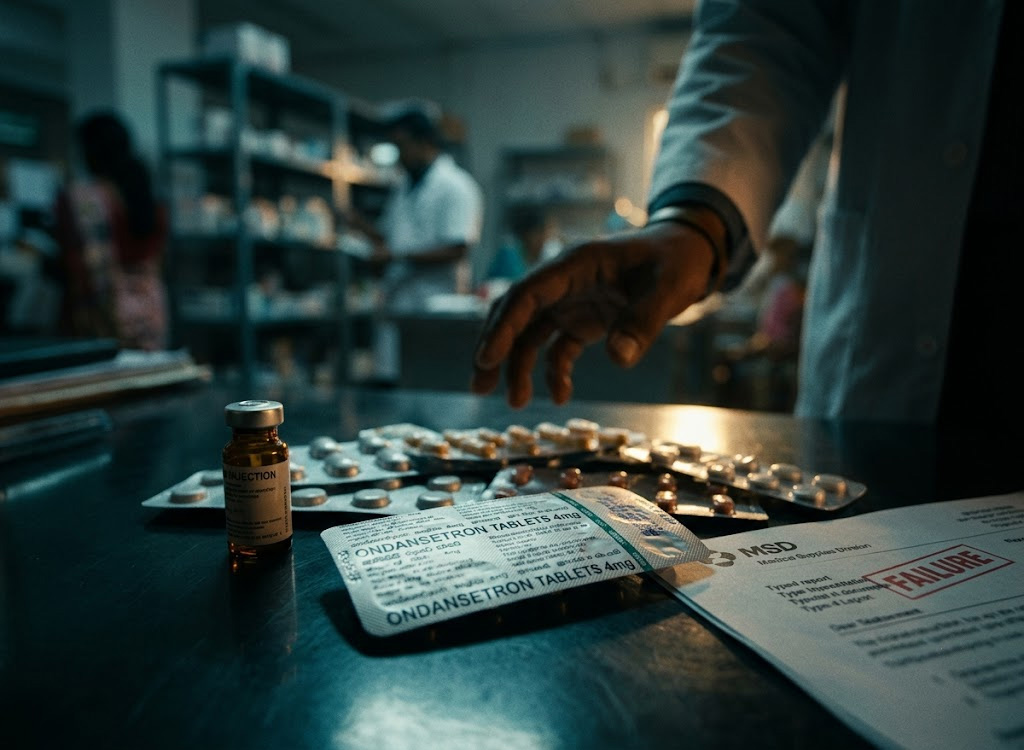
Nearly two years later, the issue has resurfaced following reports of two deaths allegedly linked to complications associated with the anti-nausea drug Ondansetron, which is commonly used to prevent nausea and vomiting, including during surgery and chemotherapy.
Health authorities have stressed that investigations into both incidents are still ongoing and that no final conclusion has been reached regarding the cause of the deaths. Officials have urged the public not to draw premature conclusions until scientific and forensic investigations are completed.
The latest data nevertheless underscores that medicine quality remains a significant challenge for Sri Lanka’s healthcare system. While the detection and removal of substandard medicines demonstrates that surveillance mechanisms are functioning, experts say preventing such medicines from entering the supply chain in the first place remains the greater challenge.
With public confidence in the country’s pharmaceutical regulatory system still recovering from the 2023 crisis, health authorities are likely to face continued pressure to strengthen quality assurance, improve procurement safeguards and ensure greater accountability throughout the medicine supply chain.













Leave a comment