
By The Pulseline News Desk
The British High Commission in Colombo and the Delegation of the European Union (EU) to Sri Lanka have launched a joint solar energy initiative expected to generate 365,000 kilowatt-hours (kWh) of electricity annually while reducing carbon dioxide emissions by approximately 193 tonnes a year.
The project, officially launched on Wednesday (28), introduces approximately 240 kilowatts-peak (kWp) of installed solar power capacity across the British High Commission’s office premises, reflecting efforts to promote renewable energy and environmentally sustainable operations.
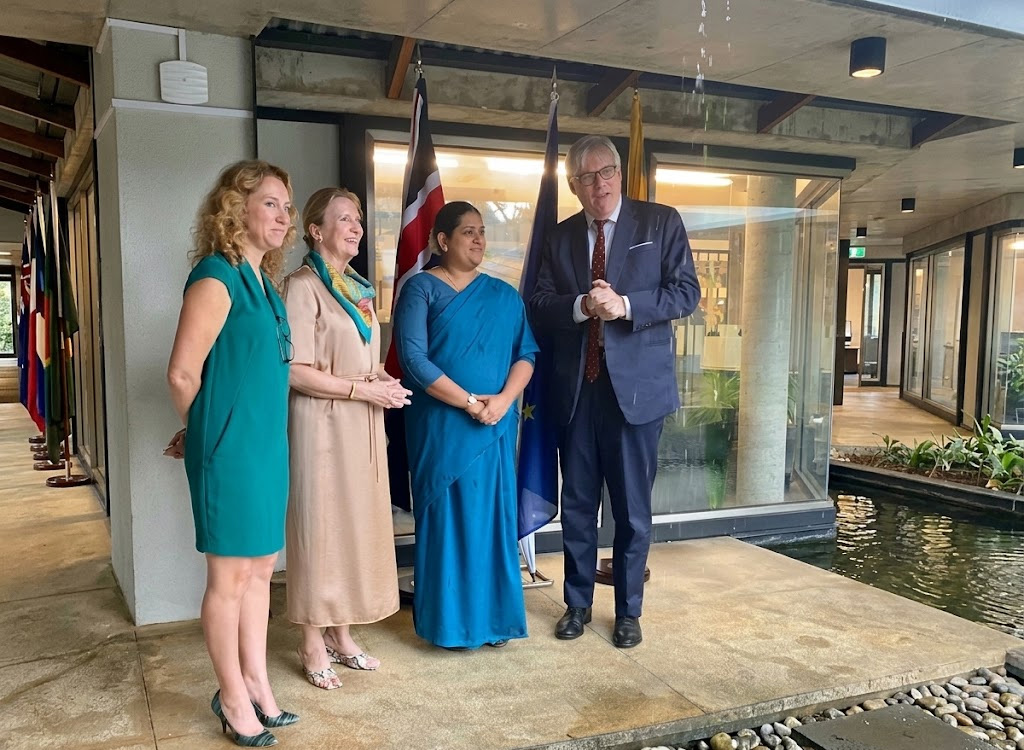
The launch ceremony was attended by Colombo Mayor Vraie Cally Balthazaar, British High Commissioner Andrew Patrick, EU Ambassador-designate Sylvia Hartleif and Deputy British High Commissioner Theresa O’Mahony.
According to the British High Commission, the initiative forms part of a broader programme to reduce its environmental footprint through renewable energy, improved energy efficiency and responsible resource management.
In addition to the solar installation, energy-efficient cooling, lighting and building systems, together with solar water heating, are expected to save approximately 79,200 kWh of electricity annually.
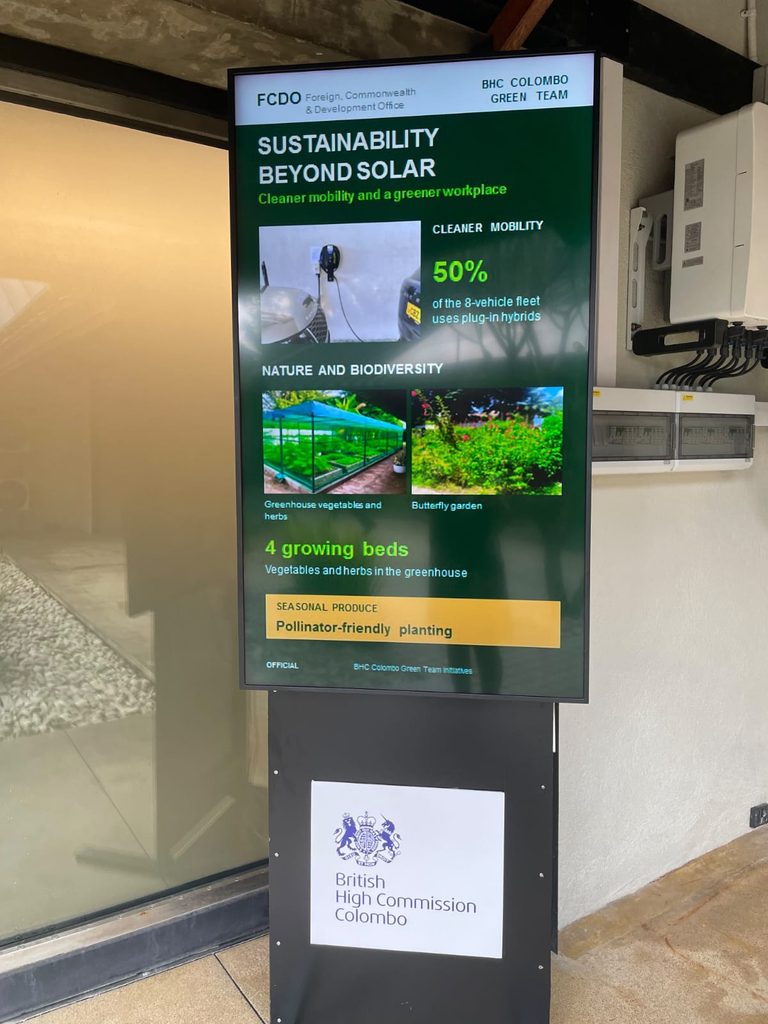
The High Commission has also introduced measures to improve water conservation, transportation and waste management. These include rainwater storage capacity of 10,000 litres, a vehicle fleet comprising 25% plug-in hybrid vehicles, and waste segregation, recycling and composting initiatives that account for approximately 1.13 tonnes of waste annually.
British High Commissioner Andrew Patrick said the project demonstrated the shared commitment of the United Kingdom and the European Union to building a cleaner future through practical cooperation.
EU Ambassador-designate Sylvia Hartleif said the initiative reflected the EU’s broader support for Sri Lanka’s Green Recovery, particularly through the promotion of renewable energy, climate resilience and access to affordable and sustainable energy.
Deputy British High Commissioner Theresa O’Mahony stressed that sustainability extended beyond solar power to include responsible water consumption, waste management and environmentally conscious transportation.
The initiative highlights how diplomatic missions can incorporate renewable energy and resource-efficient practices into their daily operations while contributing to wider environmental objectives.
It also underscores the role of international partnerships in promoting sustainable energy solutions and strengthening efforts to reduce carbon emissions in Sri Lanka.













Leave a comment