

By Vox Civis
Power corrupts, and absolute power corrupts absolutely. There are no exceptions.
It is hard to understand why so many of Sri Lanka’s self-styled political analysts have failed to look beyond the news of the day and connect the dots in the National People’s Power (NPP) Party’s two-plus years in government. Had they done so, the picture would have jolted them into a reality check and perhaps spurred them to halt the nation’s slide toward dangerous authoritarian territory.
To its credit, the NPP has made little effort to hide its ambition of bringing under its control the state institutions normally run by apolitical officials. Ministers and deputy ministers have spoken of state capture at public rallies, alongside talk of holding on to power for the next two decades. Had any other party said such things in 78 years of independence, the opposition would have gone to full political war.
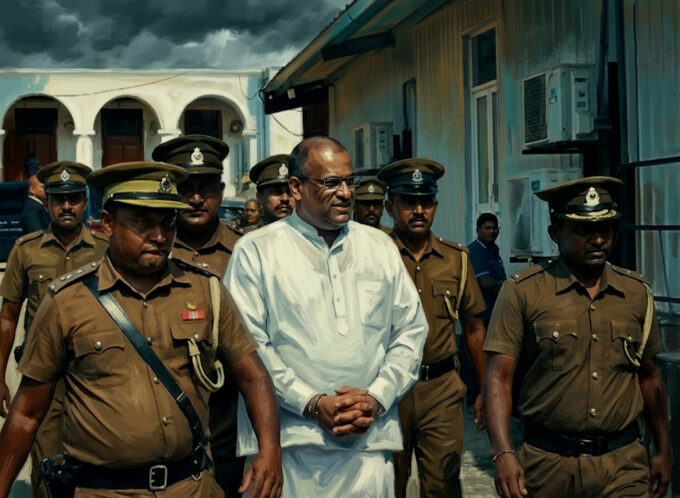
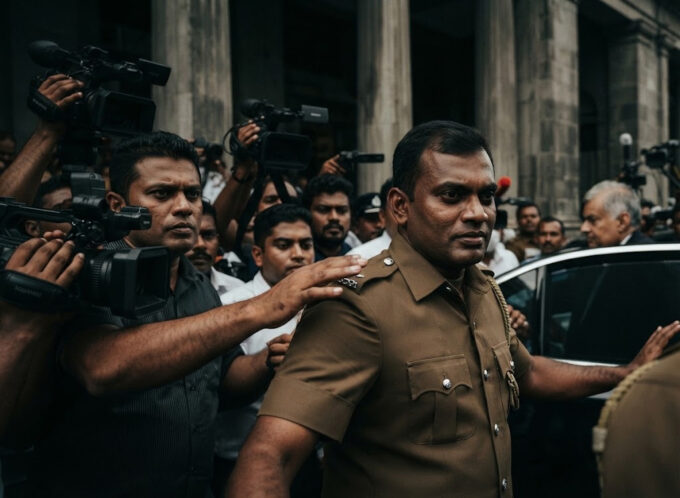
Instead, the NPP government has calmly set about its task. With an all-powerful presidency, a two-thirds parliamentary majority and most local councils, all it needed was a state apparatus amenable to its requirements. Critics allege that it began with the police, the Ministry of Law and Order, the Treasury and the Bribery Commission, placing loyalists in positions once held at arm’s length from politics. The Bribery Commission’s Director General has denied claims of party links, but the pattern of allegation is itself telling.
The judiciary was the last obstacle. The 22nd Amendment raised the retirement age of Supreme Court judges from 65 to 67 and of Court of Appeal judges from 63 to 65. The Bar Association, the Chief Prelates of the three Nikayas, opposition parties and many international organisations all spoke out against it, yet the government pressed ahead. A UN Special Rapporteur on judicial independence also raised concerns. The NPP dominated Parliament passed the measure on September 25. Opponents argued that extending the tenure of sitting judges was an open inducement.
From Hardware to Software
Having systematically installed the hardware, the party now needs the software to run it. That is the best way to read the stream of sweeping new laws introduced at breakneck speed, many seemingly designed to curtail personal freedom. The software is being installed while the opposition and the public are distracted by the mundane daily events.
However, in its eagerness to complete both installations in quick succession, the regime appears to have lost sight of the more pressing problems facing the people. The JVP-NPP configuration seems to have forgotten, in two years, what won it office. It promised a better deal: more money in people’s pockets and more freedom to live as they pleased. Repression and poverty were to be consigned to the past, blamed on the “76-year curse.”
Today those promises have been turned upside down. Little visible effort goes into the economy, while the cost of living continues to strangle the majority. Meanwhile, nearly all the regime’s energy flows into legislation that tightens state control at the expense of personal liberty. These laws are packaged so that ordinary people have little idea what is coming, and the usual watchdogs have raised so many red flags that their warnings risk losing their power to shock.
The anti-corruption episode shows how the pattern works. The Anti-Corruption (Amendment) Bill, gazetted on July 24, drew strong criticism for weakening public access to asset declarations. The President then instructed officials to revise it so that politicians’ declarations remain public. But commentators warned that the version that followed still restricted how declarations could be used, so that a citizen might see a declaration but be unable to speak about what it reveals. Transparency International Sri Lanka petitioned the Supreme Court, and the Bill was passed on October 8 with amendments and without a vote. The lesson is that the government retreated only under public pressure, and that without watchful critics it would not have retreated at all.
New monster in the making
Now, in quick succession, comes a brand-new anti-terror law that, by the account of many in the legal profession, is more draconian than the notorious Prevention of Terrorism Act (PTA) it is meant to replace. No party condemned the PTA more loudly than the JVP in opposition. For years it rallied against the Act and demanded its abolition from the rooftops. In power, it has turned a decades-old position upside down almost overnight. Had any other government proposed what this one has, the JVP would have been the first to cry repression and lust for power. That is what power does to people. It alters behaviour, and it can overturn convictions decades in the making, in an instant.
There is a political logic here. The government appears to have realised that its economic promises are off target and that the relief it pledged may fall far short. Rising discontent then becomes the most likely byproduct. Critics argue that the rush of legislation targeting personal freedoms may in fact be insurance, a way of equipping the state to stifle dissent when anger over unmet promises grows.
The Bar Association of Sri Lanka (BASL) has called on the government to withdraw the Protection of the State from Terrorism Bill (PSTA) and the Prevention of Organised Crimes Bill (OCB) in their present forms. It points to mandatory remand that strips magistrates of discretion, bail confined to the High Court and the removal of judicial oversight over extended detention. The BASL says the gazetted PSTA differs significantly from the draft approved by the review committee, and that the changes were never referred back to that committee.
It also objects to restriction orders, proscription of organisations, an expanded range of offences and immunities, criminal liability created through subordinate legislation, and a narrowing of access to legal advice. Its letter to the Justice Minister on October 8 drew no reply, and it has now filed a Special Determination application in the Supreme Court.
From bad to worse
If the PSTA is bad, the OCB may be worse. The BASL notes that it was drafted without public consultation, that the Association itself was neither consulted nor informed, and that the membership of the drafting body has never been disclosed. “Serious crimes” covers every offence punishable by four or more years in prison, plus about 50 others in a schedule. According to the draft bill, a structured group of three people acting together for material gain could count as an organised criminal group, even without formal roles or continuity of membership.
Ministry-level detention orders could hold people for up to two months at a time, and a year in total, with no court deciding whether detention is necessary and with bail only from the High Court. Courts could even weigh dress, tattoos, hand signs, language and attendance at physical or virtual meetings in deciding whether someone belongs to such a group. This would fall hardest on young people and marginalised communities, and depending on interpretation could extend to peaceful protests, trade union activity and civil society organisations.
The Human Rights Commission, the state entity entrusted with safeguarding the rights of every Sri Lankan, has reached an even starker conclusion. It has called for the OCB to be withdrawn, declaring it incompatible with the fundamental rights chapter of the Constitution. It warns that the Bill could be more draconian than the PTA. Its gravest concern is a provision admitting confessions made to police officers of Assistant Superintendent rank or above as evidence, a clause that virtually replicates Section 16 of the PTA and which the Commission has long warned creates incentives for torture.
The Commission also objects to detention orders issued by a Ministry Secretary. The definition of ‘serious crime’ extends to offences under the Customs Ordinance, importing animals without a permit, and infringements of copyright, patents and trademarks. A law sold as a weapon against organised crime would thus reach conduct no reasonable person would call serious crime.
Redefining criminality
President’s Counsel Eraj de Silva has taken the constitutional argument further. In challenging the PSTA, he focuses on the broad definition of terrorism in Clause 3 and the detention powers in Clauses 26 to 29. He argues that the definition is so imprecise that it could expose political activists, artists and academics to prosecution, even criminalising the expression of an idea because someone later acts on it. He argues that the detention provisions let the executive restrict liberty without adequate judicial supervision.
De Silva also points to the contradiction between the Bill and the NPP’s manifesto, which pledged to abolish oppressive laws, including the PTA. He is asking the Court to rule that the disputed provisions require a referendum as well as a two-thirds majority.
Three points stand out from this challenge. First, the government’s mandate is being tested against its own conduct. A government elected partly on a promise to abolish oppressive laws must explain how its replacement differs in substance from what it vowed to repeal, since a new name is not a new law.
Second, the definition of terrorism will determine the practical limits of democratic freedom. If the language is vague, citizens will hesitate to criticise the government or voice unpopular ideas, and that chilling effect corrodes democratic debate even if few are prosecuted.
Third, independent judicial oversight is the key safeguard against the misuse of executive power. National security can justify effective investigative and preventive measures, but only within constitutional limits and subject to review.
Government’s defence
In fairness, the government has a case. Amnesty International acknowledged some improvements over the December 2025 draft of the PSTA, even while calling its definitions overly broad. Organised crime and narcotics are real problems that need modern tools. On the judges, ministers argued that the extension came from broader state reform policy rather than any request from individual judges and pointed to higher retirement ages abroad. The Supreme Court review is itself a safeguard. But none of these answers the central objection, which is not that Sri Lanka needs no new laws. It is that these particular laws concentrate detention power in the executive, strip courts of discretion and contradict the party’s own promises, thereby negating its mandate.
There is an international dimension as well. The government presents the PSTA as its answer to calls to reform or abolish the PTA, which matters because successive governments have pledged reform to retain GSP+, a concession vital to the economy, especially at this juncture. Chief among the promised reforms is ending the admissibility of confessions made to senior police officers, a provision that bred a culture of torture and abuse.
Yet while assuring the European Union and the wider international community that such confessions are being abolished under the PSTA, the government has introduced an Organised Crimes Bill that reinstates the same provision in greater effect. Under it, bail lies only with the High Court, and magistrates must remand anyone produced by the police even where there is no material against them. Courts may infer membership of an organised criminal group from a person’s hairstyle, tattoos or clothing. It is not hard to imagine young men held in prolonged remand because the police dislike their appearance. Can such obvious manoeuvring really deceive the EU and secure GSP+?
Civil society has seen through it as well. The Feminist Collective for Economic Justice, a coalition of feminist economists, scholars, activists, students and lawyers, has condemned both Bills. It accepts that tackling crime and terrorism is a legitimate aim of government, but it describes the criminalisation of poverty, the expansion of policing power and the usurpation of the people’s judicial power as deeply alarming.
Investors seeing the writing on the wall
Investors, too, appear to be reading the signs. Foreign investors have been net sellers on the Colombo Stock Exchange, with the January to August outflow of $166 million already exceeding the whole of 2025, while the rupee has slipped 6.3 percent by the end of August. The picture is not uniformly bleak. Foreign money did flow into government securities, but foreign direct investment in the first half was only a fraction of last year’s total, and confidence is the commodity on which a recovering economy depends.
The bottom line is that this government is busy doing what it never promised – stifling personal freedoms – while it remains far from delivering its core economic pledges. The urgency with which it is equipping itself with both hardware and software to manage dissent suggests it knows what lies ahead. Whether the opposition rises to the occasion, and how much the public will endure in the name of change, remains to be seen.
But the big question is why the government is pressing ahead with laws that entrench state power and invite repression, at such great economic cost, when the need of the hour is to strengthen the economy. Answering that honestly may be the most important task facing the country today.
Disclaimer: The views and opinions expressed in this article are those of the writer and do not necessarily reflect the official position of this publication.










Leave a comment