
By Marianne David
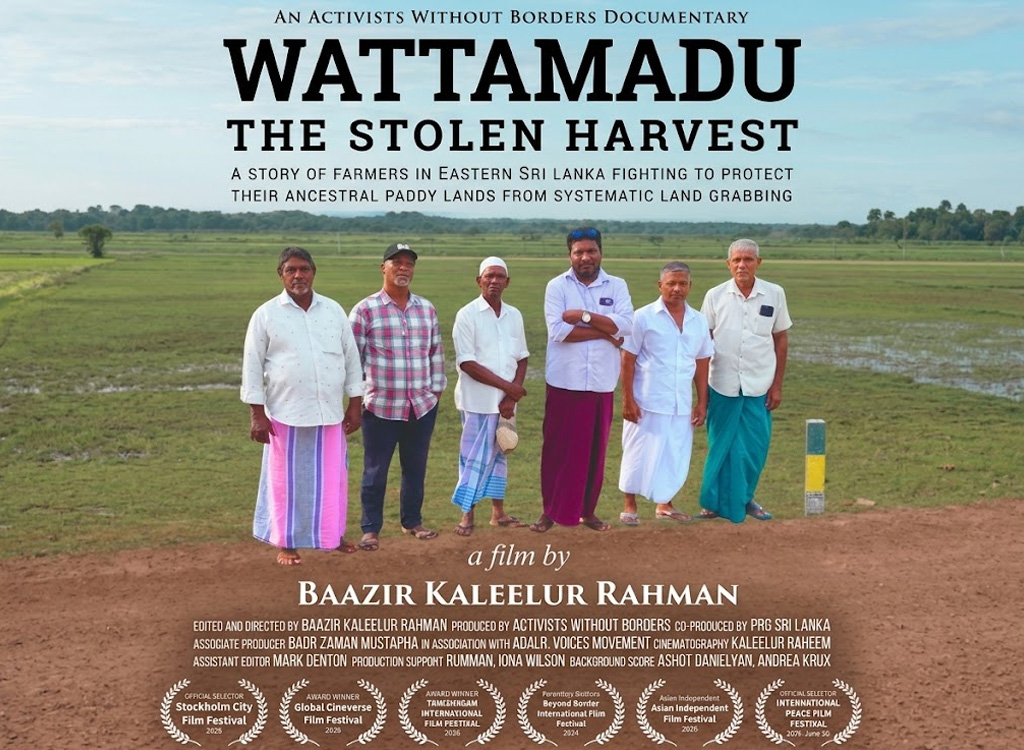
What happens when a community loses access to the land that has sustained its families for generations? And what does it take to seek justice when that struggle continues for more than a decade? In eastern Sri Lanka, farmers in Wattamadu say they have been denied access to their ancestral paddy lands, threatening not only their livelihoods but also their heritage and future.
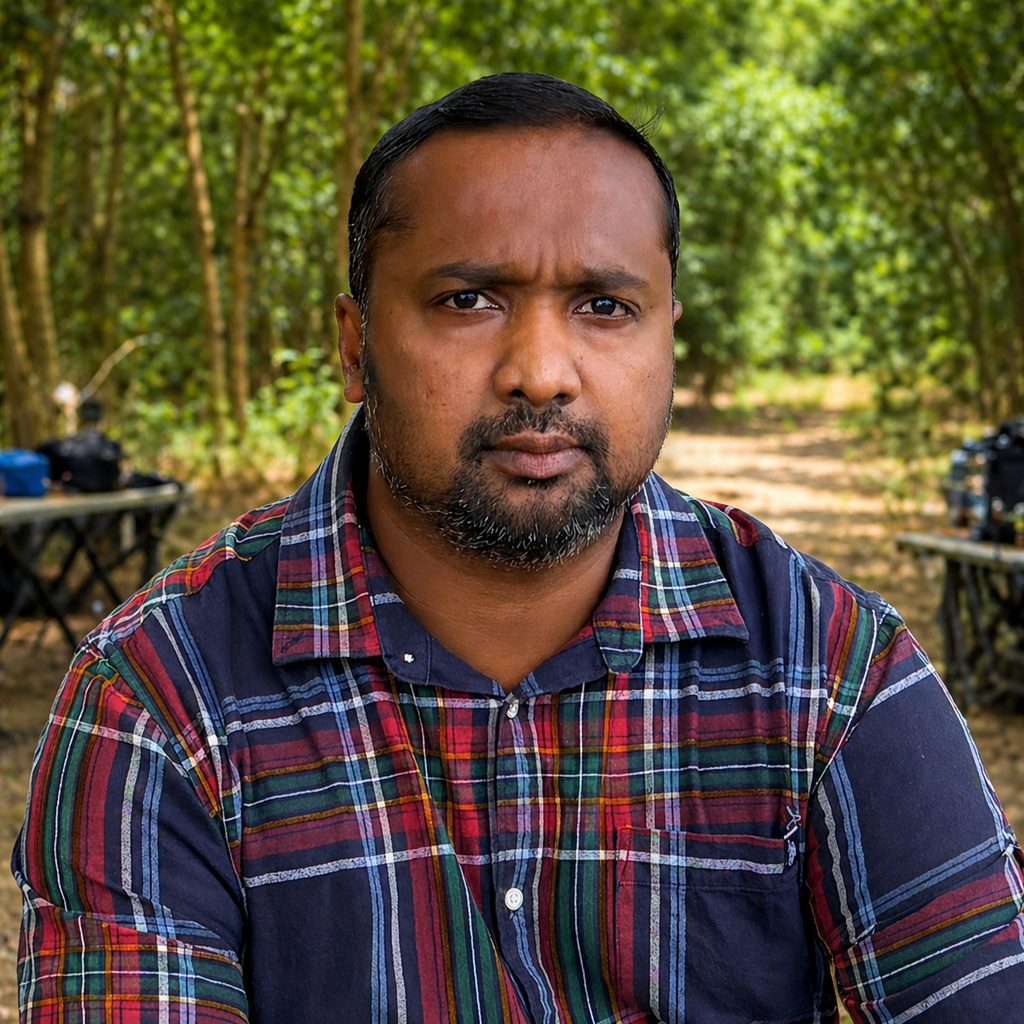
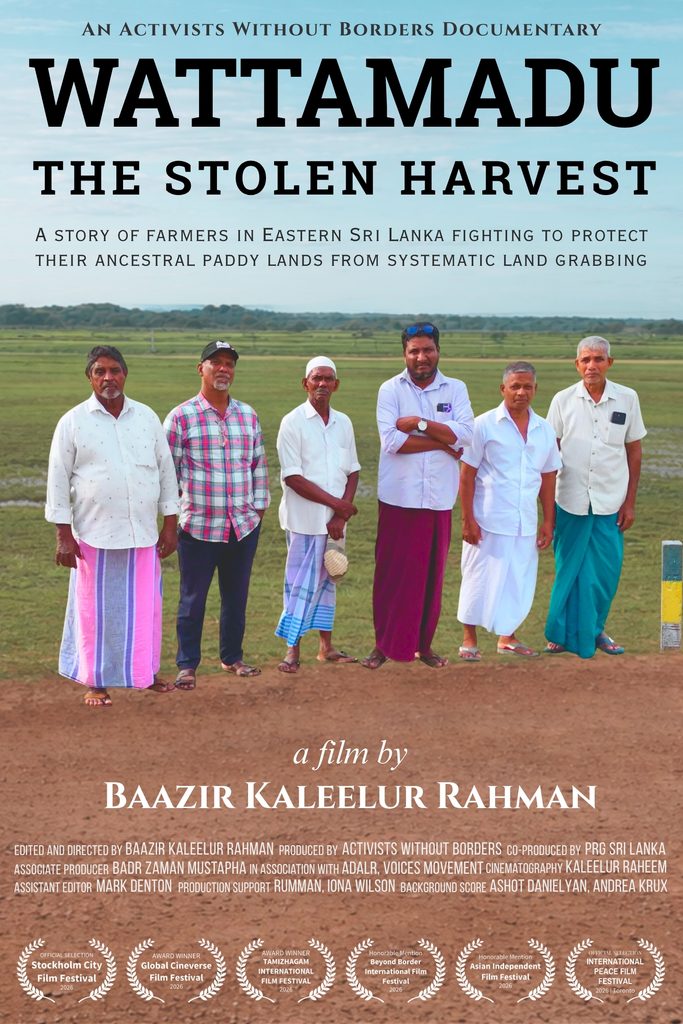
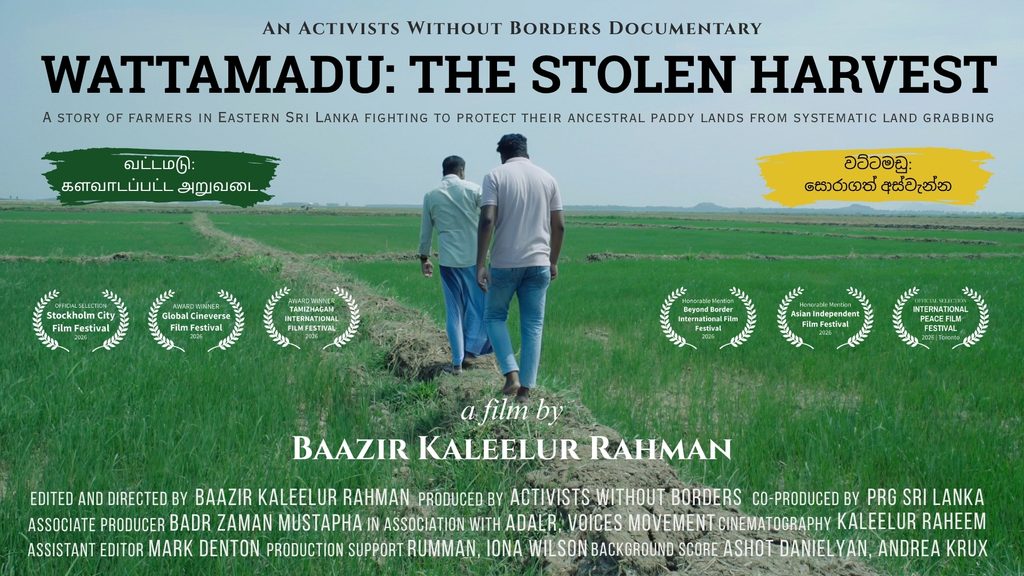
In his documentary, ‘Wattamadu: The Stolen Harvest,’ filmmaker and human rights campaigner Baazir Kaleelur Rahman brings these farmers’ stories to the forefront, exploring their struggle for land rights and raising broader questions about discrimination and justice. “What stood out to me was that this was not simply a dispute over land classification. It raised wider questions about equality, discrimination, access to justice, and whether minority communities can expect the same treatment and protection from State institutions as everyone else,” said Baazir, speaking on what his investigation uncovered.
Baazir also touched on an aspect that is best described as Sri Lanka’s Achilles’ heel: our division along ethnic lines. “People can become so divided along political, ethnic, or other lines that they fail to stand up for injustice when it affects a different community. We have seen many painful lessons throughout Sri Lanka’s history, yet the suffering of one community does not always lead others to show solidarity. I hope the film encourages people to look beyond these divisions and recognise that the right to justice should not depend on which community someone belongs to,” he asserted.
In this interview, Baazir speaks about what drew him to this story, the challenges of documenting the farmers’ experiences, the testimonies he heard, the impact of the documentary, and what it will take to achieve a fair and lasting resolution to the Wattamadu dispute.
What first drew you to Wattamadu and why did you feel this story needed to be told through a documentary?
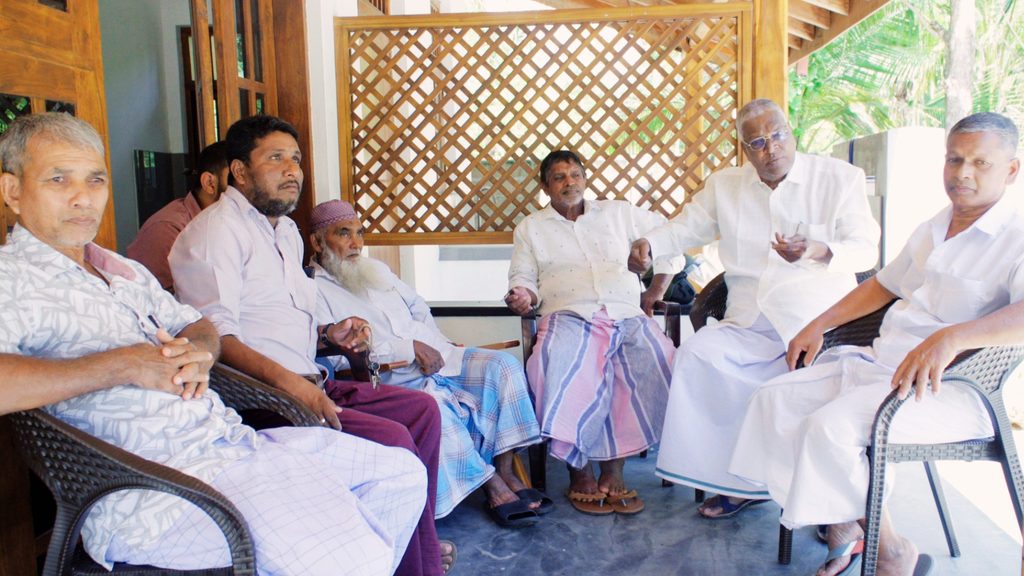
The farmers of Wattamadu, who had lost access to their lands, approached me with their stories of injustice. What they told me immediately caught my attention. These farmers had been fighting for their land rights for more than a decade, using different forms of media, legal channels, and other systems to seek justice, yet their struggle remained largely unheard.
I felt this story needed to be told through a documentary because visual storytelling can be a powerful tool for advocacy and campaigns. It allows people to hear directly from those affected, understand their experiences, and see the human impact of an issue.
For me, the film was also a way of preserving their testimonies for history. Even if justice did not come immediately, their stories would be recorded, giving the wider public and the relevant authorities a better understanding of what these farmers had experienced and the challenges they had faced over the years in trying to protect their ancestral lands.
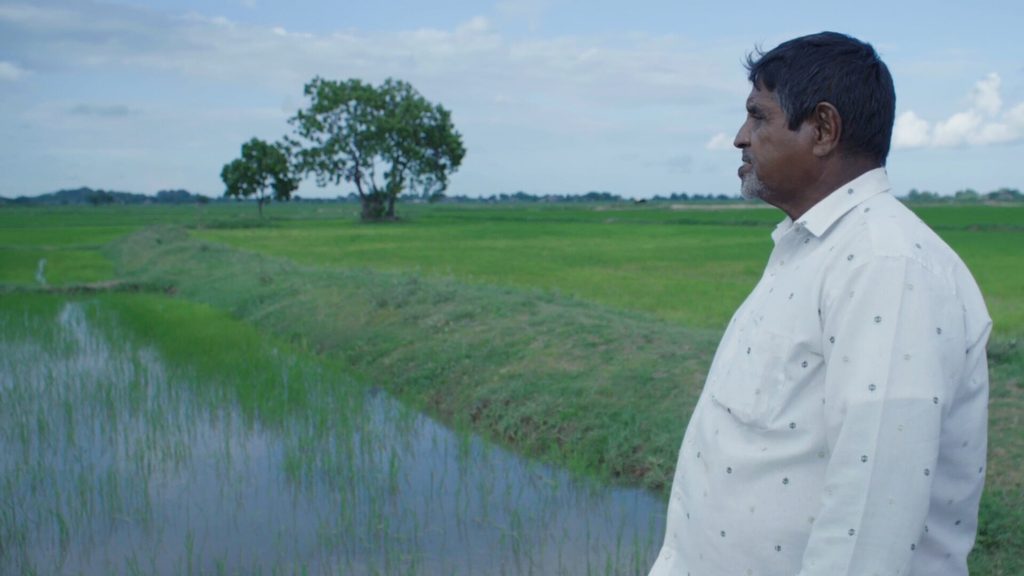
Your documentary centres on farmers in Eastern Sri Lanka who say they have been denied access to ancestral paddy lands. The film examines claims that more than 1,000 acres of paddy land were reclassified as forest land. What did your investigation uncover?
My approach was not to set out to uncover a particular finding, but to give a voice to people whose experiences had largely been ignored. I wanted to listen to the farmers, examine the documents and evidence they had gathered, and understand what had happened to their land.
As I listened to their stories and examined the material available, I became increasingly concerned about what appeared to be a pattern of institutional discrimination against a minority farming community. The farmers described how decisions and actions by State institutions had affected their livelihoods, despite their longstanding connection to these lands.
Several farmers also named government officials and political leaders whom they believed were responsible for the decisions that affected them. These are serious allegations that require proper, independent investigation. My responsibility as a filmmaker was to document their testimonies, examine the available evidence, and bring these concerns into the public domain.
What stood out to me was that this was not simply a dispute over land classification. It raised wider questions about equality, discrimination, access to justice, and whether minority communities can expect the same treatment and protection from State institutions as everyone else.
What was the most difficult testimony you heard while making the film and how did it change your understanding of the issue?
One of the biggest problems with land rights is that many people see them as a secondary issue rather than a fundamental human right. We often fail to understand what losing land actually means to the people who depend on it.
The farmers I met had survived for generations through paddy cultivation on these lands. For many families, it was their only source of income. Losing access to their fields meant losing their livelihood and struggling to provide for their families. The consequences went far beyond agriculture.
Some farmers also explained how land ownership was connected to marriage and the local dowry system. The loss of land had affected marriage arrangements, broken up relationships, and placed women in particularly difficult situations. Hearing these accounts made me realise how deeply a land dispute can affect every part of a community’s social and personal life.
One testimony that particularly stayed with me was that of Uwais. His father was killed by the LTTE during the civil war on the land that the family had depended on, and the family was unable to recover his body. Years later, Uwais was still fighting to reclaim the land that belonged to his father.
I found stories like his incredibly difficult to hear. His family had already suffered the loss of a loved one during the war, and the struggle over their land continued long afterwards. It made me think about how injustice can continue across generations, even after a conflict has ended.
These stories reminded me that land is not just a piece of property. It can hold a family’s history, identity, memories, and hopes for the future. When people lose it, they can lose far more than their income.
How long did you spend researching and filming in Wattamadu and could you tell us about the experience?
Compared with my previous documentary, for which I spent years on research, the research process for ‘Wattamadu: The Stolen Harvest’ was more straightforward. Activists and lawyers involved in the legal case had already carried out substantial work and gathered documents relating to the farmers’ claims.
I spent several days reviewing the research, checking the documents, and verifying the information through reliable contacts before beginning the filming. Once I was satisfied that I had a reasonable basis to proceed, I started interviewing the farmers.
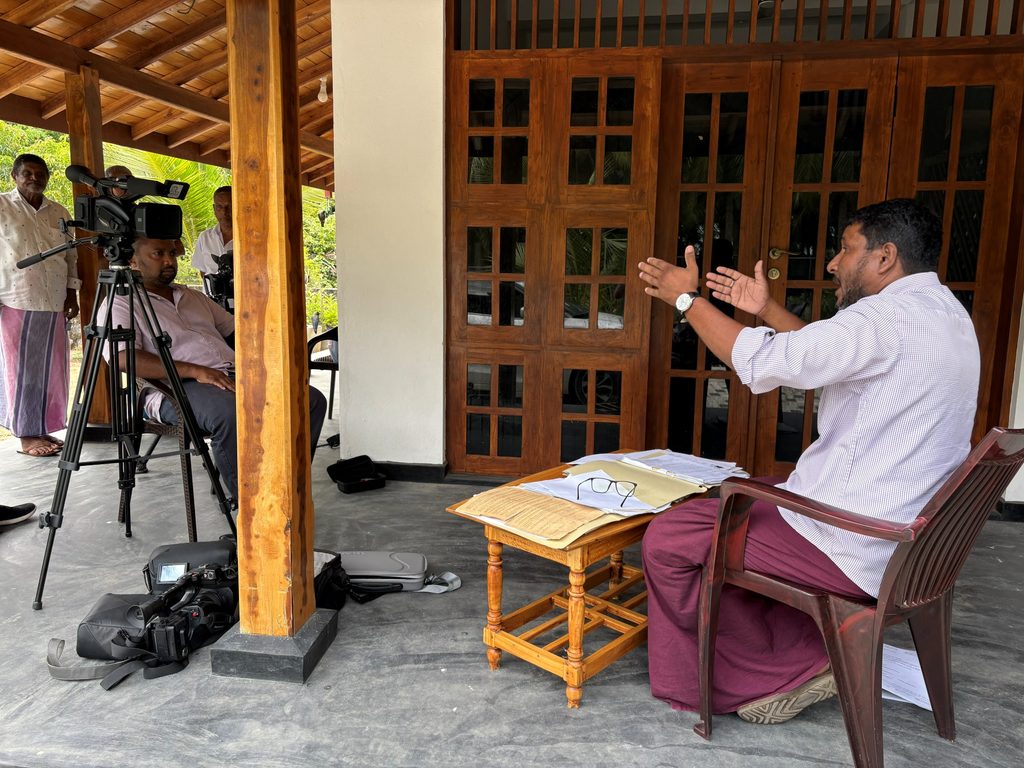
The documentary was unscripted, so I did not go into the interviews with a fixed narrative that I wanted people to follow. Instead, I asked questions and allowed the farmers to explain their experiences in their own words. I had to ask many questions to understand the history of the dispute, the different events that had taken place, and the impact on individual families. We recorded more than 10 hours of interview footage alone.
For me, the most important part of the process was listening. Every farmer had a different experience, even though they were connected by the same struggle. I wanted to understand those differences and give each person’s testimony the attention it deserved.
Why did you call the film ‘The Stolen Harvest’?
The Wattamadu lands were paddy fields that had sustained farming families for three generations. Their harvest was not simply a source of food or income; it was the foundation of their livelihoods and the future they hoped to pass on to their children.
The farmers described losing access to their lands during the civil war in 1990s and facing further restrictions after 2014, which they believe were driven by institutionalised discrimination. Over time, they lost the ability to cultivate the fields that had sustained their families for generations.
I chose the title ‘The Stolen Harvest’ because I felt it captured what had happened to these communities. Their harvest represents their labour, livelihood, history, and future. When they lost access to their land, they also lost the means to sustain the lives they had built around it.
For me, the title reflects how a community’s livelihood can be taken away, not only through direct force, but also through administrative decisions and systems that prevent people from accessing the land they depend on.
How did you navigate the competing claims of paddy farmers, cattle farmers, and environmental authorities?
I did not approach this as a conventional television investigation in which the aim is to give every party equal time and leave the audience to decide who is right. Nor did I set out to make a film that simply supports one side without examining the issues. As a campaigner, I chose to focus on the voices of the farming community whose experiences I felt had been overlooked. My intention was to amplify their voices, not to act as a judge or pretend that I was completely detached from the issue.
However, that did not mean ignoring other perspectives. I communicated with cattle farmers and relevant authorities to hear their side of the story. I also examined the documents and evidence presented by the paddy farmers and checked the information through other sources where possible. This was important to ensure that the documentary was grounded in the available evidence and that I understood the wider context.
I believe there is a difference between giving a voice to a marginalised community and claiming that every allegation has already been proven. My role was to document the farmers’ experiences and bring their concerns to public attention. Ultimately, it is the responsibility of the relevant authorities to investigate the claims made by all parties, establish the facts, and deliver justice where it is due. My role was to help ensure that the farmers’ voices could no longer be ignored.
What response have you received from the farmers themselves, Government officials, and other stakeholders who have watched the documentary? Has it opened doors to meaningful dialogue?
The farmers have welcomed the documentary, and they have used screenings to bring attention to their struggle and support their claims. For me, it has been encouraging to see people who have spent years trying to make their voices heard finally have an opportunity to share their experiences with a wider audience.
Government officials who attended the screening acknowledged the issue and indicated that they would look into it and help the affected farmers seek justice. However, as often happens in Sri Lanka, there was also a tendency to place responsibility on previous governments rather than address what needs to be done now.
I believe the documentary has helped open doors for dialogue, but the real challenge is turning that attention into meaningful action. Public awareness alone is not enough if the people responsible for resolving the dispute do not take the necessary steps.
Another challenge is that people can become so divided along political, ethnic, or other lines that they fail to stand up for injustice when it affects a different community. We have seen many painful lessons throughout Sri Lanka’s history, yet the suffering of one community does not always lead others to show solidarity.
I hope the film encourages people to look beyond these divisions and recognise that the right to justice should not depend on which community someone belongs to. The farmers need more than sympathy. They need a fair investigation, accountability, and a lasting solution to their struggle.
What is your assessment of the prospects for a lasting resolution to the Wattamadu dispute? What practical steps would be necessary to restore trust and protect the affected communities’ livelihoods?
I believe a lasting solution is possible, but it must begin with a proper and independent investigation. The process should be free from the influence of local authorities, political interests, or religious leaders, so that the facts can be established fairly.
The investigation must examine the claims made by the paddy farmers, the concerns raised by cattle farmers, and the decisions taken by the relevant authorities. It should consider the historical use of the land, the available documents, and the impact that the dispute has had on the people who depend on it.
Once the facts are established, the findings must lead to action. Anyone who has been denied their lawful rights should receive justice, and those found responsible for wrongdoing should be held accountable through the appropriate processes.
Where the investigation establishes that people have suffered losses or that their rights have been violated, appropriate compensation should also be considered. This should apply to any party with a valid claim, based on the evidence and the findings of the investigation.
Most importantly, the process must restore people’s confidence that they can seek justice without discrimination. A lasting resolution should protect legitimate livelihoods, address the grievances of affected communities, and prevent similar disputes from continuing into future generations.
What is the one thing you want audiences, policymakers, and the people responsible for resolving this dispute to do after watching ‘The Stolen Harvest’? What would a just and lasting resolution look like?
Justice for the Wattamadu farmers. That is the most important message I want people to take away from this film.
I believe I have helped amplify the farmers’ voices and present their experiences in a way that allows different audiences to understand the claims they are making and the difficulties they have faced. Their stories have now been documented, and the issues they raised have been brought into the public domain.
But telling their stories is only one part of the process. A documentary cannot deliver justice on its own. The next step must come from the people and institutions with the power to investigate these claims and take action.
I want policymakers and the relevant authorities to move beyond acknowledging the problem. They must properly investigate the farmers’ claims, establish the facts, and ensure that justice is delivered.
A just and lasting resolution would mean that the farmers’ rights are fairly recognised, their legitimate grievances are addressed, and they can rebuild their livelihoods without fear of discrimination. Above all, it would mean that they no longer have to spend their lives fighting for the land that has sustained their families for generations.
How does this documentary connect with your earlier work on overlooked human-rights violations and what patterns do you see in the struggles of marginalised communities?
My previous documentary, ‘Killing the Travellers: Kurukkalmadam Massacre,’ examined a human rights violation in which lives were brutally taken. With ‘Wattamadu: The Stolen Harvest,’ the focus is on another form of injustice: the loss of land, livelihoods, and the rights of a community.
Although the circumstances are different, I see a troubling pattern. As the film reflects, the injustice experienced by the Muslim community in the 1990s involved violence and the loss of lives, while the struggle in Wattamadu concerns the loss of land through administrative decisions, documents, and systems. The methods may be different, but the consequences for the people affected have been devastating.
Racism and discrimination have taken different forms throughout Sri Lanka’s history. Sometimes they are visible through direct violence. At other times, they operate through institutions, policies, and bureaucratic processes that can gradually deprive people of their rights without attracting the same public attention.
One of the most painful realities is that injustice against one marginalised community can also be carried out by members of another community that has itself suffered discrimination and violence at the hands of the majority. Having experienced injustice does not automatically prevent people from participating in the oppression of others.
For me, this is an important lesson. Human rights should not depend on ethnicity, religion, political affiliation, or which community someone belongs to. We cannot demand justice for our own community while remaining silent when another community suffers.
Through my films, I want to document these overlooked experiences, preserve the testimonies of those affected, and encourage people to look beyond the divisions that allow injustice to continue. If we are serious about building a just society, we must be willing to listen to one another, acknowledge uncomfortable truths, and stand against injustice wherever it occurs.






Leave a comment