

By The Pulseline News Desk
Sri Lanka has come under renewed international scrutiny at the 63rd Session of the UN Human Rights Council (UNHRC) in Geneva, with the Sri Lanka Core Group urging the Government to translate its reform commitments into concrete results while Colombo insists that progress must be driven through nationally owned processes.
The Core Group, comprising Canada, Malawi, Montenegro, North Macedonia and the United Kingdom, has welcomed UN High Commissioner for Human Rights Volker Türk’s assessment of the country’s human rights situation, describing it as balanced. However, it stressed that Sri Lanka’s stated commitment to reform must now lead to “concrete progress.”
The group acknowledged the challenges faced by Sri Lanka, including severe weather events and global energy shocks, while welcoming positive developments such as the ratification of ILO Convention 190 and Sri Lanka’s engagement with the Convention on the Rights of Persons with Disabilities.
However, it said much more needed to be done to build confidence in accountability and reconciliation.
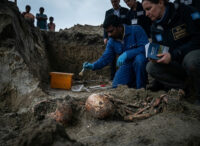
The Core Group highlighted unresolved emblematic cases and ongoing mass grave excavations as reminders of the thousands of enforced disappearances that remain unresolved. It also expressed concern over reports of intimidation, harassment and restrictions affecting civil society groups, journalists and victims’ organisations, particularly in the North and East.
The group called for greater progress on democratic governance and urged the Government to conduct transparent and inclusive consultations addressing the concerns of all affected communities.
It also pressed for legal and institutional reforms, progress on land-related issues, stronger protection of human rights in detention facilities and the strengthening of independent institutions.
The concerns broadly reflect issues raised by High Commissioner Türk, who has acknowledged positive developments in Sri Lanka while warning that significant challenges remain in addressing accountability for past human rights violations and ensuring meaningful reconciliation.
Türk has also stressed the importance of protecting civic space, strengthening independent institutions and ensuring that victims and affected communities are able to participate meaningfully in reconciliation and accountability processes.
Sri Lanka, however, has rejected the suggestion that international scrutiny should continue indefinitely.
Addressing the Council, Sri Lanka’s Permanent Representative in Geneva, Ambassador Sumith Dassanayake, said no UNHRC country-specific mandate should be regarded as permanent. He called for such mandates to be periodically reviewed against clearly defined objectives and measurable outcomes, including the possibility of their eventual conclusion where sufficient national progress has been achieved.
Sri Lanka has also highlighted its own reform agenda, including efforts to repeal and replace the Prevention of Terrorism Act (PTA), strengthen anti-corruption mechanisms, improve prison administration and advance investigations into several high-profile cases.
The Government has maintained that accountability and reconciliation should be pursued through nationally owned mechanisms, while opposing externally driven evidence-gathering mechanisms.
The contrasting positions once again expose the central challenge facing Sri Lanka at the UNHRC: international partners are seeking visible and measurable progress on accountability, reconciliation and institutional reform, while Colombo is insisting on greater space for domestic processes.
For the Government, the issue is increasingly one of demonstrating that its reform commitments are producing tangible results. For the Core Group and other international partners, the test will be whether those reforms are sufficiently credible, transparent and inclusive to restore confidence among victims, affected communities and independent institutions.





Leave a comment