

By Vox Civis
A government is judged less by how well it responds to a crisis than by how many crises it has the foresight to prevent. By that measure, the National People’s Power (NPP) administration has a painful record. Over two years in office, one trait has repeatedly defined it: a reluctance to act before events force its hand. Whether the trouble comes from nature, from institutions or from politics, the pattern is familiar. Warning signs appear and are not heeded, the damage is done, and only then does the administration shift into damage control.
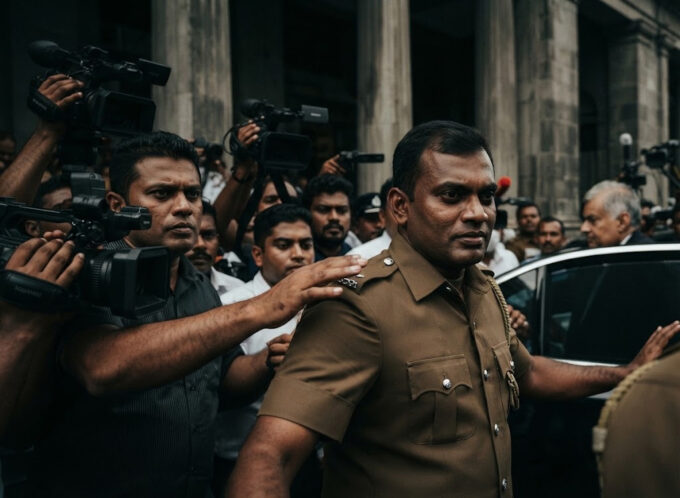
Consider the Negombo prison riot of July. A clash between rival groups of inmates on a Sunday left two prisoners dead. The far deadlier violence came the next morning, and by the early count at least 26 people had died, seven of them prison officers. Later accounts put the toll at 30. The Opposition alleged that intelligence warnings of unrest were ignored and moved a no-confidence motion against the Justice Minister.
The government’s defenders point out, that a prison system holding roughly four times its intended capacity is a problem decades in the making, and no single minister created it. But that is exactly the point. When a facility is a known powder keg and a first clash has already claimed lives, the hours before the second are the only window for prevention. Whether that window was used wisely is a question the inquiry must answer. What the public saw was a state that seemed to wake up after the funerals.
Cyclone Ditwah in November last year told a similar story on a far larger scale. The Meteorology Department issued early warnings of a possible storm days earlier and a red alert the day before the storm hit, yet more than 600 people died. Critics, including the Opposition, argue that the warnings were never translated into evacuations and preparedness on the ground, and that their reach and specificity fell short of what a cyclone demands.
Relief followed, as it always does. But recovery is a longer test than rescue. As recently as August, hundreds of families displaced by the cyclone were still in temporary shelters. That is down from over 200,000 people at the peak, which is progress, but it is cold comfort to those still waiting, nearly a year on, for permanent homes. Disaster response tests competence. Recovery tests commitment. The people who suffered most have reason to ask whether either was fully met.
Gnanasara Thera saga
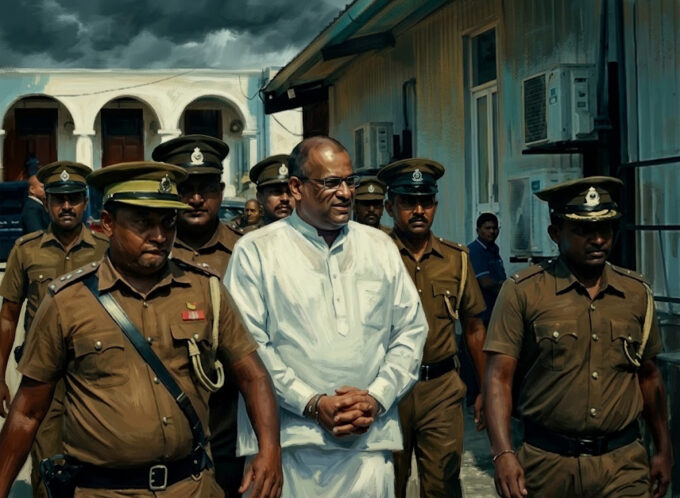
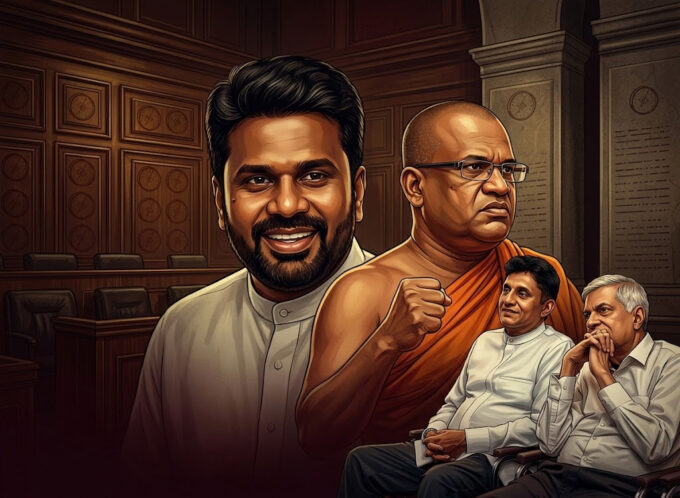
The latest entry in this growing catalogue is the controversy over Ven. Galagoda Aththe Gnanasara Thero. On 10 September the Supreme Court, hearing petitions that included one from Sandya Eknaligoda, wife of the missing journalist Prageeth Ekneligoda, declared the pardon granted by former President Maithripala Sirisena in 2019 null and void. The court found it had been granted arbitrarily, without the procedures and constitutional safeguards that clemency requires. The monk, who had served less than a year of a six-year contempt sentence, was ordered back to prison. The government did not choose that outcome, and it could hardly have defied the court. What it controlled was what came next.
What came next has been drift. The Buddhist clergy, who describe the defect in the pardon as a technical flaw that can be rectified, marched to the Presidential Secretariat in pouring rain all the way from Kandy, last Thursday. The Presidential Secretary heard their request and said that a definitive answer could not yet be given. The Court of Appeal will shortly consider petitions over the removal of the monk’s robes in prison. A matter that began as a question of legal procedure has become a test of the government’s relationship with one of the country’s most influential constituencies. That is the cost of drift. Problems left unmanaged do not wait politely. They acquire symbolic weight, and their consequences will surface at the next election, whenever it is held.
The government was never without options. A pardon is not an act of defiance against the courts if it is done properly, and recent history shows both ways of doing it. Sirisena’s pardon of Sarath Fonseka was broadly accepted, but his pardons of Gnanasara and of the murder convict Jude Jayamaha were both struck down. Ranjan Ramanayake’s release in 2022 shows the better path. President Ranil Wickremesinghe’s administration had the Attorney General’s Department study the matter closely so that the pardon would not offend the judiciary, and it was issued with conditions.
A comparable process could have begun the day the Supreme Court ruled. If the President had the will, he could have asked the Attorney General to examine whether the defect could be cured and the request resubmitted. Nothing suggests that was ever seriously tried. Instead, what surfaced was a perceived determination on the part of the administration to incarcerate the monk.
An honest assessment must acknowledge that the choice was never costless. Rights groups opposed the original pardon as an affront to the rule of law, and the Eknaligoda family fought for years to see the sentence honoured. The NPP campaigned against the abuse of clemency, and a reversal would invite charges of capitulation. A pardon granted under street pressure would look exactly like that. But a government can accept those costs for good reasons, or it can explain, with courage, why it will not. What it cannot do is leave both camps guessing.
A properly processed pardon, announced early and on the President’s own terms, might have defused tension and earned political capital that this administration badly needs. The monk, after all, faces further legal proceedings, so the gesture would not have amounted to impunity. A clear refusal would at least have been a position. Instead, the government finds itself in a damned-if-you-do, damned-if-you-don’t dilemma largely of its own making. Some have likened the moment to the ‘Aragalaya,’ and both are uncharted territory for any government, but the comparison should not be pushed. The issues at their core are vastly different.
There is also an irony that the government’s critics will not miss. The movement from which the NPP descends owes something to clemency of its own. Rohana Wijeweera, the JVP’s founder, was released in 1977 after about six years of a life sentence for the 1971 insurrection, freed by the new J.R. Jayewardene led government before the executive presidency even existed.
This does not settle the merits of the present case, which must be judged on its own facts, and the NPP is entitled to argue that its objection is to the abuse of the pardoning power, not to the power itself. But a party with such origins would be wise to speak about these matters with humility. After all, moral authority is not served by selective memory.
Economic challenge
None of this compares with the challenge that lies ahead, for it is on the economy that the politics of drift will matter most. And it is this state of affairs that is causing concern, not necessarily subtle, even at this point in time. The International Monetary Fund’s (IMF’s) latest World Economic Outlook projects that Sri Lanka’s growth will moderate to 4.0 percent in 2026 and 3.7 percent in 2027, down from 5.0 percent in 2025. Average inflation is expected to swing from minus 0.5 percent last year to 5.3 percent this year and 5.4 percent next year, nearly double the 2.7 percent projected for emerging Asia and a shade above the Central Bank’s target. The current account is forecast to move from a surplus of 1.6 percent of GDP in 2025 to deficits of 0.5 percent and 0.3 percent in the next two years.
These figures must be read in context. They do not predict collapse. The IMF’s September mission found the economy ‘resilient,’ with growth of 4.2 percent in the second quarter, and the World Bank has raised its 2026 forecast to 4.4 percent and now classifies Sri Lanka as an upper middle-income country. Part of the external pressure comes from the oil price shock stemming from the conflict in the Middle East, which no Sri Lankan government controls. Yet the same World Bank notes that real wages remain about 12 percent below 2019 levels and that poverty is still above its pre-crisis level. These are the details that matter and hit pockets the hardest.
The end of the disinflationary phase that followed the crisis makes price stability a more demanding task, and a return to current account deficits makes foreign exchange buffers all the more important. Slower growth, rising prices and a weaker external balance together make up precisely the combination that tests policymakers. It cannot be managed on autopilot.
Autopilot
For all intents and purposes, Autopilot, however, is how the NPP has run economic policy since taking office in 2024. A party that campaigned on renegotiating the IMF programme reversed course within days of winning power, and the framework inherited from the Wickremesinghe government has continued largely untouched. Its defenders call this prudence, and the growth figures, though moderate, lend the argument some support. Continuity can be a considered choice, and a defensible one.
But the problem is that it has been presented as no choice at all, and a party that promised transformation and delivered stewardship owes the public an explanation. The voters who believed they were choosing a different path are entitled to ask what became of it.
And the reckoning is close. The IMF’s Extended Fund Facility (EFF), approved in March 2023 for forty-eight months, ends in March 2027, less than six months away. The President himself said last year that this should be the country’s last IMF programme, but the Fund has made clear that it stands ready to keep supporting Sri Lanka. Yet statements from within the government have been read as pointing in different directions, and there is talk in some quarters of ending structural engagement with the Fund altogether. A country cannot navigate its most important economic transition with its leadership speaking in several voices. Markets, investors and ordinary citizens all read ambiguity as risk, and risk has a price.
As far as the public knows, no post-IMF economic framework has been set out, and the coming budget is the first real opportunity to do so. If the plan is to wait for trouble to arrive, it should be remembered that this time the consequences will fall not on the government alone but on each of the country’s 22 million citizens, who have already endured more than their share of hardship.
This is no longer only about the IMF agreement or the exit from the programme. It is about the political survival of the NPP administration. The government now follows an economic framework much closer to the one once advocated by the SJB and the UNP than it ever admitted it would. In the end it will be judged on its ability to attract investment, build confidence and deliver lasting stability. If it fails, the consequences will be its own to bear, and a government that has made a habit of arriving after the storm will have no one else to blame.
Disclaimer: The views and opinions expressed in this article are those of the writer and do not necessarily reflect the official position of this publication.






Leave a comment