
By Vox Civis
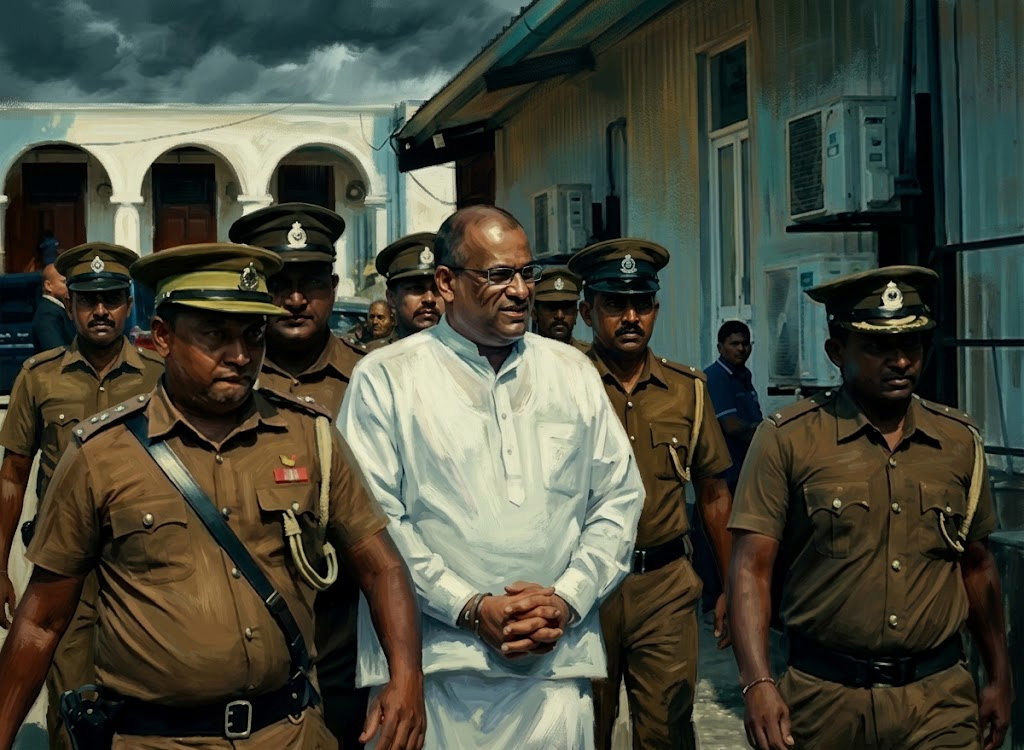
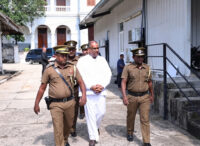
Sri Lanka is witnessing an unusual spectacle. Former presidents, former first ladies, political heirs, senior police officers and other individuals who wielded considerable power are finding themselves before the courts, in remand custody or under criminal investigation. In a country where political influence has long been perceived as a shield against accountability, these developments are undoubtedly significant.
Yet an arrest is not a conviction, remand is not justice, and the public humiliation of the powerful is not, by itself, evidence of meaningful reform. The question that inevitably arises is whether we are witnessing genuine accountability or mere political theatre.
After all, none of the cases currently before the courts involving former VIPs originated with the present Government. Most were initiated during the Yahapalanaya era. If the investigations and cases were already in existence, why are we witnessing this sudden flurry of arrests now? Is it simply that the wheels of justice are finally turning, or is there more to the timing and the political mileage being extracted from these developments?
It is no secret that governments often resort to popular diversions when confronted with contentious issues that threaten to provoke public anger. Dramatic developments capable of capturing the public imagination can serve to displace uncomfortable questions from the national conversation. The objective need not always be to manufacture a controversy; sometimes it is enough to exploit one that provides a convenient distraction.
At present, there are three major issues that risk being pushed into the background by the rapid succession of arrests. They are the growing uncertainty over fuel supplies and prices, the increasingly precarious balance between macroeconomic recovery and the hardships faced by ordinary people, and the controversial legislation proposed to replace the notorious Prevention of Terrorism Act (PTA).
Matters with serious implications
These are not minor matters that can be obscured by theater or allowed to disappear from public scrutiny. They have direct implications for the country’s economic stability, the welfare of its citizens, their fundamental freedoms and Sri Lanka’s international standing.
The latest fuel price increases, coupled with reports of shortages in several parts of the country, have revived concerns that Sri Lankans had hoped were firmly behind them following the economic catastrophe of 2022. Fuel is central to almost every aspect of economic activity. Any sustained increase in its price inevitably feeds into transport, food distribution, production costs and the cost of living. For households already struggling to make ends meet, the consequences are immediate and painful.
The second concern is the state of the economy. While Sri Lanka has made progress in restoring macroeconomic stability, the recovery remains fragile. Inflation and the rising cost of living continue to weigh heavily on households, while concerns over stagnant foreign exchange reserves and the country’s ability to meet the expectations attached to the IMF programme persist. The Government must also contend with the difficult reality that economic indicators can improve without delivering a corresponding improvement in the lives of ordinary citizens.
The third issue, arguably the most consequential for the country’s democratic future, is the proposed Protection of the State from Terrorism Act (PSTA), intended to replace the PTA. Far from resolving the deficiencies of the existing law, the proposed legislation has attracted serious concerns from legal professionals who warn that it could reproduce, and potentially aggravate, the very abuses that made the PTA so notorious.
The spectacle of former political heavyweights being taken into custody provides a compelling narrative, particularly for a public that has long demanded accountability from those who appeared untouchable. The danger, however, lies in confusing the political appeal of these arrests with the Government’s overall performance.
The real test
Diverting public attention from difficult issues is one thing. Successfully managing those issues is quite another. Headlines can be dominated, public anger temporarily redirected and political opponents placed on the defensive. But none of this will resolve the fuel shortage, reduce the cost of living, strengthen foreign exchange reserves or safeguard civil liberties.
This is where the real test of the present administration begins. Does the Government possess the competence, foresight and administrative capacity to deal with the challenges that remain, or is it becoming increasingly dependent on theater? The answer will ultimately be determined not by the number of arrests made, but by the results the Government can deliver on the fronts that matter.
The economic picture illustrates the challenge. The achievement of a staff-level agreement on the seventh review is a milestone in a recovery that has travelled a considerable distance since the sovereign default. Yet there is an uncomfortable contradiction at the heart of this progress. While the macroeconomic indicators point towards recovery, poverty remains substantially above its pre-crisis level. In other words, the economy may be recovering, but the people are not necessarily recovering at the same pace.
This matters because the purpose of economic policy cannot simply be to satisfy creditors, meet programme targets and improve statistical indicators. These are necessary objectives, but they are not the ultimate measure of success. The real question is whether Sri Lanka can emerge from the IMF programme with a stronger, more productive and more resilient economy, rather than returning to the same conditions that made an international bailout necessary in the first place.
That requires more than fiscal discipline. It demands investment, employment generation, export growth, efficient public administration and a sustained improvement in household incomes. It also requires the Government to demonstrate that the resources available to it are being used effectively.
2027 Appropriation Bill
The arrival of the 2027 Appropriation Bill in Parliament makes this question particularly pertinent. While the Government prepares to seek approval for another year of expenditure, an uncomfortable issue remains unresolved: capital expenditure has been running substantially behind allocations. Before asking Parliament to authorise another year’s spending, the Government owes the public an explanation as to why only a fraction of the money already allocated last year, has been spent.
Capital expenditure is not merely an accounting entry. It represents investment in infrastructure, public facilities and the productive capacity required to sustain future economic growth. When approved expenditure fails to materialise, projects are delayed, opportunities are lost and the public is deprived of the benefits that the Budget was supposed to deliver.
There may be legitimate reasons for delays, including procurement difficulties, administrative constraints or the need to prevent wasteful expenditure. But persistent underspending demands scrutiny, particularly from a government that promised to improve the efficiency and accountability of the state machinery. A government cannot indefinitely justify its inability to deliver by pointing to financial constraints while failing to utilise available resources effectively. Nor can it claim credit for allocations that remain largely on paper.
The IMF programme presents a similar challenge. Completing successive reviews and securing further disbursements are important achievements, but they cannot become ends in themselves. The ultimate objective must be to build an economy capable of generating sufficient foreign exchange, meeting debt obligations and improving living standards without remaining perpetually dependent on external rescue.
The Government’s performance must therefore be judged not merely by its ability to meet the IMF’s expectations, but by whether it can translate the discipline imposed by the programme into sustainable economic progress for the country.
Re-emerging ghosts of the PTA
Meanwhile, another deeply contentious issue has received far less public attention than it deserves, largely because the national conversation has been dominated by the succession of arrests. This is the PSTA, the proposed replacement for the PTA.
The controversy has taken a serious turn following concerns raised by President’s Counsel Saliya Pieris, who served as a nominee of the Bar Association of Sri Lanka (BASL) on the committee appointed to examine the proposed legislation. In a public statement, Pieris questioned how substantial changes had been made to the Bill presented to Parliament without informing the committee responsible for examining and drafting the proposed law.
He explained that he had disagreed with the committee majority on three specific matters: the definition of terrorism, which he considered excessively broad and vulnerable to abuse; administrative detention powers, which he believed should rest with judicial officers rather than a ministry secretary; and the power to proscribe organisations, which he argued should be exercised by a judicial authority. However, he stated that the committee members had agreed on several other provisions, including restrictions on detention periods and the ability of magistrates to grant bail where there was no material against a suspect.
According to Pieris, the Bill subsequently presented to Parliament contained substantial departures from the committee’s agreed position, particularly regarding bail and the extension of detention. He further stated that the committee had not been informed of these changes or the reasons behind them. So, who made these changes?
Pieris’ concerns are especially significant given the composition of the committee, which included representatives of the Attorney General’s Department, the Ministry of Justice, the police and the armed forces, as well as members of the legal profession and a Member of Parliament.
This was not, therefore, a body of individuals unfamiliar with the legal, administrative and security implications of the proposed legislation. If the Bill was substantially altered without its knowledge, the Government must explain who authorised those changes, why they were made and what justification exists for departing from the committee’s recommendations.
Pieris has warned that, if the Bill is passed in its present form, prolonged detention could continue under the PSTA, magistrates could be compelled to remand suspects even in the absence of sufficient material against them, and the abuse of the law by politicians, the police and security authorities could become inevitable. These are not concerns that can be dismissed as technical objections or political opposition, they go to the heart of the relationship between the state and the citizen.
Cosmetic reform
The PTA became notorious because powers granted in the name of national security could be used in ways that undermined fundamental rights and the rule of law. If its proposed replacement preserves the same vulnerabilities, changing the name of the legislation would amount to little more than cosmetic reform.
No responsible government would deny the state the power to confront genuine terrorist threats. But national security cannot become a blanket justification for legislation that weakens judicial safeguards, permits prolonged detention or exposes citizens to arbitrary action by the authorities.
The Government must also recognise that the implications extend beyond domestic politics. A law that fails to meet accepted human rights standards could attract renewed international criticism and complicate Sri Lanka’s relationship with its trading partners, including the European Union. Concerns over the legislation could place the benefits associated with GSP+ under additional pressure, with potentially serious economic consequences.
It would be a bitter irony if a government elected on promises of democratic renewal and institutional reform were to introduce legislation that reproduced the very dangers it had previously condemned. While the Government may enjoy the temporary political advantages generated by the arrest fiesta, the question is how long such developments can continue to shield it from scrutiny over these substantive issues.
No amount of political theatre can indefinitely conceal the consequences of poor economic management, administrative inefficiency or the erosion of democratic safeguards. Fuel prices, household expenses and economic insecurity are not abstract political debates. They are realities that people confront every day. Likewise, the consequences of restrictive legislation become apparent not through political rhetoric but through the experiences of those subjected to its provisions.
There is no denying that the Government has undertaken some worthwhile work in addressing corruption and governance. Efforts to investigate allegations involving powerful individuals deserve recognition where they are pursued lawfully and supported by credible evidence. Breaking the perception that political office provides immunity from investigation is an important step towards restoring public confidence.
No substitute for competent governance
But the fight against corruption cannot become a substitute for competent governance. Nor can it serve as a permanent justification for failing to deliver on other commitments. With 159 MPs in Parliament, nearly two years in office and a manifesto built around the promise of systemic change, the Government has enjoyed a degree of political authority that few administrations can claim. It has had both the parliamentary strength and the public mandate to advance substantial reforms. That makes the continued failure to deliver on important promises increasingly difficult to excuse.
The holding of Provincial Council elections is one prominent example. A Government that speaks of democratic accountability and popular sovereignty must explain why an important tier of representative government remains without an elected mandate. The continued delay raises legitimate questions about the consistency between its democratic commitments and its actions.
There are other promises, too numerous to list here, that remain to be fulfilled. Taken together, they raise a fundamental question about whether the Government is translating its electoral mandate into meaningful and measurable change. The public did not elect the NPP merely to investigate the alleged wrongdoing of its predecessors. It elected the party because it promised to govern differently, dismantle entrenched practices, strengthen institutions and create a more accountable and prosperous society.
Those expectations cannot be met through arrests alone. They require an administration capable of making difficult decisions, implementing policy effectively, managing public finances responsibly and respecting the democratic freedoms of its citizens.
The Government must also recognise that the political advantages of being the outsider eventually disappear once the responsibility of governing becomes its own. Nearly two years into its tenure, it can no longer rely indefinitely on the failures of previous administrations to explain its own shortcomings. The question is no longer simply what the previous governments did wrong; it is what the present Government is doing right, what it is getting wrong and what it intends to do about the difference.
Dismantling the culture of impunity
The arrests of former VIPs may yet represent a meaningful step towards accountability. If the evidence supports the allegations, the investigations are conducted impartially and the courts are allowed to reach their conclusions independently, Sri Lanka will have taken an important step towards dismantling its entrenched culture of impunity.
But the process must be allowed to run its course. Arrests must lead to properly conducted prosecutions where warranted, and guilt must be established through due process. Equally, those against whom sufficient evidence cannot be established must not be condemned merely because their political identities make them convenient targets for public anger.
Justice must be impartial, consistent and independent of political considerations. Anything less would simply replace one form of selective accountability with another. Ultimately, the challenge facing the NPP is far greater than bringing former political heavyweights before the courts. It must demonstrate that it can manage the economy, improve living standards, use public resources effectively, protect civil liberties and fulfil the promises on which it secured an overwhelming mandate.
The Government can continue to enjoy the headlines generated by its arrests. But headlines are fleeting, while the consequences of economic mismanagement, unfulfilled promises and weakened democratic safeguards endure.
Sri Lanka has seen governments exploit public anger, promise transformation and then struggle to deliver the change they pledged. The present administration was elected on the expectation that it would break that cycle, not perpetuate it under a different political banner. The real question, therefore, is not whether the Government can arrest the powerful, it is whether it can govern effectively once the arrests cease to dominate the news.
Disclaimer: The views and opinions expressed in this article are those of the writer and do not necessarily reflect the official position of this publication.









Leave a comment