
By Vox Civis
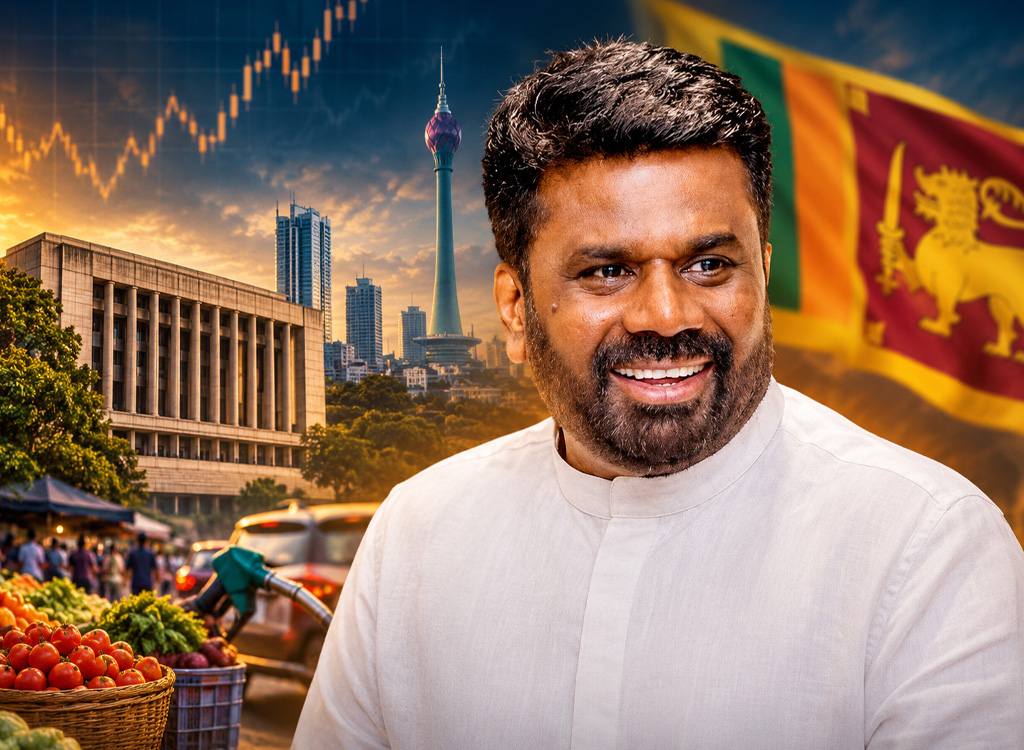
Barely a week after Parliament sat through a budget speech of nearly five hours, the Central Bank delivered a message that took only a few lines. On Friday (20), it announced that its Monetary Policy Board had raised the Overnight Policy Rate by 25 basis points to 9 percent and lifted the Statutory Reserve Requirement from 2 to 3 percent from 9 December. Markets, which expected no change, were caught off guard.
But, that was not all. The Governor then added the sentence that matters most to ordinary families: inflation, already 8.3 percent in October, could reach 9 percent by the end of the month. The Governor’s message was sobering for a second reason. Inflation may reach about 9 percent this month, but he offered no assurance that it will ease soon after. The Central Bank’s own central projection has it hovering around that level in the near term and returning to the 5 percent target only in the second half of 2027.
The risks lean upward. Energy costs are still working their way through transport and production, and the festive season brings seasonal demand. Some analysts already consider double-digit inflation by early next year a plausible stress scenario. It is not an official forecast, but it would be the first double-digit reading in more than three years.
For the government, this is politically toxic, because the cost of living was the promise on which it rose to power. It accused its predecessors – all of them – of racketeering and of ministers pocketing commissions on everything from fuel to dhal and sprats. It pledged to cut electricity tariffs by 30 percent, lower fuel prices and strip taxes from food and education items. Some relief did arrive. But two years on, the headline promise has not been met, and prices are now rising faster than at any time since 2023.
Diversionary tactics not good enough
The Government’s answer has been to put the courts and the prosecution of former officials at the center of its story. Holding the corrupt to account is necessary and popular, but it is not a cost-of-living policy. A family that cannot afford rice does not eat any better because a former minister is in the dock. A hungry citizen is also an angry one, and no number of prosecutions will substitute for an economic strategy that puts people first.
The cost of that gap is about to grow. The interest rate hike will raise borrowing costs and slow credit growth, and with it the investment and hiring that growth depends on. The Central Bank has done what its mandate requires. What remains is for the Treasury to produce a plan as serious as the problem. The Finance Minister and his budget told the country what the government hopes will happen. The Central Bank on Friday told it what actually is happening. The gap between the two is the real story of this week, and that gap is not likely to narrow anytime soon.
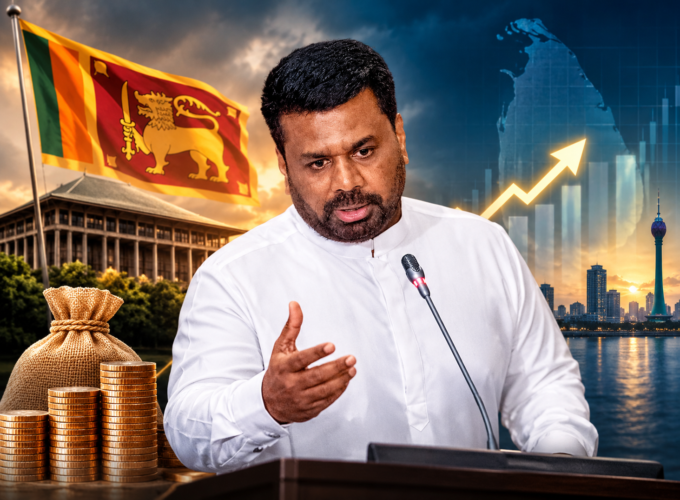
In New Delhi in February, India’s Finance Minister Nirmala Sitharaman presented her ninth consecutive budget in about 85 minutes. She was steering an economy of roughly USD 4 trillion. In Colombo, President Anura Kumara Dissanayake, acting as Finance Minister, spoke for close to five hours on behalf of an economy a little over 1/30th that size. Last year’s speech ran four hours and twenty minutes, so brevity is not a lesson this government is learning.
Length would be forgivable if it carried clarity. A budget exists to tell citizens, investors and lenders where a country is headed and how it will get there. When the speech is a catalogue of seventy-odd proposals, the listener cannot tell the priorities from the garnish, and the detail itself invites scrutiny.
Promises and their price tags
Consider the livestock line. The budget sets aside Rs. 1 billion to import 2,000 breeding sheep, which works out to Rs. 500,000 an animal. It sits within a Rs. 1.8 billion programme to import foundation stock of dairy cattle, buffaloes, pigs and sheep. There may be a sound genetic argument for this, but the speech offered none, and the government that asks the public to trust its stewardship should be able to say what a half-million-rupee sheep is meant to achieve.
Education tells a more serious story. The Ministry’s allocation has marginally risen to Rs. 328 billion. That is a real increase, and fairness requires saying so. But it amounts to roughly 2 percent of GDP, a long way from the 6 percent the education sector and its current minister have been demanding and what international benchmarks suggest as the minimum. Some analysts, counting ministry allocations alone, put the figure far lower. A government that campaigned on rebuilding public education cannot treat a 2 percent share as a ‘transformation.’
Research and development follow the same pattern. The speech sprinkled the word “digital” over proposals as if it were a seasoning. Yet the budget provides Rs. 23.8 billion for R&D programmes, about USD 75 million and well under one-tenth of one percent of GDP. The National Research and Development Bill is promised for the first half of next year. But a country that wants to export services and ideas cannot do so on a research budget that small.
Allocations are promises, and what matters is what is spent. By the IMF’s reckoning, only 45 percent of the 2025 capital allocation was executed. The President himself has put the figure at 76 percent, and the gap between the two numbers is itself a problem.
The Asian Development Bank (ADB) estimates that capital spending averaged about 3 percent of GDP between 2022 and 2025, against the 5 to 6 percent budgeted. In the first half of 2026 only about 17 percent of the capital budget had been spent, and the World Bank reported that just 8 percent of the Cyclone Ditwah rebuilding funds had gone out.
Against that record, the 2027 budget unveils the largest capital allocation in the country’s history, Rs. 2 trillion. The question for Parliament is not how large the number is but what has changed in procurement, project preparation and ministry capacity to make it real. The speech did not answer that. A billion rupees announced is not a billion rupees delivered.
The Olympic confusion
The episode that travelled furthest on social media concerned sport. The budget proposes cash awards for gold medalists: Rs. 100 million for an Olympic gold, Rs. 100 million for the World Athletics Championships, and smaller sums for Commonwealth, Asian and SAARC titles. Critics pointed out that there are no Olympic Games in 2027, and the next Summer Games are in 2028.
In fairness, the Government’s reply has some validity. Awards of this kind are standing policy that pays out when a medal is won, not a line that must be spent in a single year. The Cabinet Spokesman has said as much, and he noted that Rs. 300 million has been allocated for the “Mission Olympics” preparation programme.
A budget is a statement of policy as well as an annual spending plan. But the episode shows the real cost of a five-hour speech. When a headline number appears in a budget, the public will read it as money to be spent this year. If the intention was a long-term incentive, the speech should have said so plainly. Instead, the government spent a week explaining its own announcement.
Central Bank reality check
The same discipline applies to Cyclone Ditwah, which killed about 650 people and left scores more missing. The President promised Rs. 1 million for each life lost, and the state has since launched housing grants of up to Rs. 5 million for destroyed homes.
The 2027 budget carries a supplementary Rs. 250 billion for rebuilding. Yet the World Bank has found that only a sliver of rebuilding funds had been spent when it last looked. For families still living in damaged houses, the budget line is not the relief. The money arriving is.
Now to Friday’s decision. The Central Bank cited rising inflation, driven by elevated global energy prices and food costs amid the prolonged conflict in the Middle East. It also cited rising one-year inflation expectations and credit growth that has slowed but remains high. Governor Nandalal Weerasinghe said the bank had expected the conflict to be short-lived and oil prices to stabilise. They did not, and inflation overshot.
The design of the response is notable. A 25-basis point rate rise alone would have done little against 9 percent inflation while banks sit on about Rs. 460 billion of structural excess rupee liquidity, much of it created when the Central Bank bought dollars to rebuild reserves.
Raising the reserve requirement pulls about Rs. 150 billion out of lendable funds more or less permanently. It tightens conditions without the shock of a 75 or 100 basis point rate jump. It also brings the policy rate roughly level with inflation. Had inflation reached 9 percent with the policy rate at 8.75 percent, real rates would have turned negative.
Borrowers will feel this first. New loans, leases and working-capital facilities will cost more, and variable-rate borrowers will see higher repayments. Savers may eventually earn more. Growth will likely moderate. The Central Bank says the rupee has remained broadly stable, though it has depreciated by more than 6 percent against the dollar so far this year.
Accountability clock starts ticking
There is also a legal dimension. Under Section 26(5) of the Central Bank of Sri Lanka Act, when quarterly headline inflation misses the 5 percent target by more than two percentage points for two consecutive quarters, the Monetary Policy Board must report to Parliament through the Minister of Finance, and the report must be made public.
The third quarter average, from readings of 7.3, 8.0 and 8.0 percent, was already above the 7 percent ceiling. With October at 8.3 percent and November heading toward 9, the fourth quarter will almost certainly follow, which would trigger the report once the numbers are final.
The report must explain the causes, the remedial action taken and the time by which inflation will return to the band. The Central Bank has said that will be the second half of 2027. There is no penalty attached, but there is transparency.
Previous reports covered deflation below the floor. This one will concern the cost of living, and it will be tabled through a Finance Minister who is also the President. He will have to read in Parliament, in plain language, why prices are rising faster than he promised.
Credibility is the real budget
None of this means the budget has no merit. The tax-free threshold rises from Rs. 150,000 to Rs. 162,500, the projected deficit of 4.5 percent of GDP is far below the crisis years, and the government has largely stayed within its IMF programme. The programme expires in March, and the government is now weighing whether to seek another. These are not trivial achievements.
But credibility is built on the match between what is said and what is done. A government that announces records and then spends half of what it allocated, that unveils transformation and funds research at a rounding error, that makes a headline announcement and then spends a week explaining it, teaches investors and citizens to discount its words. Investors read budgets for signals, and the signal now is that this administration’s numbers must be checked rather than trusted.
The first budget of an inexperienced administration drew patience. The second drew questions. By the third, the standard has changed. The country does not need longer speeches. It needs shorter ones, with fewer promises and costed commitments that arrive on time.
Inflation will not wait for the next budget. With households facing 9 percent price growth and a Central Bank with a hawkish bias, the question is no longer how long the speech can run; it is how long the country can afford the distance between rhetoric and results.
Disclaimer: The views and opinions expressed in this article are those of the writer and do not necessarily reflect the official position of this publication.








Leave a comment