
By Vox Civis
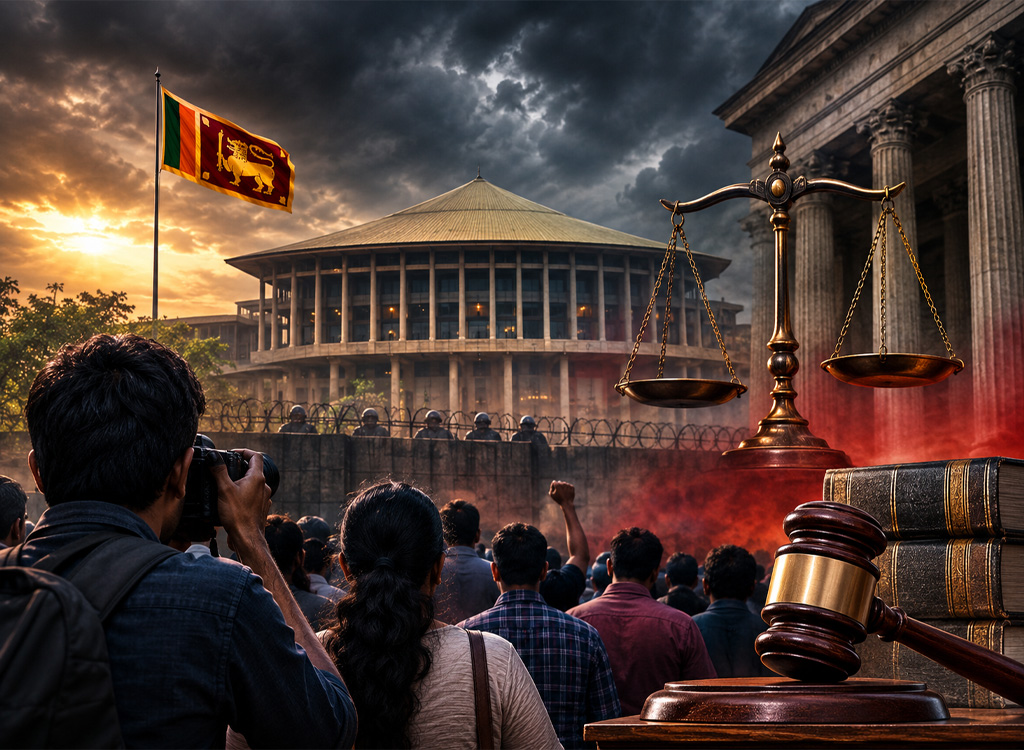
The National People’s Power (NPP) was elected to office on a simple moral claim: that it was different. After decades in which governments invoked national security to detain, silence and at times kill their critics, here was a movement that promised to dismantle that machinery rather than inherit it. Abolishing the Prevention of Terrorism Act of 1979 was a signature pledge, repeated from platforms across the country for years, if not decades by this very party, and embraced by voters weary of being governed through fear.
Yet the JVP/NPP government is now vigorously advancing two bills: the Protection of the State from Terrorism Bill (PST), gazetted in late September and presented as the burial of the PTA, and the Prevention of Organised Crimes Bill (POC), tabled on 6 October, and presented as the answer to organised crime. Lawyers, rights monitors and the state’s own Human Rights Commission have read the texts and concluded that in important respects they reproduce, and in places exceed, the very powers the JVP/NPP vowed to abolish.
The irony is hard to miss. The JVP knows repressive laws from the inside, having lived under them since 1971 and especially since 1987–89. It then secured power through the democratic route: the open platform, the free press, the ballot box. Now it proposes a legal order that would make that route perilous for those who follow. Trade unions, journalists, activists and ordinary citizens will all be affected. Here is a party that is effectively kicking away the ladder that carried it to the top.
Why states reach for repression
Governments rarely call repressive laws by that name. The language is always public safety, order and national necessity. Scholars and monitors tend to see four primary motives beneath it. The first is managing dissent: vague offences such as “disinformation” or “undermining state authority” make it risky for journalists, unions and protesters to organise. The second is escaping scrutiny: power drifts from the judiciary and rights commissions to ministries and security agencies, through parallel detention regimes and confessions taken by police. The third is institutional inertia: security agencies lobby for wider powers because they ease their work, and emergency powers, once acquired, are rarely surrendered but folded into permanent law in the name of modern threats. The fourth is crisis: governments expecting public anger over prices and livelihoods may deter the street with harsh penalties, and project toughness by pointing to scapegoats among the marginalised.
None of this proves intent here. But repressive law is usually wanted either to build an authoritarian order or to meet an imminent threat arriving through democratic means, and neither fits a government with a commanding mandate and a divided opposition. The haste and harshness of these bills therefore demand an explanation that has not been offered.
The police we actually have
A law is only as safe as the hands that enforce it. Older citizens remember the routine in which a suspect was taken out to reveal where weapons were hidden, then shot dead, the police claiming he had tried to escape. Dozens were killed under that dubious formula, and the present government promised to end it.
The recent record however gives little comfort. A court in Gampaha found that police had filed baseless drug possession charges against a resident of Makandana, dismissed the case, and ordered three officers and the Police Department to pay Rs 200,000 in compensation. It also directed the Inspector General of Police (IGP) to issue a nationwide circular forbidding frivolous cases against innocent people.
Instead, a Deputy Inspector General issued guidelines covering only the Gampaha, Kelaniya and Negombo divisions, and the magistrate directed that contempt proceedings be initiated against the IGP himself. The head of the force stands accused of disregarding a court on the very question of fabricated charges.
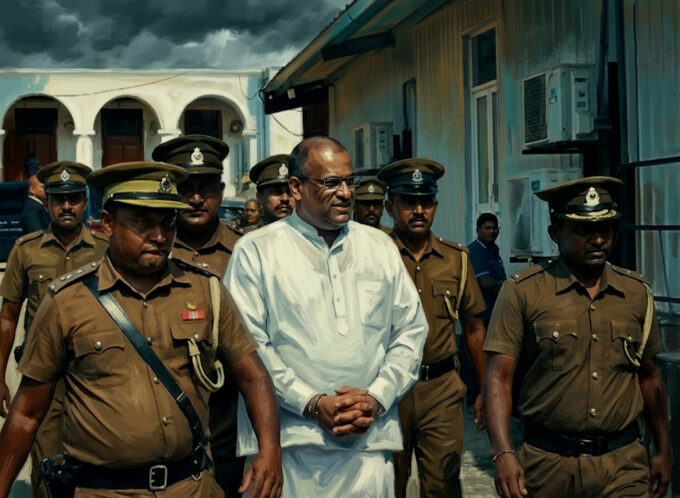
Then came Homagama, last week. The family of a young man says he walked into the police station on his own two feet to give a statement and was carried out dead, just hours later. He was a son, a husband and the father of a four-year-old. The police say he fell ill, an explanation that answers none of the questions that matter: what happened to him, what was done to protect his life, and what truly caused his death.
A suspect may face charges, but no charge is a licence to take his life. If torture or abuse of power occurred, the law must be enforced against those responsible, whatever their rank. This is not one family’s private tragedy. It concerns the right to life and the rule of law for every citizen, and it is the context in which every clause of the two new bills must be read. Too much power and too little restraint almost always produce a culture of torture and impunity. Sri Lanka has been there, done that and made up its mind in 2024, never again. But here we are, two years later, back at square one.
What the bills provide
The criticism rests on provisions any reader can examine. The terrorism bill retains a broad definition of terrorism that risks capturing property damage or public protest. It creates offences on loose standards, such as speech “likely to be understood” or “capable of being interpreted” as supportive of terrorism, removing the strict intent normally required for criminal liability. Its rules on confidential information could criminalise recording military deployments, checkpoints or arrests, threatening public-interest journalism.
The President may proscribe organisations without independent judicial oversight, and law enforcement authorities may issue detention orders running two months at a time for up to a year. With a further year of pre-trial detention, as Amnesty notes, a person could wait two years for a trial. Magistrates must remand mechanically, bail is confined to the High Court, and the security forces gain broad powers to stop, search and arrest.
The Organised Crimes Bill is more startling still. The secretary to the ministry in charge of the police could issue detention orders that magistrates would effectively be bound to enforce, and suspects could be held for 72 hours before being produced before a Magistrate. Confessions to senior police officers, not below the rank of Assistant Superintendent, become admissible, with the risk that the accused must prove they were coerced.
Individuals can be compelled to give information on pain of seven years’ imprisonment, and access to telecommunications and digital records would escape rigorous judicial supervision, endangering journalists’ sources and confidential legal communications. “Serious crime” extends to offences carrying penalties with a minimum of four years.
Most troubling is how the bill identifies membership of a criminal group. Courts may weigh clothing, tattoos, hand signs, language, associations and places visited. That is profiling written into statute, and the young and marginalised will bear it. The Bar Association of Sri Lanka (BASL) showed its absurdity: read literally, an amateur band playing popular songs at a restaurant without copyright permission could be an organised criminal group, its members detained and its instruments seized. Critics add that the terrorism bill may be worse than the law it replaces. The PTA was often justified through periodic emergency regulations, whereas this bill would place sweeping powers permanently in the ordinary statute book.
A rare unanimity of alarm
It is unusual for so many independent institutions to reach the same verdict. Human Rights Watch warns that both bills reproduce and expand the PTA’s abusive features, creating conditions for arbitrary detention and torture. Amnesty International wants them withdrawn, its regional office describing a “dangerous path” that weakens safeguards against torture and puts fair trial guarantees at risk. The UN Human Rights Office says the terrorism bill repeats the PTA’s structural flaws and urges a comprehensive review with genuine consultation.
Local voices are more telling because they know the system from within. The Bar Association asks for withdrawal of both bills in their present form, noting that the gazetted terrorism bill departed from the safer draft approved by the expert committee and demanding to know on whose instructions. The Human Rights Commission found the organised crimes bill potentially more draconian than the PTA, called prolonged police custody combined with admissible police confessions a recipe for torture, and noted that it offends Article 13(2) of the Constitution, which requires deprivation of liberty to be ordered by a judge.
The Centre for Policy Alternatives warns that vague wording will be turned against young people, unions and peaceful protesters, criminalising association rather than conduct, and that the fight against crime must not become a pretext for unchecked executive power. These are not partisan opponents. They include the bar, the state’s own rights commission and the UN among many others.
A rushed process and a constitutional test
The manner of the bills’ arrival compounds their substance. The Organised Crimes Bill was drafted and gazetted without meaningful consultation, its text unreleased beforehand. The terrorism bill’s earlier, expert-backed drafts, shaped by scholars such as Dr Jayampathy Wickramaratne, were reportedly altered in the final stages in favour of broader executive powers. Both carry heavy imprints of police and security thinking and little independent legal expertise or minority voice. There is a precedent worth recalling: an Organised Crimes Bill drafted in 2003 was abandoned by the Wickremesinghe government after sustained criticism of its reach. A government elected on reform can do no less.
The Constitution provides a safety valve, and it is in use. Under Articles 120, 121 and 123 the Supreme Court reviews bills before enactment and issues a special determination. About 25 petitions challenge the terrorism bill, filed by opposition parliamentarians, former ministers, activists and legal organisations, and oral submissions have concluded. The court may find a bill consistent with the Constitution, requiring a simple majority; may require a two-thirds majority; or, if core rights are affected, may require two-thirds plus approval at a referendum. Often, it indicates amendments that cure the defect.
A caution is needed: the court answers a legal question, not a political one, and a clause may survive review and still be unwise. But a determination requiring amendments is a gift, offering a dignified path to fix flawed law without loss of face.
Inherited, not imported
It is sometimes suggested that such provisions are borrowed from abroad, Singapore being the usual example. Sri Lanka does look abroad for economic and technology regulation, but these bills are largely homegrown. Their lengthy executive detention, broad security offences and curtailed judicial oversight trace their lineage to the PTA and the emergency laws of the colonial and post-independence eras, and where other jurisdictions pair strong powers with strict institutional checks, these bills lack the checks. They are old powers in modern dress.
They also betray a national undertaking. Opposition to the PTA never belonged to one party. Tamil parties and the families of the disappeared protested it most consistently for nearly half a century, having seen it used for mass arrests, ethnic profiling and indefinite detention. The left, including the JVP, suffered its application and campaigned against it. Mainstream parties from the UNP and SLFP to the SJB have pledged its repeal at election time. Repeal was a promise made to all of them, and to replace the PTA with a statute of equal or greater reach is to break it.
The price of getting it wrong
The cost of this course is not only moral. It is economic, and it falls on ordinary workers. Under the EU’s GSP+ arrangement, Sri Lanka enjoys zero or reduced duties on many exports, notably apparel, rubber products and bicycles, in return for effectively implementing 27 international conventions, including on human rights. Unlike a negotiated trade agreement, GSP+ is a concession the EU can withdraw, as it did in 2010; Sri Lanka regained it only in 2017. Repeal of the PTA has long been among the EU’s expectations, and the European Parliament has called for it, inviting the Commission to consider temporary withdrawal if it does not happen. Press reports on the Cabinet’s approval of the terrorism bill described it as closely linked to continued eligibility.
The stakes are large. The EU takes, by different estimates, roughly a quarter to nearly a third of Sri Lanka’s export revenue, and estimates of the share of EU-bound exports covered by GSP+ range from around 60 percent to above 80 percent. The EU’s own assessment put the tariff exemptions Sri Lanka enjoyed in 2024 at about EUR 139 million, roughly 5 percent of its export value to the EU. That may sound modest, but apparel margins are thin, buyers can shift orders over small price differences, and any loss would fall hardest on garment and rubber workers. The same assessment found that Sri Lanka showed increasing compliance during 2023–2025. The country has been moving in the right direction; these bills would reverse it.
The margin for error is narrow. EU imports from Sri Lanka already fell from EUR 3.2 billion in 2022 to EUR 2.6 billion in 2024, and the scheme is under review for renewal beyond 2027, reportedly with tougher criteria. Human Rights Watch has urged the EU to monitor these bills closely. A government that has laboured to stabilise the economy should not put that recovery at risk by enacting laws that international partners may regard as a retreat.
The way out
The government will answer, with some force, that the threat is real: organised crime and terrorism are genuine dangers, the PTA is being repealed rather than retained, and the Supreme Court’s review and the committee stage in Parliament can still correct defects. These points deserve a hearing, but they argue for better drafting, not for the present texts.
A path is available, and critics have mapped it repeatedly. The government should pause and withdraw the present drafts, as the Bar Association, the Human Rights Commission and the UN urge. In revising them, it should narrow definitions so the laws target criminality rather than civic space; remove subjective profiling; abolish executive detention outside the courts; end the admissibility of police confessions; and restore magistrates’ independent power to judge whether detention is necessary and proportionate.
It should consult in earnest, bringing independent scholars, rights defenders, minority representatives, unions, journalists and civil society into drafting before bills reach the Gazette, and accept the Supreme Court’s directions gracefully. And it should treat GSP+ not as a bargaining chip but as a measure of whether its laws honour the commitments that earned the concession.
The ladder
History will not judge this government by the speeches that carried it to power, but by what it does with the power it holds. Sri Lanka knows what follows when the state is armed with sweeping, unaccountable authority: the midnight arrests, the confessions obtained in custody, the young men who walk into police stations and do not walk out. Each generation of rulers has promised that this time the powers will be used wisely, and the promise has usually failed once the rulers changed.
The NPP has a rare chance to prove that those who suffered repression can refuse to become its architects. That means withdrawing the bills, rewriting them in the open, and building security law that protects people without making them afraid. A government that does so keeps faith with those who voted for change. One that does not will have shown that it climbed the ladder only to pull it up behind it, leaving the next generation of citizens, activists and opposition leaders no way up at all.
Disclaimer: The views and opinions expressed in this article are those of the writer and do not necessarily reflect the official position of this publication.









Leave a comment