
By Vox Civis
Since the guns fell silent in 2009, Sri Lanka has been handed more second chances than a nation of 22 million could reasonably expect. Each has been squandered, by every party that has held office. To their credit, voters have refused to be patient: governments that disappointed were dismissed, often brutally. One would have expected the present incumbents, who rode that anger to power, to have studied the lesson. They appear to have skipped the class.
The post-war moment was the greatest missed opportunity. Mahinda Rajapaksa’s government could have made national unity its organising principle, and almost everything else, from investment to reconciliation to the country’s international standing, would have followed. It chose instead the colonial recipe of divide and rule, courting the majority and alienating the minorities. The rest is history.
In 2015 voters swept the Rajapaksas out, handing President Maithripala Sirisena and Prime Minister Ranil Wickremesinghe a mandate to fight corruption and call the previous administration to account. Neither was pursued with conviction. By 2020 the UNP that had won in 2015 could not capture a single district seat, surviving in Parliament only through one national list place – voter brutality, at its peak.
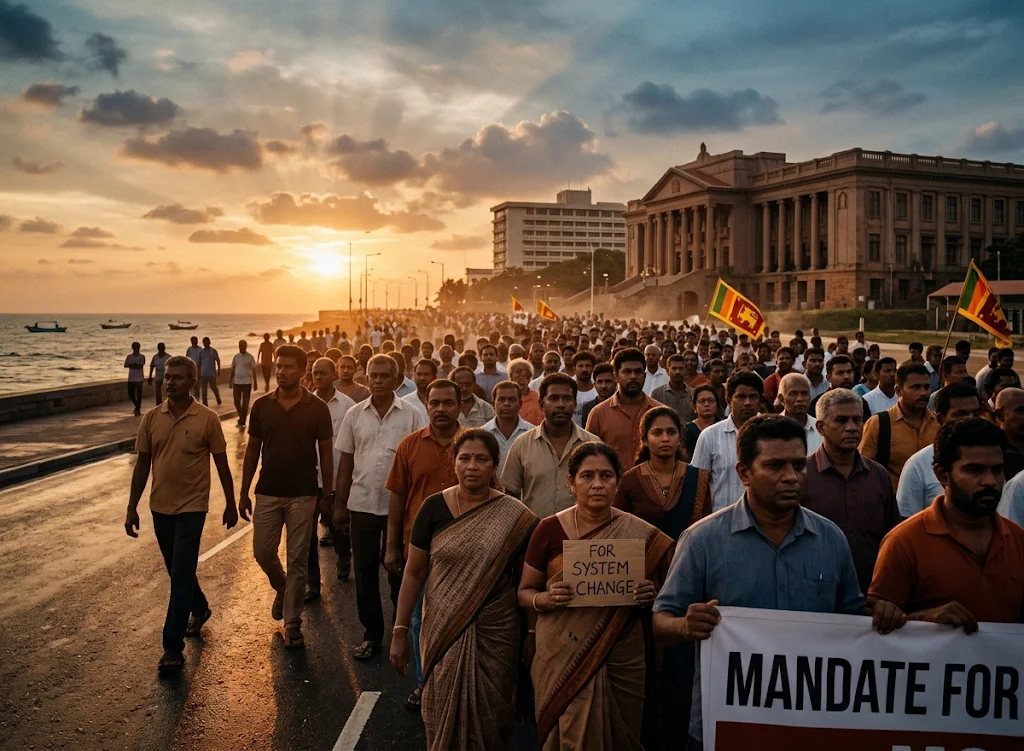
Then came the Rajapaksa return, the economic collapse and the uprising of 2022. The electorate has been consistently unforgiving. In 2024 it was the turn of the National People’s Power (NPP), the new kids on the block, promising nothing less than system change. Prominent among the pledges was the abolition of repressive legislation, with the Prevention of Terrorism Act (PTA) at the top of the list.
In reverse gear
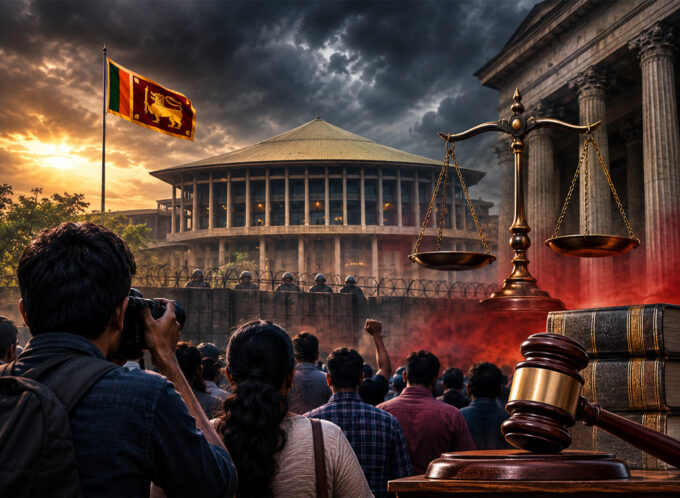
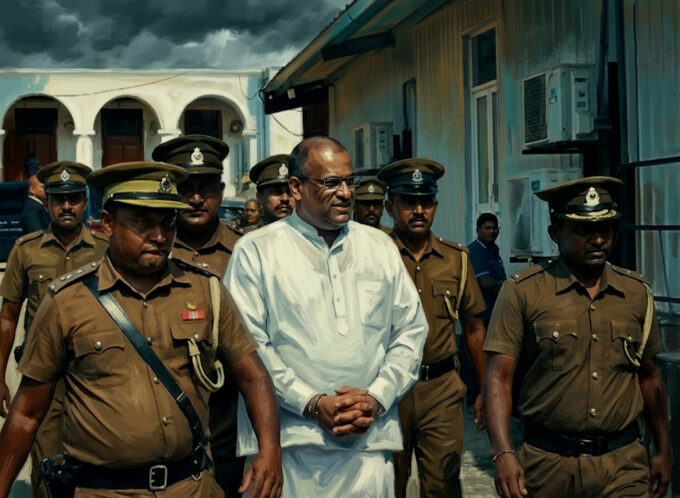
Two years on, the nation is watching the reverse. The Protection of the State from Terrorism Bill (PST) and the Prevention of Organised Crimes Bill (POCB), both placed before Parliament last month, have sent citizens trudging to the Supreme Court yet again, with around 25 petitions against the first and 26 against the second. A couple of months ago they were compelled to do the same against the 22nd Amendment. Citizens trudging back and forth to the apex court ever so regularly to save them from the regime they elected just two years ago, is indeed telling.
The Human Rights Commission, the State body entrusted with safeguarding the rights of the people, has called the POCB wholly incompatible with the Constitution’s fundamental rights chapter and warned that it may be even more draconian than the PTA. The Bar Association has demanded its withdrawal. Human Rights Watch argues that both Bills reproduce abusive features of the old law, including the admissibility of confessions made to police, which invites coercion.
The irony is rich. When the Wickremesinghe government brought its Anti-Terrorism Bill in 2024, three NPP heavyweights, Vijitha Herath, Wasantha Samarasinghe and Eranga Gunasekara, were among the petitioners who had challenged it. The title of the new law deserves scrutiny too. As a Sunday newspaper noted in an editorial, “sovereignty belongs to the people and a government merely holds it in trust. A law to ‘protect the State’ slides too easily into a law to protect the government of the day.”
The stakes are economic as well as moral. The European Union’s GSP+ concessions are conditional on human rights commitments, and Sri Lanka lost them once before, in 2010. The EU absorbs roughly a fifth of Sri Lanka’s merchandise exports. A Daily FT editorial warns that both Bills jeopardise the extension, and Human Rights Watch has urged Brussels to say plainly that the POCB would not meet Sri Lanka’s obligations.
A contradiction
The NPP government promised a ‘prosperous and beautiful country.’ Prosperity needs investment and trade, and repressive laws deliver neither. The ‘beautiful’ half of the promise was supposed to arrive with the abolition of such laws. It will certainly not arrive by their replacement.
The pattern extends beyond security legislation. On 25 September the government used its two-thirds majority to pass the 22nd Amendment and the Judicature (Amendment) Bill, which alter provisions on the judiciary, including the retirement ages of senior judges. It did so over the objections of the Bar Association and in the face of 67 Supreme Court petitions.
Two weeks later, Parliament passed amendments to the Anti-Corruption Act without a vote. The government says the changes fix legal and administrative flaws. Opposition MPs allege they could shield the asset declarations of officials from scrutiny, and they note that the IMF itself raised questions about transparency and accountability.
Majorities breed a dangerous sense of security. This week American voters delivered a stinging rebuke to Donald Trump, with Democrats taking both chambers of Congress after two years of governing as though opposition were an inconvenience. The lesson is not that majorities are illegitimate; it is that they are loans, repayable with interest, and that the surest way to forfeit one is to isolate the people who granted it. Trump’s ‘my way or the highway’ model has its Colombo equivalent, in a Parliament used to pass laws the public never asked for.
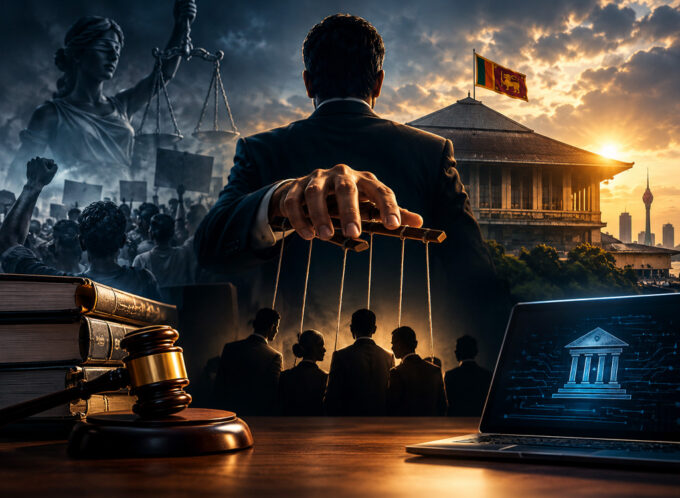
Then there is the President’s warning of a “shadow State.” Speaking at Temple Trees on Thursday (5), Anura Kumara Dissanayake said drug traffickers and organised criminal networks have used their wealth to influence politicians, police officers, officials and institutions. He cited drug seizures worth roughly Rs. 224 billion in a year. The threat is real, and the effort deserves credit.
But consider what the claim implies. A government with a two-thirds majority and the executive presidency announces that a parallel power structure operates inside the State it commands. Either the claim is true, in which case the government is confessing to a failure of governance that no new statute can paper over, or it is rhetorical cover for powers it wishes to acquire. Neither reading reassures investors, who treat such language as risk. Nor does it reassure honest public servants, who are told their institutions are compromised.
Wrong remedy
The proposed remedy, broad detention powers with weak judicial oversight, is the instrument Sri Lankans have seen turned on activists, journalists and minorities for more than four decades. A shadow State is dismantled by transparent institutions and prosecutions that survive in open court, not by granting the State powers that thrive in the dark.
Behind this appetite for control lies, one suspects, the economy. The NPP is new to government and was entitled to a learning period, and the inheritance was a country emerging from default. Stabilisation under the IMF programme is real, and a staff-level agreement on the seventh review has just been reached. But two years into a five-year term, the government’s one, and seemingly only, dependable revenue mechanism has been to tax the public harder
Revenue has climbed from 12.3 per cent of GDP in 2021 to beyond the 15 per cent target the IMF set for 2024, a target surpassed in 2025. Dr. W.A. Wijewardena, a former Deputy Governor of the Central Bank, told CA Sri Lanka’s 28th Annual Tax Oration that outperforming the IMF is no cause for celebration, since every extra rupee collected is taken from households and firms that would otherwise consume and invest.
The income tax threshold was cut to Rs. 100,000 a month before being raised to Rs. 150,000, with a marginal rate of 36 per cent. Every citizen over 18 now needs a Taxpayer Identification Number (TIN). VAT has risen from 8 per cent in 2021 to 18 per cent, and a registration threshold of Rs. 36 million has dragged small firms into a complex compliance regime. Indirect taxes on essentials make the system regressive. Add inflation, which stood at 8.3 per cent in October against 2.1 per cent a year earlier, and the squeeze is complete.
The story in the numbers
The sting lies in what the money is not doing. The IMF sought a primary surplus of 1.5 per cent of GDP in 2025. The government delivered about 4 per cent, largely by under-spending on capital projects. Only about 75 per cent of the Rs. 1.3 trillion capital allocation was spent in 2025.
For 2026, an equal allocation was only 28 per cent used by the end of September. A government that collects like a creditor and spends like a miser is balancing a ledger, not planning for growth. Dr. Wijewardena called it a breach of the moral contract: overcrowded hospital wards, dependence on private tuition, and an Inland Revenue system whose RAMIS platform cannot cope with the expanded tax net.
Fuel tells the same story. Prices rose again on 2 November. The government maintains it is absorbing losses, yet dealers say neither the pricing formula nor its cost components have been published since October 2024, despite a Cabinet requirement to do so with every revision. Publishing it would settle the argument and reveal the tax component. A government confident of its case would do so. In the absence of it, a civic minded citizen may yet again have to trudge to Hulftsdorp Hill to obtain the formula through court intervention.
Squeezing disposable income starves the consumer demand that circulates money, sustains small firms and fills the tax base. What Sri Lanka needs is production and exports, and both lag. In 2025 tourism missed its 3 million target, landing at a record but insufficient 2.36 million. The 2026 target was cut from 3 million to 2.7 million, yet arrivals through September stood at 1.69 million, nearly 2 per cent below last year, and earnings for January to August were 10 per cent lower.
In fairness, the Gulf crisis shaved about a fifth of arrivals in March and April, but the government now promises 5 million arrivals and US$10 billion by 2030. With earnings of about US$1,340 per visitor, that requires some 7.5 million arrivals, more than three times the 2025 figure. The alternative is 5 million visitors who each spend about half as much again. The current average daily spending of about US$148 does not point that way.
A prominent minister has been celebrating export growth, but the detail is less flattering. Total exports grew 5 per cent in the first nine months of 2026, to US$13.6 billion, against growth of 13.7 per cent in January. Apparel, the backbone, fell 5.5 per cent. September’s record month was powered by petroleum products and machinery, not garments.
Ignored warnings
Exporters speak of rising costs, eroded margins, expensive energy and investment reduced to a trickle. In IT and BPM, the sector that kept growing through the crisis, Central Bank data reportedly show earnings down about 15 per cent in the first nine months, though the Export Development Board’s estimates showed growth earlier in the year and the industry says official figures undercount revenue invoiced abroad. The data are contested but the warnings are not: the industry has cautioned since 2024 that taxing export services would erode its competitiveness, and a sector that can invoice from anywhere can also leave.
Meanwhile, at a time when strengthening business confidence is of paramount importance comes another bolt from the blue. President’s Counsel Eraj de Silva has warned in his submissions to court, that the proposed POCB could expose legitimate businesses, professionals and ordinary citizens to arbitrary arrest and detention, arguing that its broad definitions and extensive investigative powers create considerable scope for abuse. Given this one step forward and two steps back economic strategy, one is given to wonder if there is any strategy at all.
On Thursday (12), the President as Finance Minister will present the 2027 Budget, and the choices couldn’t be more difficult. In the 2026 Budget estimates, interest payments alone take about 29 per cent of spending, and total debt service about half. Salaries and pensions take another 22 per cent. Dissanayake has pledged further tax cuts without endangering the revenue target, while Treasury officials say to expect reforms rather than cuts. Both cannot be right. The proposed capital spending of Rs. 1.75 trillion will mean little if 2026’s under-execution is repeated.
The NPP government faces a choice, and sooner rather than later. It can continue down the path of repressive laws, concentrated power and a taxed-to-the-limit public, or it can win the trust of its people with growth, transparency and restraint. Citizens who removed one regime after another will not hesitate to remove another. The NPP won because Sri Lankans wanted change. It should remember that they meant change from this.
Disclaimer: The views and opinions expressed in this article are those of the writer and do not necessarily reflect the official position of this publication.







Leave a comment