
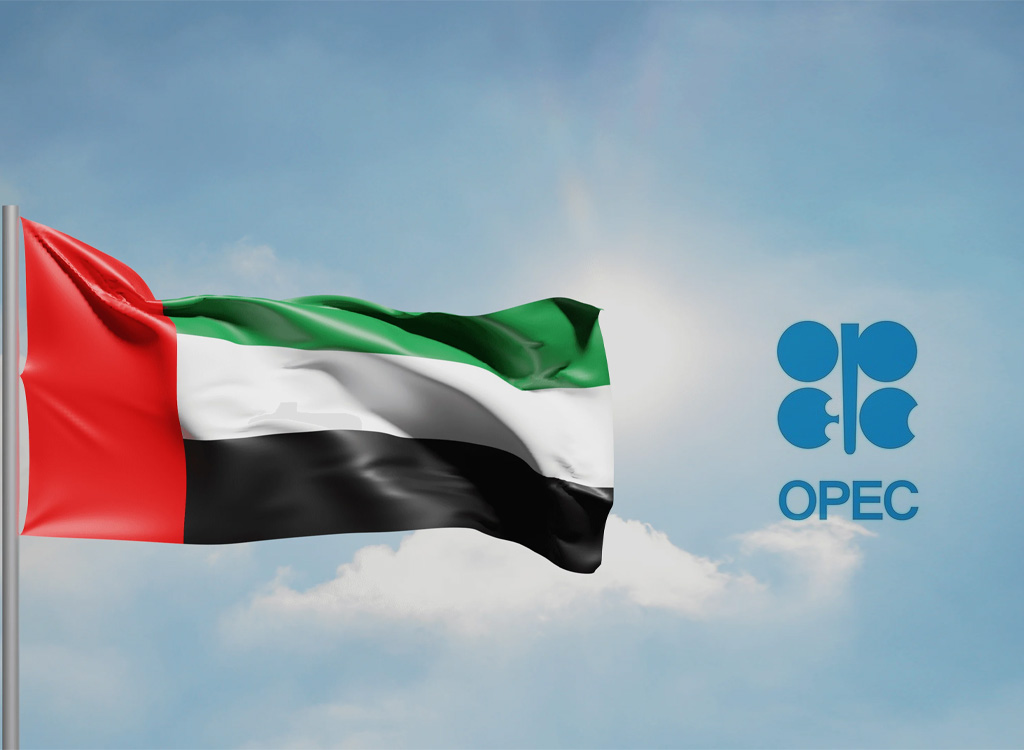
The United Arab Emirates (UAE) has announced that it will withdraw from the Organization of the Petroleum Exporting Countries (OPEC) effective May 1, marking one of the most significant shifts in global energy governance in decades.
The decision signals a break from a decades-long arrangement in which the UAE played a central role within the oil-producing bloc that has shaped global crude pricing and supply coordination since its establishment. While official details of the announcement remain limited, the move is expected to reshape dynamics within OPEC and its wider alliance framework.
The UAE has long been considered one of the most influential members of OPEC, balancing its position as a major oil exporter with an increasingly diversified economic strategy. In recent years, it has expanded production capacity and invested heavily in energy infrastructure, tourism, logistics, and financial services, reflecting a broader ambition to reduce reliance on hydrocarbons.
Tensions within OPEC+ – the expanded grouping that includes non-OPEC producers – have periodically emerged over production quotas and output ceilings. The UAE has previously expressed dissatisfaction with restrictions it viewed as limiting its ability to fully utilise its production potential. These disagreements have often been resolved through negotiation, but they have underscored differing priorities among member states.
Analysts say the exit, if implemented as announced, could have far-reaching implications for global oil markets. OPEC has historically functioned as a mechanism to coordinate supply and stabilise prices, with Saudi Arabia typically acting as the group’s key swing producer. The departure of a major Gulf producer like the UAE could weaken the cohesion of the bloc and complicate future output agreements.
At the same time, the UAE remains deeply integrated into global energy markets and is unlikely to abandon its role as a major exporter. Any post-OPEC strategy would likely involve continued coordination with other producers through alternative frameworks, though the structure of such arrangements remains unclear.
The announcement also raises questions about the future of OPEC itself. Established in 1960, the organisation has weathered multiple crises, including oil shocks, wars, sanctions, and internal disagreements. However, the rise of diversified production centres, renewable energy transitions, and shifting demand patterns has already placed pressure on its traditional influence.
Market reactions are expected to be closely watched in the coming days, particularly as traders assess whether the decision will affect supply stability or trigger volatility in crude prices. Historically, even signals of discord within OPEC have had immediate effects on global markets.
For now, the UAE’s move represents a significant realignment in energy geopolitics. Whether it leads to a broader fragmentation of producer coordination or a recalibrated system of cooperation will depend on how remaining members respond and whether new mechanisms emerge to fill the gap left by one of OPEC’s most strategically important participants.








Leave a comment