
By The Pulseline News Desk
Food security is no longer just a development goal since it has now become a core question of national stability. In Sri Lanka, the ability to reliably produce, import, and distribute food has emerged as a defining policy challenge, closely tied to economic recovery, social cohesion, and political resilience.
The shocks of recent years have exposed how fragile the system can be. The 2022 economic crisis, marked by severe foreign exchange shortages, disrupted the import of essential commodities, from fuel to fertiliser. The sudden shift to organic farming in 2021 further compounded the strain, leading to reduced agricultural yields and forcing the country to rely more heavily on imports at a time when it could least afford them.
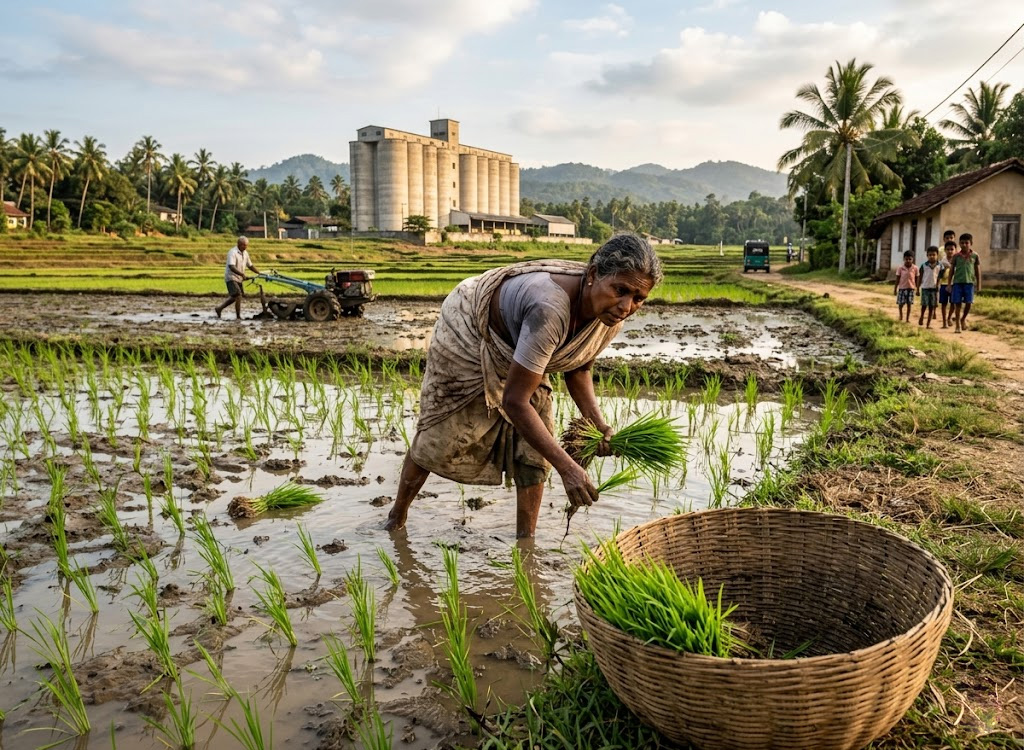
At the center of Sri Lanka’s food security framework is rice, which is the staple that underpins daily consumption. Institutions such as the Paddy Marketing Board and the Ministry of Agriculture play a key role in managing paddy procurement, price stabilisation, and farmer support. Yet, recurring issues ranging from post-harvest losses to inconsistent policy direction have limited their effectiveness.
Climate variability has added another layer of uncertainty. Irregular rainfall patterns, prolonged droughts, and occasional flooding have disrupted planting cycles and harvests. Sri Lanka’s reliance on monsoon systems means that even minor climatic shifts can have outsized impacts on food production. Efforts to promote climate-resilient agriculture remain ongoing, but progress has been uneven.
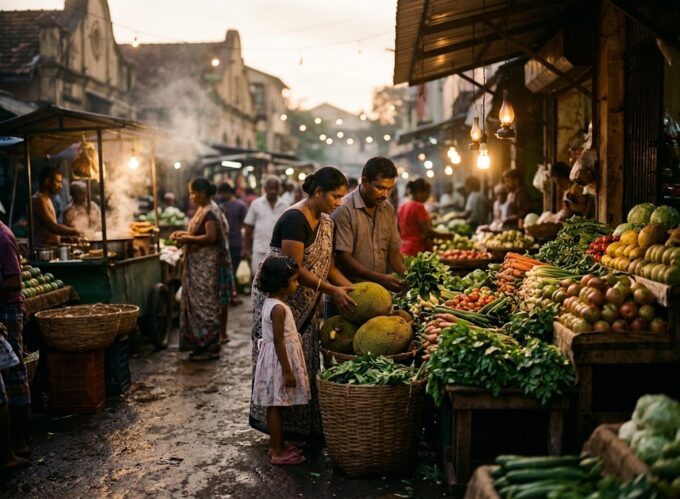
Meanwhile, the cost of food continues to weigh heavily on households. Inflation during and after the crisis significantly eroded purchasing power, pushing many families toward reduced consumption or lower-quality diets. Food security, in this sense, is not only about availability, but also equally about affordability and access.
The government has taken steps to stabilise the sector. Fertiliser subsidies have been partially restored, and there have been renewed efforts to support domestic cultivation. Discussions around diversifying crops, improving storage infrastructure, and reducing dependency on imports have gained traction. However, implementation gaps persist, often undermining policy intent.
International partners, including the World Food Programme (WFP), have also played a role in addressing immediate food needs, particularly among vulnerable populations. School meal programs and targeted assistance schemes have helped cushion the worst effects of the crisis, but these are not long-term substitutes for systemic resilience.
A key challenge lies in coordination. Food security cuts across multiple sectors – agriculture, trade, finance, and social welfare – yet policy responses are often fragmented. Experts argue that a more integrated national strategy is needed, one that aligns production goals with market realities and nutritional outcomes.
There is also growing recognition that food security is closely linked to national security. A country that cannot feed itself or secure reliable supply chains is inherently vulnerable to external shocks. This has prompted renewed debate about self-sufficiency versus strategic imports, and how best to strike a sustainable balance.
For Sri Lanka, the path forward will likely involve a mix of both. Strengthening domestic agriculture is essential, but so is maintaining stable trade relationships and adequate reserves. Investment in technology, irrigation, and farmer education will be critical, as will reforms to improve efficiency in distribution and reduce waste.
Ultimately, food security is not a single policy objective but an ongoing process – one that requires consistency, adaptability, and political will. For a nation still navigating economic recovery, ensuring that every household has reliable access to safe and nutritious food may be one of the most important tests of governance in the years ahead.
It is in such a backdrop that Prime Minister Harini Amarasuriya yesterday (28) noted during an event in Colombo that, amid the prevailing turbulent global environment, the agriculture sector is facing significant challenges, while food security has become a key factor influencing a country’s stability, sovereignty, and national security.
“Food security, founded on agriculture, directly impacts a nation’s national security. Concepts such as ‘Grow and Sell’ contribute significantly to strengthening the production economy,” she said.
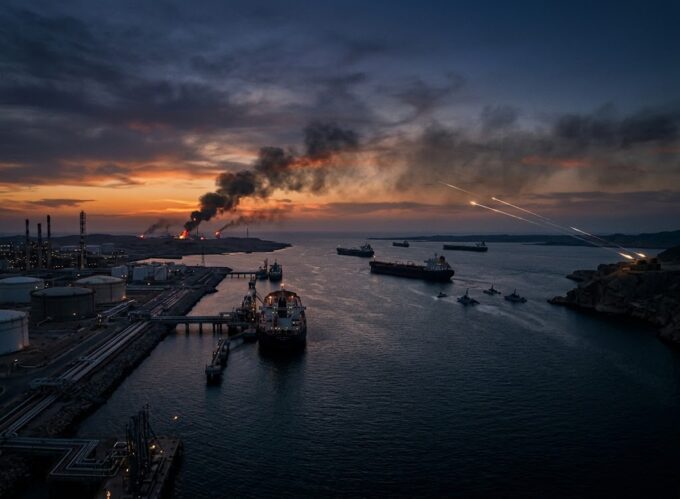
She also pointed to global disruptions, noting that the COVID-19 pandemic and ongoing conflicts in the Middle East have demonstrated how vulnerable economies become in the absence of food security. She warned that even minor policy decisions by global leaders could disrupt supply chains.
The Prime Minister further highlighted that climate change poses serious and growing challenges to agriculture, making production increasingly unpredictable.
“In such a context, your contribution as agri-entrepreneurs goes beyond earning an income. It is a direct contribution to the nation’s food security and, consequently, to national security,” Amarasuriya said, adding that youth innovation in agriculture is essential for the country’s future.










Leave a comment