
By Dinouk Colombage
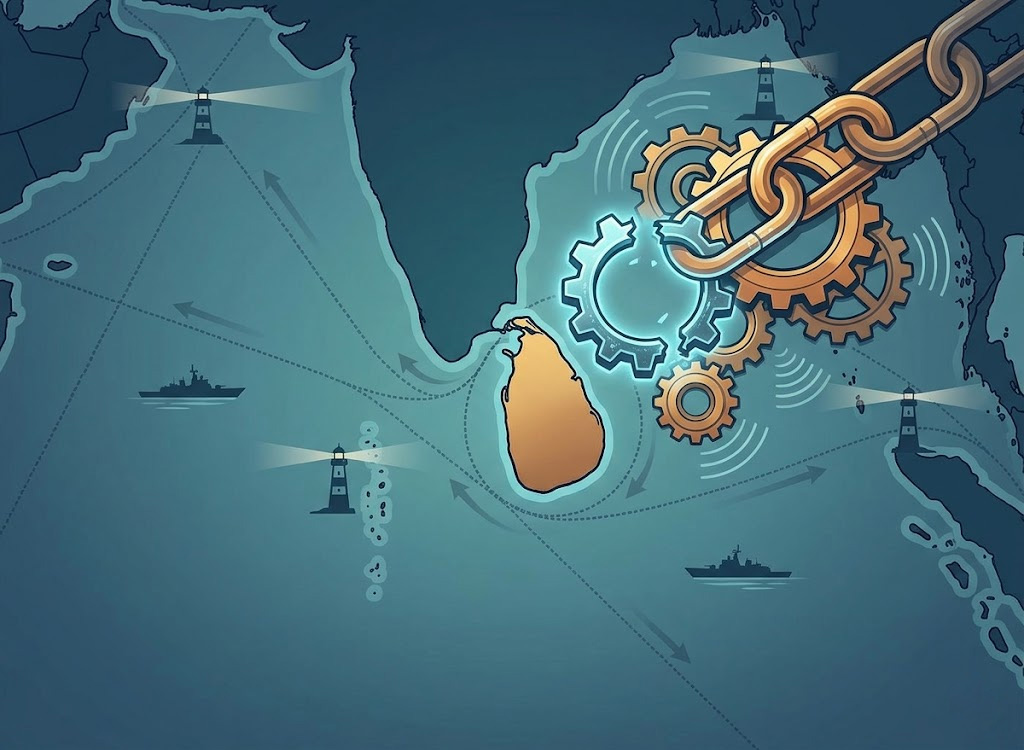
Buried amidst the numerous headlines this past week was the announcement by India’s Ministry of External Affairs Secretary Vikram Misri that the Colombo Security Conclave (CSC) was to be formalised into an international organisation.
Having accompanied Indian Vice President C.P. Radhakrishnan on an official visit to Sri Lanka, Misri made the announcement at a media briefing in Colombo. The development of the CSC follows on from the efforts initiated by former President Ranil Wickremesinghe in 2022–’24, whereby a greater emphasis was placed on the expansion of the CSC.
It was in August 2024 that the Charter and the Memorandum of Understanding (MOU) to establish the CSC’s Secretariat were signed in Colombo. While the latest step in the evolution of the conclave is welcome news, it has also thrown a light on the shortcomings within Sri Lanka’s current security and geopolitical apparatus.
The CSC, initially founded in 2011, has grown from a trilateral forum (India-Sri Lanka-Maldives) to now encompass six member states (including Bangladesh, Mauritius, and Seychelles), with Malaysia occupying the position of guest participant.
Built around five pillars (1. Maritime Safety and Security; 2. Countering Terrorism and Radicalisation; 3. Combating Trafficking and Transnational Organised Crime; 4. Cyber Security and Protection of Critical Infrastructure and Technology; 5. Humanitarian Assistance and Disaster Relief), the conclave’s primary objective has been to develop regional stability, security, and cooperation among member states.
As has been demonstrated through the ongoing war in West Asia, the Indian Ocean is fast becoming a host to expanding big power rivalry and third-party influences and militarisation.
Only South Asian country without an NSA
Interaction and cooperation among the members of the CSC have been designed to take place at the level of National Security Adviser (NSA). However, since the assumption of office by the National People’s Power (NPP) Government in 2024, Sri Lanka has not had an NSA; this follows Sagala Ratnayaka’s resignation from the position in the aftermath of the Presidential Election the same year.
The responsibilities that would have otherwise been delegated to the NSA are now being handled by the Secretary to the Ministry of Defence. Coupled with the immense administrative responsibilities accompanying the Ministry of Defence, concerns have now been raised whether the Secretary of Defence will have the adequate bandwidth to dedicate to this essential position.
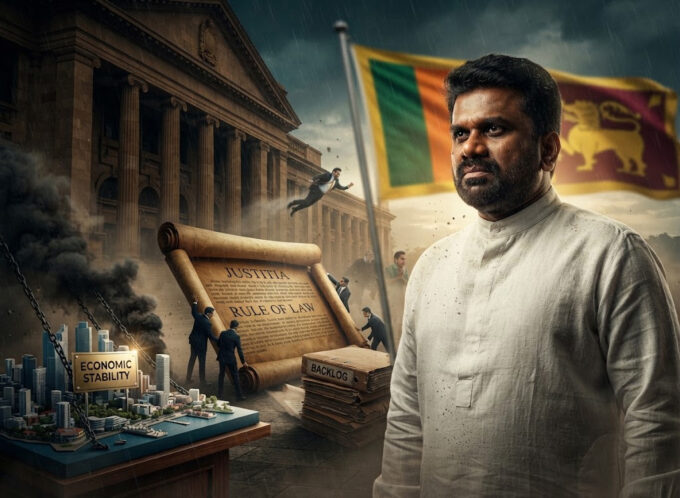
The country is running the potential risk of growing backlogs, breakdown in communication, and an absence of decision-making in the geopolitical arena.
It was under former President Wickremesinghe that legislation had been drafted to operationalise the Office of the NSA, similar to that of its counterparts in India and the US.
The NSA is an appointment that bridges an otherwise pre-existing gap between the Ministries of Defence and Foreign Affairs and the President’s Office. The NSA, and their office, are not only tasked with providing an overarching view of the current security and intelligence apparatus in the country, but also provides a direct line of communication between the president and his counterparts abroad.
Among the South Asian states, Sri Lanka is currently the only country without a functioning NSA. The absence of this official has been noted not only by foreign missions in Colombo but also their respective governments.
Concerns have been raised behind closed doors by Colombo-based diplomats that the absence of an NSA has seen continual delays in communications with the President’s Office. In fact, following the sinking of the Iranian naval vessel IRIS Dena last month, confusion reigned amongst diplomats over who would be running point on this issue for the Sri Lankan Government.
While the Sri Lanka Navy was engaged in Search and Rescue (SAR) operations, the geopolitical fallout from the attack was left unanswered as both the Ministry of Foreign Affairs and the Ministry of Defence were unsure who would face up to this matter.
The NSA structure
The NSA, while often a political appointee, is an experienced official responsible for directly advising the president on matters related to foreign affairs, national security, and intelligence.
Hosted at the Presidential Secretariat, the direct access to the president allows for swift decision-making. Most importantly, unlike secretaries to the ministries, the NSA will be solely focused on these particular issues and will not be encumbered by the administrative responsibilities accompanying a ministry.
While both the NSAs in India and America operate in similar fashions, India’s NSA has greater operational responsibilities, while the NSA in the US focuses on direct communications with the president in assisting with the formulation of policy and strategy.
Under the Indian system, the NSA (currently Ajit Doval) is the Secretary to the National Security Council (NSC) which is chaired by the Prime Minister and oversees the NSC Secretariat. It is this secretariat that handles the daily administration and intelligence coordination for the country. Doval is also often dispatched as a special envoy of the Prime Minister to foreign nations regarding sensitive issues that require discretion and authoritative engagement.
In the US, the NSA is a similar high-ranking official who is responsible for inter-governmental coordination on matters of security and intelligence, while also acting as an in-house adviser and policy guide for the president. Playing a less visible role to that of India’s NSA, the NSA in the US is equally influential and serves as a link between the White House and foreign governments on issues that require circumspection that may be found wanting within the bureaucratic hallways of Washington.
Growing importance
The 21st century geopolitical stage has shifted from traditional diplomacy to once again one of backroom channels and military involvement. Organisations such as the CSC, while focused on maritime security and intelligence sharing, will fast become a focal point of Indian Ocean geopolitics.
While the conclave saw a suspension of engagements between 2014 and 2020 due to tensions between India and the Maldives, it has since become a frequent meeting point for the members’ security apparatus.
However, for Sri Lanka to fully benefit from the expanding role of the conclave, a dedicated and experienced NSA is required. As highlighted above, the role of the NSA goes beyond national security and incorporates foreign affairs. In multilateral forums such as the CSC, the country’s representative will not only be required to have authority on security matters but also be well versed in geopolitics.
As global tensions continue to expand beyond the existing theatres of war, regions such as the Indian Ocean are primed to inadvertently play host to diplomatic standoffs. As such, the ability of countries such as Sri Lanka to navigate the turbulent waters ahead is reliant on the modernisation of diplomatic and administrative structures.
Positions such as the NSA will become far more important as bureaucratic red tape cannot be allowed to obstruct decision-making on this front. Bureaucratically, Sri Lanka is well staffed (with many suggesting that the country is over-staffed); however, on the part of policymakers, beyond Members of Parliament, the country has been found wanting.
With fast-paced geopolitical games afoot, it would be prudent for the Government to not only immediately appoint a competent NSA but to also enact the previous legislation to formalise the Office of the NSA.
(The writer is the Chief Research Officer at the Geopolitical Cartographer and has previously served as the Director of International Affairs to former President Ranil Wickremesinghe)
Disclaimer: The views and opinions expressed in this article are those of the writer and do not necessarily reflect the official position of this publication.










Leave a comment