
By The Pulseline News Desk
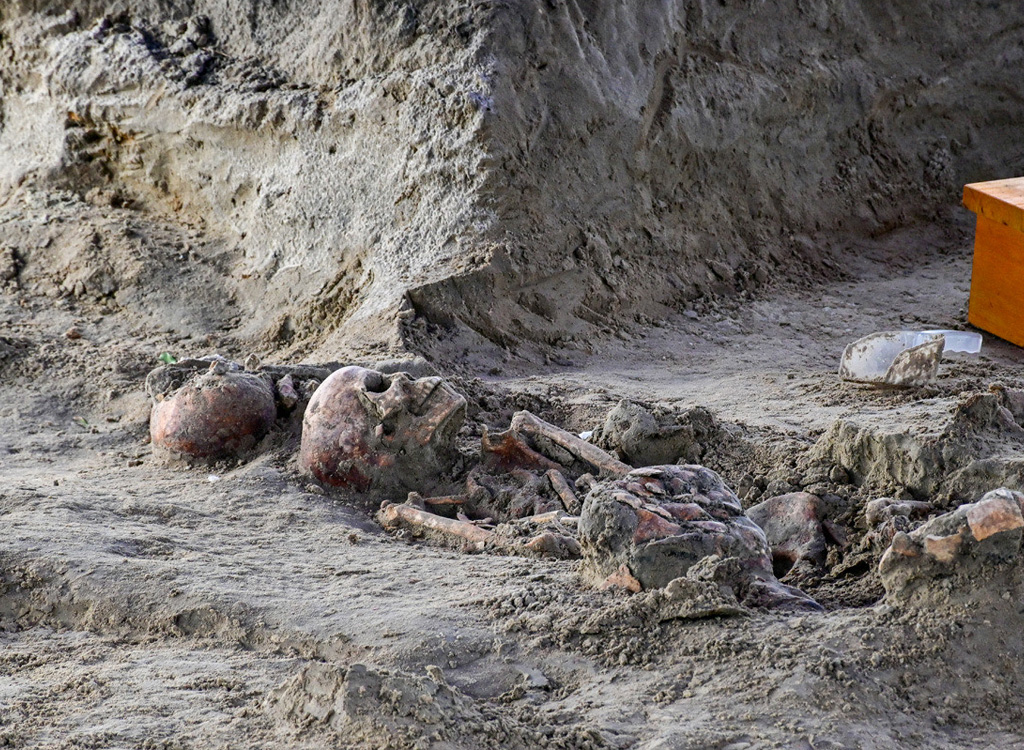
The excavation at the Chemmani mass gravesite in Jaffna is set to resume on 1 June after heavy rains forced authorities to temporarily suspend operations, as the number of skeletal remains recovered from the site climbed to 262 in one of Sri Lanka’s most closely watched post-war investigations.
Court-supervised excavations at the site, which have long been linked to allegations of enforced disappearances and wartime abuses, have once again drawn intense scrutiny from forensic experts, rights groups, diplomats, and families searching for answers about relatives who vanished during the conflict years.
Officials overseeing the excavation said deteriorating weather conditions made it impossible to continue work safely over recent days.
Consultant Judicial Medical Officer (JMO) Dr. Selliah Pranavan has confirmed to the media that the interruption was temporary and that excavation teams would return to the site at the beginning of June.
“We are starting on 1 June. Activities at the excavation site had to be halted due to the adverse weather that has been prevailing,” he has said.
The latest update comes amid growing public attention over the scale of the discoveries emerging from the northern burial ground. Office on Missing Persons (OMP) Executive Director Dr. Jeganathan Thatparan has said the excavation had now reached a critical stage, with investigators uncovering a steadily increasing number of remains.
“In terms of new findings, the number of skeletal remains has risen to 262, of which 260 have been excavated; two remain to be fully excavated,” he has said.
Sensitive post-war history
The Chemmani site occupies a deeply sensitive place in Sri Lanka’s post-war history. Allegations surrounding mass burials in the area first surfaced decades ago during investigations into disappearances linked to the conflict in the North. For many families of the missing, the renewed excavation represents both a painful reopening of old wounds and a rare opportunity for truth and accountability.
The recovery process has become increasingly complex as the number of remains rises. Forensic specialists are expected to play a central role in the next phase of the investigation, including cataloguing skeletal material, conducting anthropological examinations, and determining whether DNA analysis can assist in identifying victims.
Questions have also intensified over the capacity of local laboratories and the time frame required for scientific testing. Rights advocates and families of the disappeared have repeatedly called for transparency in the handling of evidence and for international technical assistance where necessary.
Diplomatic observers and human rights organisations are also monitoring developments closely, viewing the excavation as a test of Sri Lanka’s broader commitment to addressing long-standing allegations of enforced disappearances and wartime abuses through credible judicial processes.
Emotional toll
At the excavation site itself, the emotional toll remains visible. Relatives of the missing have continued to gather near the area, hoping that the investigation may finally provide answers after years of uncertainty.
For many, however, the discovery of additional remains has brought renewed anguish alongside hope. Each excavation layer deepens the scale of the tragedy while underscoring the unresolved legacy of disappearances that continues to shape Sri Lanka’s post-war landscape.
With excavation work scheduled to restart in early June, attention is now turning to what investigators may uncover next – and whether the process will ultimately lead to identification, accountability, and long-awaited closure for grieving families.










Leave a comment