
By The Pulseline News Desk
A nationwide inspection by the Consumer Affairs Authority (CAA) has uncovered expired and unfit medical laboratory materials at a number of private hospitals and medical laboratories, raising fresh concerns over quality control and patient safety within Sri Lanka’s private healthcare sector.
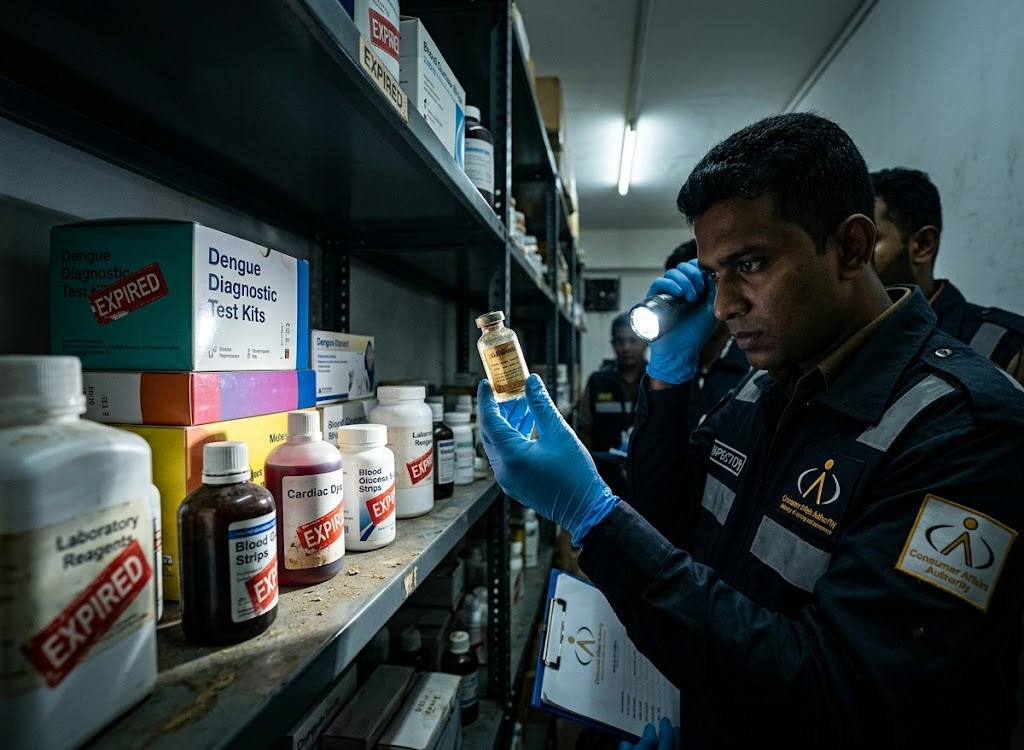
The CAA has announced that 52 special raids were carried out across all districts as part of an islandwide operation aimed at ensuring healthcare providers comply with consumer protection laws and maintain acceptable standards in the storage and use of medical supplies.
The inspections had revealed a series of serious irregularities, including the storage and use of expired laboratory materials alongside products that were still being used in medical testing.
Among the items seized were expired blood glucose testing kits, laboratory chemicals, dengue diagnostic test kits, gels used in cardiac-related procedures, laboratory dye solutions and a range of other consumables routinely used during medical examinations.
According to the authority, the materials have been taken into official custody while investigations continue.
The CAA has said legal action will be initiated against the institutions found to have violated provisions of the Consumer Affairs Authority Act, adding that similar inspections will continue across the country to safeguard public health and consumer rights.
Patient safety at the centre
Although Sri Lanka’s public healthcare system provides free medical services, the private healthcare sector has grown significantly over the past two decades, with thousands of patients seeking laboratory investigations, diagnostic services and specialist treatment from private hospitals and independent laboratories each day.
The accuracy of laboratory testing plays a critical role in modern medicine. Physicians rely on laboratory results to diagnose diseases, monitor treatment and make clinical decisions. The use of expired diagnostic materials or improperly stored laboratory consumables can affect the reliability of test results, potentially leading to delayed diagnoses, inappropriate treatment or unnecessary medical procedures.
Medical products such as glucose testing kits, dengue rapid diagnostic tests and laboratory reagents are manufactured with specified shelf lives to ensure their accuracy and effectiveness. Once expired, these materials may no longer perform according to approved standards, making strict inventory management and quality assurance essential components of healthcare practice.
Growing regulatory oversight
The latest operation reflects increasing regulatory scrutiny of Sri Lanka’s private healthcare sector as authorities seek to strengthen consumer protection and improve compliance with health and safety standards.
The CAA, established under the Consumer Affairs Authority Act, is responsible for protecting consumers against unfair trade practices and ensuring that goods and services offered to the public meet prescribed standards. While the authority traditionally focuses on consumer goods and commercial practices, it also conducts inspections of service providers where consumer health and safety may be compromised.
Officials say inspections are carried out based on intelligence, public complaints and routine monitoring, with enforcement measures ranging from warnings and prosecutions to the seizure of unsafe products.
Call for stronger compliance
The discovery of expired medical laboratory materials has renewed attention on the importance of internal quality control systems within private healthcare institutions.
Healthcare experts note that laboratories are expected to maintain rigorous stock management procedures, including regular inventory checks, proper storage conditions and the immediate disposal of expired materials. Many accredited laboratories also operate under internationally recognised quality management systems that require routine audits and documentation of laboratory supplies.
The CAA has indicated that its latest operation is part of a continuing nationwide enforcement programme rather than a one-off inspection.
With legal proceedings now expected against institutions found to be in violation of the law, authorities say further islandwide inspections will be conducted to ensure healthcare providers adhere to required standards and that patients receive safe, reliable diagnostic services.













Leave a comment