
By The Pulseline News Desk
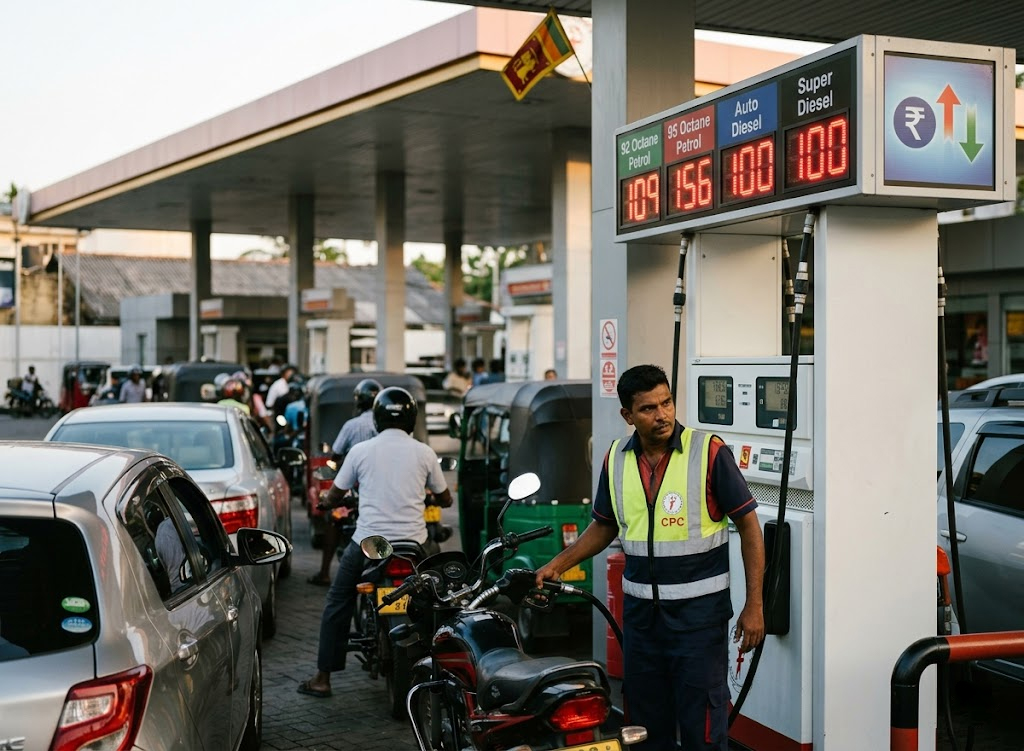
The country’s state-run fuel supplier has assured the public that the country holds sufficient fuel stocks through August, easing immediate concerns over supply disruptions, though a weakening rupee is increasing pressure on future retail fuel prices.
The Ceylon Petroleum Corporation (CPC) said existing inventories and scheduled shipments were adequate to maintain uninterrupted fuel distribution over the coming months, as Sri Lanka continues its fragile recovery from a foreign exchange crisis that triggered severe shortages in 2022.
The assurance comes as the Sri Lankan rupee has shown renewed depreciation pressure against the US dollar, raising concerns over the rising local currency cost of importing refined petroleum products.
Sri Lanka imports most of its fuel requirements, making domestic retail prices highly sensitive to exchange rate fluctuations and global oil market movements.
CPC Managing Director Mayura Neththikumarage has told the media that available inventories were sufficient “for now,” amid continued volatility in international oil markets and exchange rate pressures affecting landed costs.
However, import figures indicate that while global fuel prices have eased from recent peaks, the Corporation’s purchase prices remain elevated in several categories, with diesel in particular recording significant cost spikes during April.
During the first week of April, the CPC had purchased 38,814 barrels of super diesel at US$ 303.76 per barrel. In the same period, it had imported 293,804 barrels of diesel at US$ 289.47 per barrel, followed by a further 254,219 barrels at US$ 281.87 per barrel.
In late March, diesel imports had included 239,805 barrels priced at US$ 285.28 per barrel, alongside a separate shipment of 265,455 barrels at US$ 195.81 per barrel.
Overall, from March to early May, diesel procurement prices have ranged from a high of US$ 303.76 per barrel for super diesel to a low of US$ 172.74 per barrel, reflecting sharp intra-month volatility in global supply contracts and market benchmarks.
Petrol imports were comparatively lower in cost over the same period. Petrol 92 had recorded a peak purchase price of US$ 153.70 per barrel in late April, while the lowest recorded price was US$ 130.89 per barrel for a shipment of 312,899 barrels.
For higher-grade petrol, CPC had imported Petrol 95 in two shipments during March and April, priced at US$ 143.53 per barrel and US$ 154.72 per barrel respectively, covering 44,405 barrels and 44,322 barrels.
Energy analysts say that even if global crude prices remain relatively stable, a weaker rupee can significantly increase the landed cost of fuel cargoes, eventually forcing adjustments to domestic pump prices under Sri Lanka’s monthly fuel pricing formula.
The CPC statement is likely intended to reassure markets and consumers still sensitive to memories of the 2022 economic crisis, when Sri Lanka experienced long fuel queues, widespread power cuts and acute shortages of essential imports after foreign reserves collapsed.
The island nation defaulted on its external debt in 2022 and later secured a bailout programme from the International Monetary Fund (IMF), which required broad economic reforms including tighter fiscal policy and cost-reflective energy pricing.
Since then, Sri Lanka has largely stabilised fuel supplies through a combination of IMF-backed reforms, improved tourism earnings, worker remittances and tighter import management.
However, fuel prices remain politically sensitive because of their impact on transport costs, electricity generation and household inflation.
Any increase in retail fuel prices could place renewed pressure on consumers and businesses already grappling with high living costs following the country’s economic downturn.
Sri Lanka currently adjusts fuel prices under a pricing mechanism linked to international oil prices, exchange rates and operational costs. The formula was introduced to reduce losses at state energy entities and limit the fiscal burden on the government.
Nevertheless, if the rupee continues to weaken, the CPC may have little choice but to pass on part of the additional import cost or face a situation where losses begin accumulating again within the energy sector.












Leave a comment