
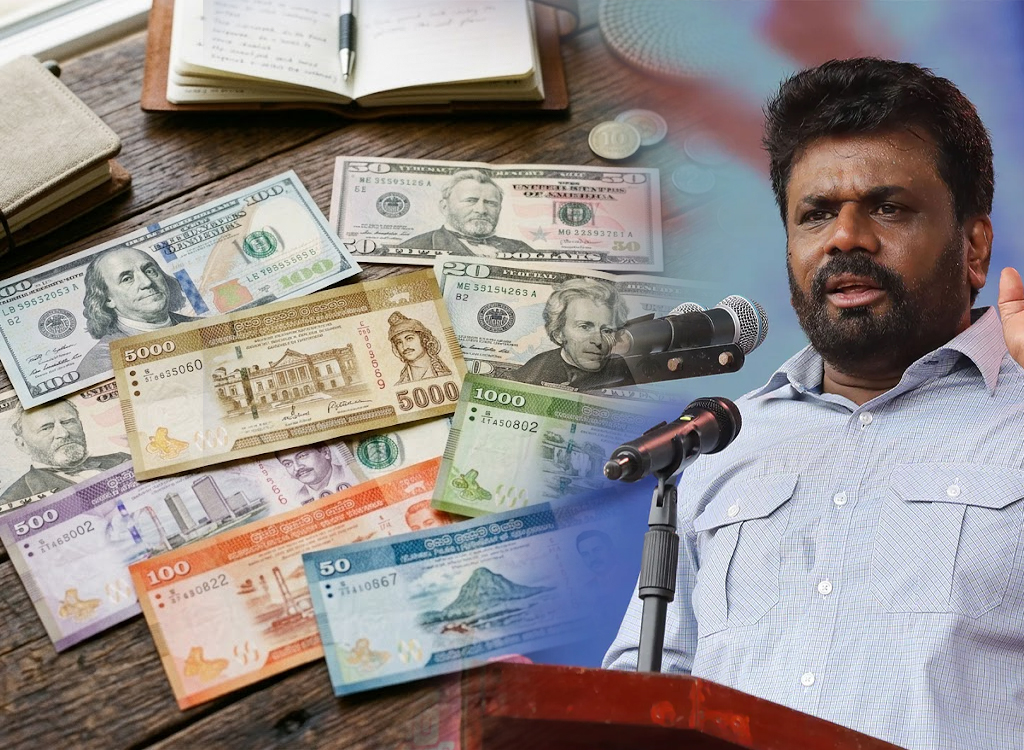
President assures the public that the government is taking urgent steps to prevent another economic collapse
By The Pulseline News Desk
The continued depreciation of the Sri Lankan rupee against the US dollar is once again drawing concern among economists, businesses, and ordinary citizens, amid fears that a weaker currency could place renewed pressure on the country’s fragile economic recovery.
The issue has now gained renewed political attention, with President Anura Kumara Dissanayake (AKD) assuring the public that the government is taking urgent steps to prevent another economic collapse.
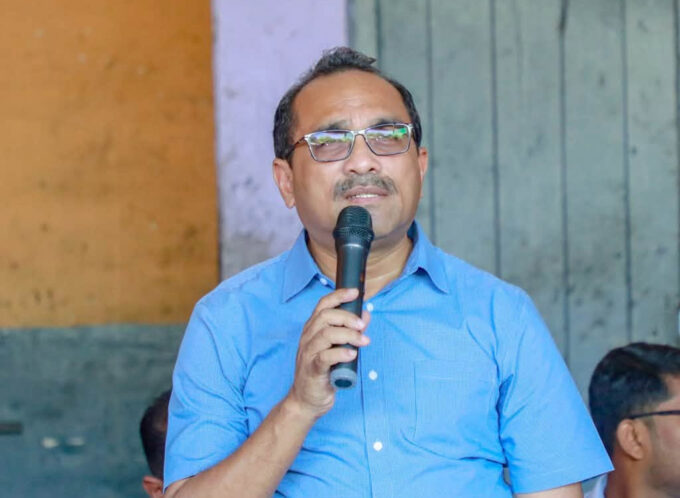
Speaking at a public meeting in Batticaloa, the President said the government is working closely with the International Monetary Fund to manage the growing Dollar shortage and stabilize the economy.
“We have discussed with them what measures could be taken, and we have also submitted our proposals,” he said.
Government moves to contain dollar outflow
Among the immediate measures being considered are reducing fuel consumption, curbing imports, and lowering overall import expenditure.
“We must all think about how we can prevent Dollars from leaving the country. There is only a short window, and we must face it with strength,” the President emphasised.
His remarks come at a time when pressure on Sri Lanka’s foreign exchange reserves appears to be increasing once again. The strengthening of the US Dollar globally has added further strain on the Sri Lankan Rupee, making imports more expensive and increasing demand for foreign currency.
The President also pointed to a slowdown in key foreign exchange earning sectors. According to him, tourist arrivals in April dropped by 29 percent compared to the same period last year, while export earnings and worker remittances have also declined.
Fuel imports trigger rising dollar demand
One of the biggest concerns highlighted by the government is the sharp rise in fuel import costs, which has significantly increased the country’s demand for Dollars.
President AKD revealed that fuel imports rose from $ 98 million in February to $ 216 million in March, $ 368 million in April, and $ 522 million in May – surpassing the half-billion-dollar mark within months.
Economists note that Sri Lanka’s heavy dependence on imported fuel leaves the country especially vulnerable to exchange-rate fluctuations and global energy price movements.
As fuel import bills rise, more Dollars are required to pay suppliers, placing additional downward pressure on the Rupee.
“This escalation has further increased demand for Dollars and weakened the Rupee,” the President said.
Rising cost of living
Currency depreciation directly affects the cost of living because Sri Lanka imports a significant share of its fuel, medicine, food items, machinery, and industrial raw materials.
When the Rupee weakens, importers must spend more local currency to purchase goods priced in Dollars. Those costs are often passed on to consumers through higher prices.
Financial analysts warn that sustained depreciation could trigger another wave of inflation, particularly in transport, electricity, and food prices.
Small and medium-sized businesses are also expected to face difficulties, especially companies dependent on imported raw materials and equipment.
Debt and economic recovery at risk
Sri Lanka’s external debt obligations remain another major concern. Since a large portion of the country’s debt is denominated in foreign currencies, a weaker Rupee increases the local currency value of repayments.
This places additional pressure on government finances as authorities continue debt restructuring efforts and implement reforms under the IMF program.
Analysts say exchange-rate stability will be essential to maintaining investor confidence and ensuring the country’s economic recovery remains on track.
Balancing challenges and opportunities
While a weaker Rupee creates economic hardship domestically, some sectors may benefit. Export industries such as tea and garments could become more competitive internationally, while tourism may become more affordable for foreign visitors.
However, economists caution that such benefits can only materialise if inflation and market instability are kept under control.
For ordinary Sri Lankans, however, the immediate concern remains the rising cost of daily essentials and uncertainty about the economy’s direction.
“The difference with the dollar must be controlled in the short term. I assure you, I will not allow another economic crisis to occur in the country,” President AKD said.
As Sri Lanka continues its fragile recovery from the 2022 economic collapse, the future performance of the Rupee is likely to remain one of the country’s most closely watched economic indicators.









Leave a comment