
By The Pulseline News Desk
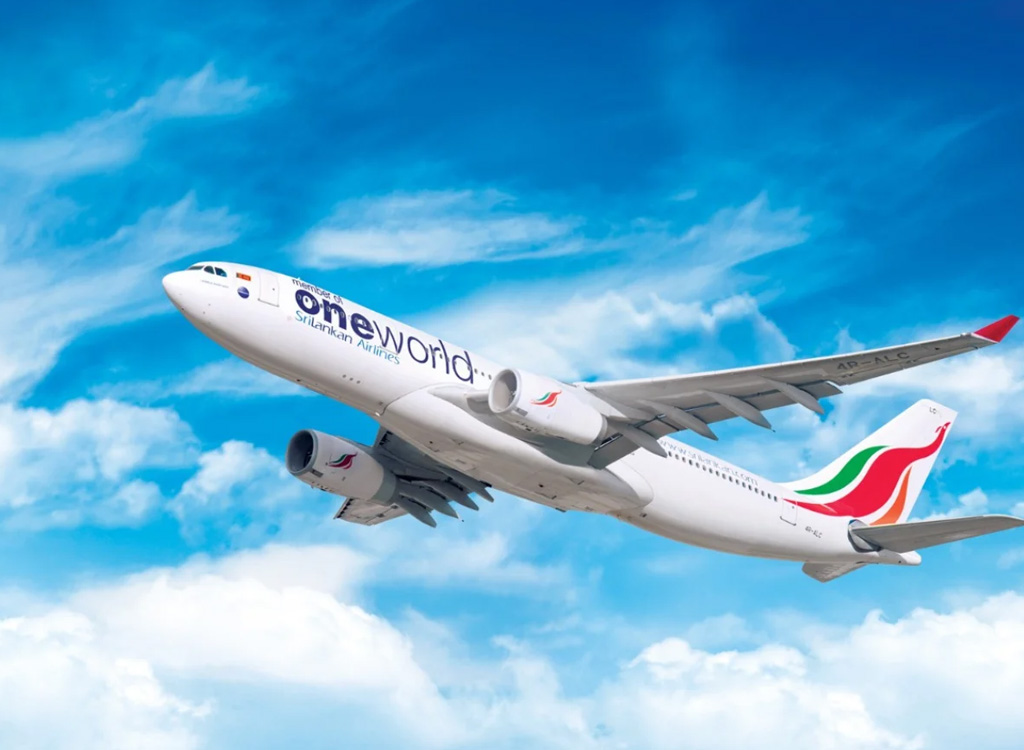
The government has launched a fresh effort to determine the future of SriLankan Airlines by appointing a high-powered committee to oversee a comprehensive review and restructuring of the national carrier, a move that could influence one of the country’s most closely watched state enterprise reforms.
The committee, which will work alongside the International Finance Corporation (IFC), has been tasked with examining options for restructuring the airline and recommending a path that balances commercial viability with national interests.
According to the Department of Government Information, the government has identified the review as an urgent priority, citing the need to assess the airline’s future in the context of Sri Lanka’s broader economic recovery and fiscal consolidation efforts.
The committee will be chaired by Presidential Adviser Hans Wijesuriya and includes economist Duminda Hulangamuwa, economic analyst Deshal de Mel, corporate executive Dumith Fernando, senior officials from the Finance and Transport ministries, representatives of the Civil Aviation Authority, the chairman of SriLankan Airlines, as well as legal and aviation industry experts.
Its mandate extends beyond policy recommendations. The committee will also provide oversight, guidance and support during the implementation of any restructuring strategy ultimately approved by the government.
A long-running challenge
The latest initiative represents the newest chapter in a decades-long debate over the future of SriLankan Airlines, a carrier that has remained both a strategic national asset and a significant financial burden on successive governments.
Originally established as Air Lanka in 1979, the airline underwent a major transformation in 1998 when Emirates acquired a 40 percent stake and assumed management control under a strategic partnership agreement. During that period, the airline expanded its network and modernised operations, earning a reputation as one of South Asia’s better-performing carriers.
However, the partnership ended in 2008 when the Sri Lankan government repurchased Emirates’ stake and resumed full control of the airline.
Since then, SriLankan Airlines has faced persistent financial challenges. Rising fuel costs, increased competition, currency fluctuations, debt obligations and operational inefficiencies have contributed to recurring losses, requiring substantial government support over the years.
The airline’s debt burden became a major concern during Sri Lanka’s economic crisis, with international lenders and economic observers frequently pointing to loss-making state-owned enterprises as a source of fiscal pressure on public finances.
Privatisation efforts and policy shifts
Successive governments have explored various options to reform the airline, ranging from strategic partnerships to outright privatisation.
In recent years, authorities sought investors for a partial or full divestiture of the carrier as part of broader state enterprise reforms linked to economic stabilisation efforts. The IFC, the private-sector investment arm of the World Bank Group, was appointed as transaction advisor to assist the government in evaluating potential investors and restructuring options.
However, the process encountered challenges, including questions over investor interest, market conditions and the complexity of valuing a national airline operating in a highly competitive global aviation sector.
Following the election of President Anura Kumara Dissanayake’s administration, the government’s approach appeared to shift from an immediate sale towards a broader strategic review of the carrier’s future. Officials have indicated that any decision regarding ownership or management must consider both economic realities and the airline’s role in tourism, trade and international connectivity.
Balancing national interest and commercial reality
Government officials say the primary objective of the review is to establish a financially sustainable and commercially efficient national airline while minimising the long-term financial burden on taxpayers.
That goal reflects the central dilemma facing policymakers. While SriLankan Airlines remains an important symbol of national identity and plays a key role in supporting tourism and connectivity, maintaining a loss-making carrier has become increasingly difficult in an era of fiscal restraint.
Industry analysts note that the global aviation sector has become more competitive than ever, requiring airlines to operate with greater efficiency, modern fleets and strong strategic partnerships. For smaller national carriers, achieving profitability without government support has become increasingly challenging.
The newly appointed committee is expected to evaluate a range of possibilities, including operational restructuring, strategic partnerships, management reforms, capital restructuring and potential investment arrangements.
Critical decisions ahead
The committee’s findings could shape the future of SriLankan Airlines for years to come.
Whether the outcome involves a strategic investor, a revised ownership structure, operational reforms or a hybrid model, the review is likely to influence not only the airline’s future but also the government’s broader approach to reforming state-owned enterprises.
As Sri Lanka continues its economic recovery, the challenge will be to create a national carrier that can compete in a demanding global aviation market while reducing its dependence on public funds.
For policymakers, the task is not simply about saving an airline. It is about deciding what role a national carrier should play in a modern economy – and how much the state should be willing to pay to sustain it.










Leave a comment