
By The Pulseline News Desk
Sri Lanka’s education sector could be on the cusp of a major transformation after President Anura Kumara Dissanayake directed officials to finalise a proposed national Education Reform Policy Framework within one month, signalling a renewed effort to address longstanding challenges across the country’s education system.
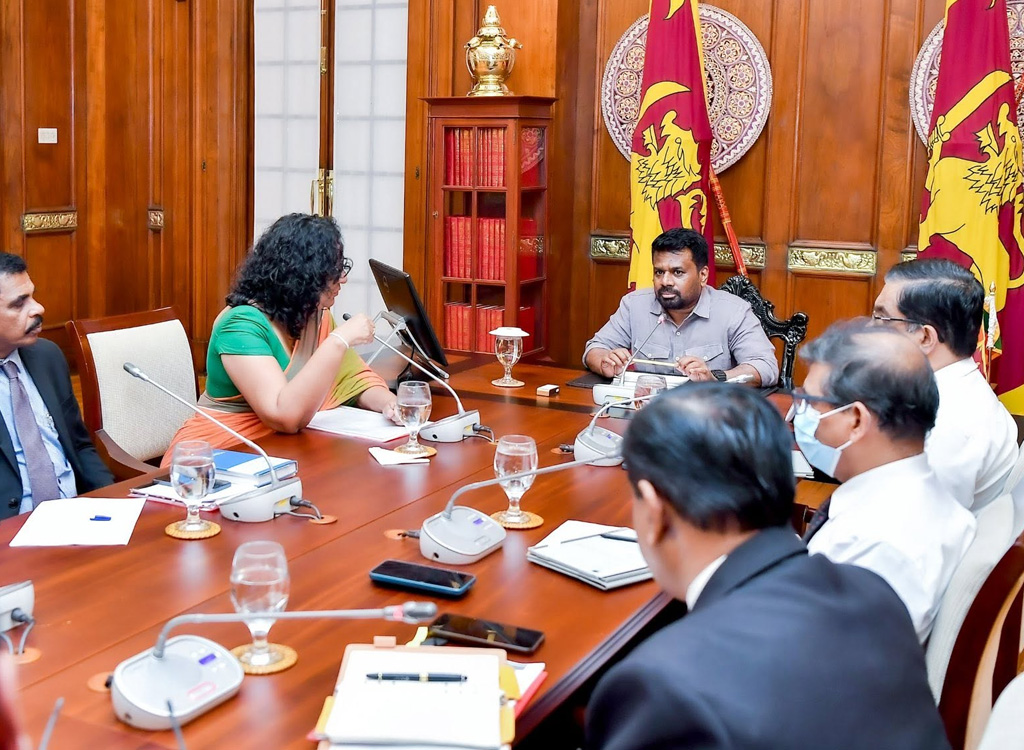
The directive was issued during a meeting held at the Presidential Secretariat on Wednesday (10), where the National Education Commission had presented a concept paper outlining reforms spanning early childhood, general, higher, vocational, technological, digital and non-formal education.
The move comes against the backdrop of decades of education reform initiatives, many of which have remained partially implemented or failed to achieve their intended outcomes. As policymakers seek to chart a new course, the President emphasised the importance of learning from the successes and shortcomings of previous reform efforts.
Members of the National Education Commission highlighted that Sri Lanka has periodically introduced education policies since the Commission’s establishment in 1991. While elements of the 1997 policy were successfully incorporated into primary education, later reform initiatives struggled to gain traction. A general education policy developed in 2016 was never fully implemented, while a policy prepared in 2023 was not formally adopted as the country’s national education framework.
These experiences, education officials noted, illustrate a recurring challenge: many reform efforts have been driven by programmes developed within individual institutions rather than by a coherent national policy framework capable of guiding long-term educational change.
Addressing the meeting, President Dissanayake described the current moment as a rare opportunity to create a comprehensive and sustainable roadmap for education. However, he cautioned against introducing reforms in a manner that could disrupt the existing education process.
Instead, he stressed the need to integrate changes carefully into the current system, ensuring continuity for students, teachers and educational institutions while gradually introducing improvements.
The President acknowledged that designing meaningful education reform is among the most complex policy challenges facing governments. He argued that neither the existing system nor its predecessors should be viewed in absolute terms as either complete successes or failures.
Rather, policymakers must identify both strengths and weaknesses before deciding on the most effective path forward.
He further noted that education reforms differ from many other public policy initiatives because their outcomes cannot be measured immediately. The true impact of changes in education often becomes visible only years later through shifts in social development, workforce capabilities and national progress.
For that reason, he said, education policy requires careful planning, extensive consultation and a long-term perspective.
A significant part of the discussion focused on preparing students for the future. Officials explored the need to anticipate emerging social, technological and economic challenges and ensure that the new policy framework equips future generations with the skills and knowledge required in a rapidly changing world.
Another key concern raised during the meeting was the absence of effective regulation in several areas of the education sector. Particular attention was given to private education institutions, where gaps in oversight have generated concerns about quality standards and accountability.
The issue of university reform also featured prominently in the discussions. Participants highlighted the need for research-driven reforms in higher education and examined options for regulating private universities as part of a broader effort to strengthen educational governance.
The one-month deadline set by the President reflects the urgency attached to the reform process. Yet officials acknowledge that developing a policy framework is only the first step. The greater challenge will be translating policy into practice and ensuring that reforms are sustained over time.
As Sri Lanka seeks to modernise its education system while preserving its strengths, the success of the proposed framework may ultimately depend not only on the quality of the policies adopted but also on the commitment to implement them consistently – a challenge that has eluded several reform efforts in the past.









Leave a comment