
By The Pulseline News Desk
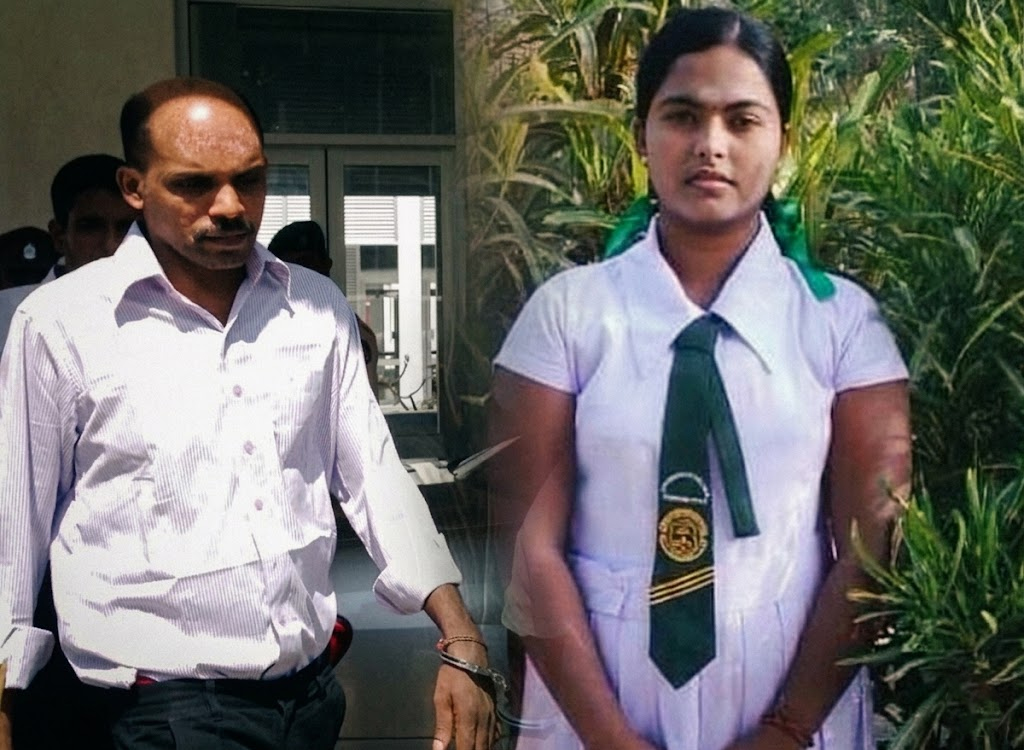
The reported suicide of a death row inmate connected to the 2015 rape and murder of schoolgirl Sivalloganathan Vidya has revived painful memories of a case that once brought thousands onto the streets demanding justice.
Police said the inmate had died by suicide on Sunday (24) night while being held at the Jaffna Prison. Authorities have launched further investigations into the incident.
The inmate was among those sentenced to death over the killing of Vidya, a teenager from Pungudutivu in Jaffna, whose brutal assault and murder became one of the most emotionally charged criminal cases in recent Sri Lankan history.
More than a decade after the crime shocked the nation, the latest development has once again drawn attention to the enduring impact of the case – not only on the victim’s family and community, but also on wider conversations about justice, violence against women, and the country’s prison system.
A crime that sparked national outrage
In May 2015, Vidya, a schoolgirl preparing for examinations, disappeared while travelling to school. Her body was later discovered in a crime that triggered widespread grief and anger across the country.
The killing ignited protests in Jaffna and beyond, with demonstrators calling for swift justice and stronger action against sexual violence. The case quickly became symbolic of deeper public frustrations over law enforcement failures and the vulnerability of women and children.
At the time, residents in northern communities voiced fears about safety and accountability in the post-war environment. Public demonstrations intensified as details of the crime emerged, turning the case into a national issue rather than a local tragedy.
Long legal battle
The legal proceedings surrounding the murder extended over several years, drawing intense public attention.
Earlier this month, the Supreme Court reaffirmed the death sentences imposed on four convicted men, including the accused known as “Swiss Kumar.” The appeals seeking acquittal were dismissed by a five-judge bench headed by Chief Justice Preethi Padman Surasena.
However, the court also removed the death sentences handed to two other accused, partially revising the original ruling delivered by the Trial-at-Bar High Court bench.
Although Sri Lanka retains capital punishment under law, executions have not been carried out for decades. As a result, inmates sentenced to death often remain on death row for extended periods under strict prison conditions.
Questions beyond the courtroom
The inmate’s death has also renewed discussion about mental health and welfare within prisons.
Rights groups and prison reform advocates have previously raised concerns about psychological strain among long-term inmates, particularly those serving capital punishment sentences with little certainty about their future.
Officials have not publicly stated whether the inmate had exhibited signs of distress prior to his death.
Police said inquiries are continuing.
For many Sri Lankans, however, the case remains inseparable from the memory of a young life lost under horrific circumstances. Even years later, Vidya’s name continues to carry deep emotional weight, especially in northern communities where the tragedy unfolded.
While the legal process may be nearing its conclusion, the social wounds left by the crime, and the public reckoning it triggered, remain far from healed.










Leave a comment