
By The Pulseline News Desk
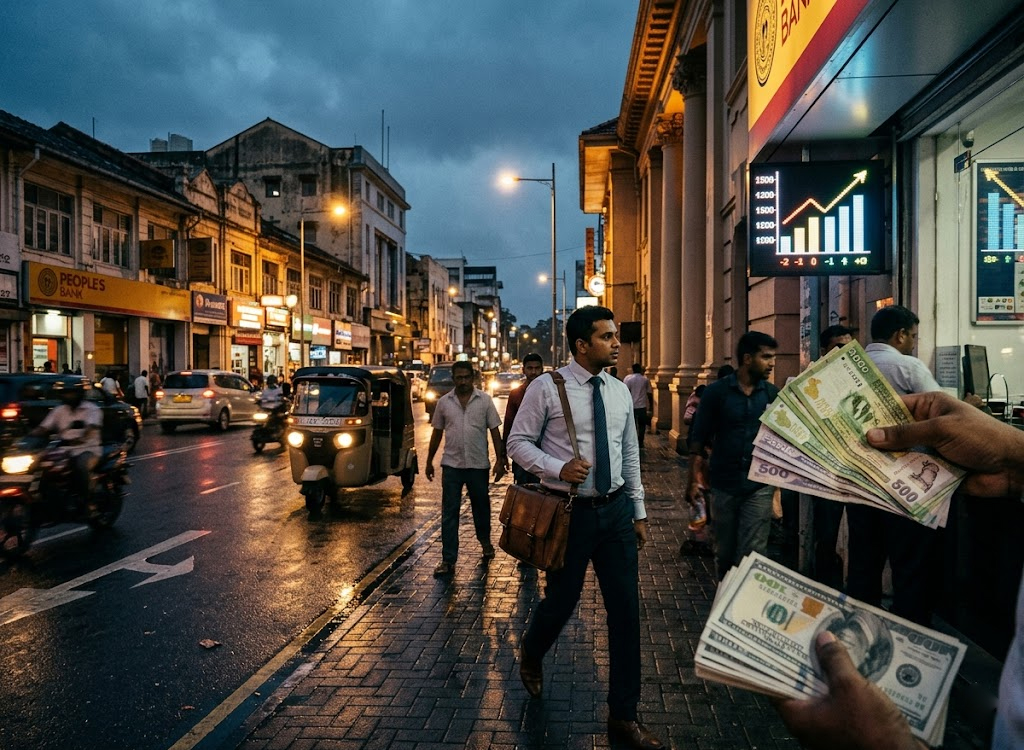
Sri Lanka’s rupee showed signs of renewed strength this week as commercial banks recorded a decline in United States (US) dollar selling rates, reflecting improving foreign exchange stability and growing market confidence in the country’s economic recovery efforts.
Currency traders said the appreciation, while moderate, signals a continuation of the relative stability seen in recent months following years of severe volatility during the country’s economic crisis.
Several licensed banks quoted lower selling rates for the US dollar compared to previous trading sessions, easing pressure on importers and businesses reliant on foreign currency transactions. Analysts noted that improved foreign reserves, stronger remittance inflows, and tighter monetary management have contributed to the rupee’s recent performance.
The movement comes amid broader efforts by authorities to stabilise Sri Lanka’s financial system after the unprecedented economic collapse of 2022, which saw the rupee sharply depreciate and inflation surge to record levels.
Economists say a stronger rupee can help reduce import costs, particularly for fuel, medicine, food, and other essential goods. Lower dollar demand in the domestic market has also helped ease pressure on the currency in recent weeks.
However, financial experts caution that sustained stability will depend on continued fiscal discipline, debt restructuring progress, and investor confidence.
Sri Lanka’s economy has shown gradual signs of recovery under ongoing reforms supported by the International Monetary Fund (IMF) programme. Inflation has moderated significantly from crisis-era highs, while tourism earnings and worker remittances have strengthened foreign currency inflows.
Market observers noted that exchange rate movements remain sensitive to global economic conditions, including shifts in US monetary policy and international commodity prices.
For ordinary citizens, fluctuations in the dollar rate continue to have direct consequences. A stronger rupee can ease the cost of imported goods and reduce some pressure on household expenses, though many consumers say the benefits often take time to appear in retail prices.
Businesses, meanwhile, are closely watching whether the current trend will hold steady in the coming weeks, particularly as import demand gradually rises alongside economic activity.
Despite the latest gains, analysts warn that Sri Lanka’s recovery remains fragile, with external debt obligations and global market uncertainties continuing to pose risks to long-term currency stability.












Leave a comment