
By The Pulseline News Desk
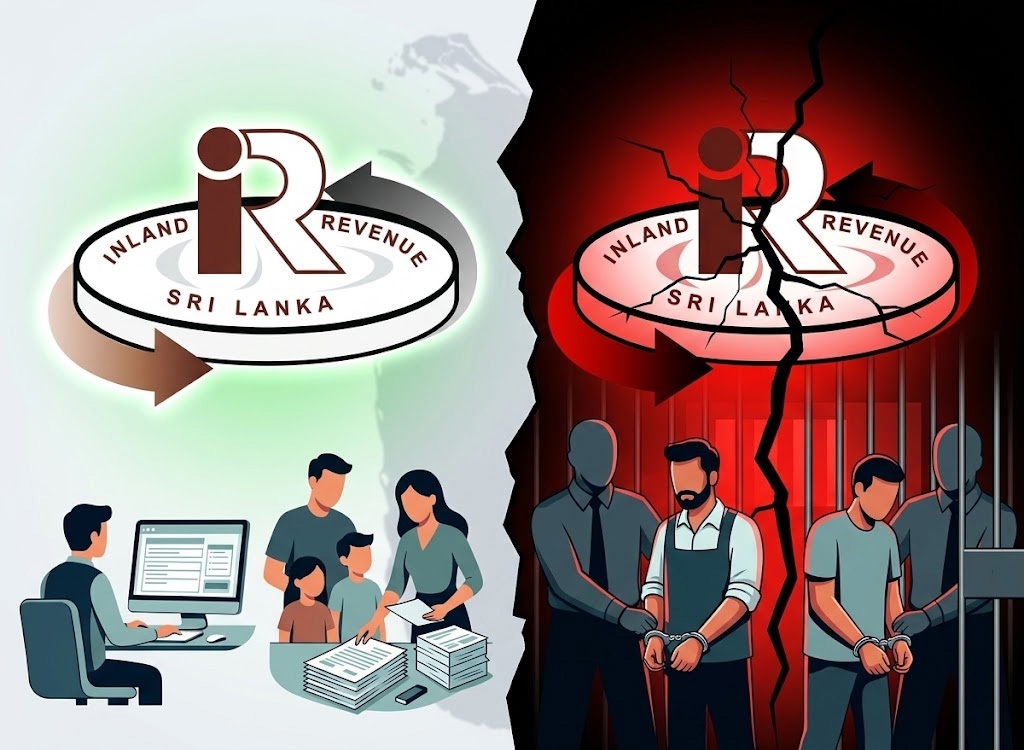
A controversial provision in Sri Lanka’s proposed Inland Revenue (Amendment) Bill 2026 has triggered growing concern among legal experts, tax professionals, and constitutional observers, who warn that the legislation could significantly expand State power by turning administrative tax failures into criminal offences.
At the centre of the debate is the proposed Section 185A, a clause critics argue represents more than a technical tax reform. They say it marks a deeper shift in the philosophy of governance – one that risks weakening democratic safeguards in the name of enforcement efficiency.
The provision would reportedly allow criminal sanctions, including fines and imprisonment, for failures such as non-registration, failure to file tax returns, failure to submit required statements, or failure to appear before tax authorities when notified.
Opponents argue the danger lies not only in the penalties themselves, but in the broad nature of the offence.
The central concern is that the proposed law appears to criminalise procedural non-compliance even where there is no fraudulent intent, concealment, deception, or deliberate tax evasion.
Legal analysts say that departs from one of the foundational principles of criminal law – that criminal punishment should generally require mens rea, or a guilty state of mind.
“This is not a minor drafting amendment,” one constitutional lawyer familiar with the Supreme Court petitions has noted. “It is a philosophical change in how the State relates to citizens.”
The controversy has already escalated into constitutional litigation before the Supreme Court under Article 121 of the Constitution.
From administrative error to criminal liability
Critics argue that in most mature democratic systems, procedural tax failures are treated primarily as civil or administrative matters handled through penalties, interest, negotiated settlements, compliance mechanisms, or rectification procedures.
Criminal prosecution, they note, is generally reserved for deliberate fraud, concealment, falsification, money laundering, obstruction, or systematic tax evasion.
The distinction, observers say, is critical.
Because once procedural mistakes become criminal offences, ordinary citizens and businesses may become vulnerable to coercive enforcement and selective targeting.
“A delayed filing can become leverage. An administrative omission can become a criminal file. A technical breach can become a political weapon,” one Colombo-based tax professional involved in public criticism of the Bill said.
Legal observers warn that without a clear requirement for willful intent, the proposed law risks collapsing the distinction between negligence, inadvertent error, and criminality itself.
Concerns over selective enforcement
The concern has become especially pronounced given Sri Lanka’s institutional and political history.
Legal commentators warn that broad enforcement powers can become dangerous in systems where allegations of politicised investigations, selective prosecutions, abuse of police powers, and regulatory intimidation have repeatedly surfaced over the years.
Several critics drew parallels to long-standing public criticism surrounding the operation of investigative and prosecutorial bodies, including allegations that certain enforcement institutions have at times been used disproportionately against political opponents or perceived adversaries.
In that context, opponents argue that laws must be designed not for an ideal government, but for the possibility of future misuse.
“The test of a democratic law is not whether good people can use it responsibly,” one legal observer said during public debate surrounding the Bill. “The test is whether bad people can abuse it easily.”
Critics fear that once broad criminal enforcement powers enter the legal system, they may eventually be used beyond their original purpose.
Civil society commentators warn that small business owners, activists, journalists, NGOs, opposition figures, and dissenting voices could become vulnerable to regulatory harassment through technical or procedural allegations.
Supreme court challenge
Multiple petitions were filed challenging several provisions of the Inland Revenue (Amendment) Bill following its publication in February 2026.
Public reporting identified Chartered Accountant and Senior Tax Partner P.A. Nadeeka Suranjana among the petitioners, while broader opposition reportedly emerged from professional tax and legal circles.
Beyond Section 185A itself, petitioners also reportedly challenged provisions strengthening the powers of the Commissioner General of Inland Revenue, including evidentiary presumptions favouring the State and summary enforcement procedures that critics argue could weaken procedural protections and judicial oversight.
The Supreme Court subsequently reviewed the Bill through Sri Lanka’s constitutional pre-enactment review process.
According to public reporting, the Court had found at least one clause constitutionally inconsistent unless amended, while allowing the Bill to proceed if corrective changes were made during the legislative process.
The ruling did not invalidate the entire Bill, but it forced reconsideration of several contentious provisions and intensified scrutiny over the scope of the Government’s proposed enforcement powers.
International standards and democratic safeguards
Comparative legal analysis has also shaped the debate.
In countries such as the United Kingdom, Canada, Australia, and many European jurisdictions, criminal tax liability generally requires proof of deliberate intent, fraudulent conduct, concealment, or willful evasion.
Administrative non-compliance is typically addressed through civil penalties and regulatory remedies rather than imprisonment.
Critics argue Sri Lanka’s proposed framework appears unusually broad by comparison and risks eroding internationally recognised distinctions between procedural error and criminal conduct.
Legal observers say the broader constitutional concern extends beyond taxation itself.
They warn that when administrative agencies receive expanding quasi-criminal powers while procedural safeguards weaken, coercive authority gradually shifts away from independent judicial oversight toward bureaucratic enforcement structures.
Civil liberties, critics argue, are rarely dismantled dramatically. More often, they are narrowed incrementally through laws justified by efficiency, compliance, or urgent economic necessity.
Calls for safeguards
Several legal professionals have urged Parliament to reconsider the long-term implications of Section 185A before final passage of the legislation.
Among the safeguards proposed by critics are:
*A clear requirement for proof of willful intent,
*Prosecutorial thresholds before criminal action,
*Opportunities for rectification prior to prosecution,
*Exemptions for bona fide administrative errors,
*Judicial oversight mechanisms,
*Protections for small taxpayers and SMEs,
*Safeguards against selective enforcement.
“No democracy should imprison citizens merely because they failed an administrative process absent fraudulent intent,” one senior legal commentator noted.
However, the government has not abandoned the Inland Revenue (Amendment) Bill and continues to pursue broader tax reform as part of Sri Lanka’s post-crisis fiscal restructuring programme.
According to reports, some controversial provisions may be revised or softened following constitutional scrutiny and mounting professional backlash.
The final shape of Section 185A – and whether criminal liability is ultimately confined to deliberate tax fraud rather than procedural non-compliance – remains one of the most closely watched constitutional and legal questions in Sri Lanka’s ongoing reform process.
Opposition Leader concerned
Opposition Leader Sajith Premadasa, meanwhile, has criticised the government’s proposed Section 185A, arguing that the clause could unjustly expose ordinary citizens and small business owners to criminal liability over administrative tax-related lapses.
In a statement, Premadasa said the public was not opposed to paying taxes but was deeply concerned about what he described as the unfair and disproportionate nature of the proposed legal framework.
He warned that under the clause, delays in filing tax returns, registration-related issues, or other procedural failures could potentially be treated as criminal offences, placing struggling entrepreneurs and small businesses at risk of prosecution alongside individuals engaged in deliberate large-scale tax evasion.
“That is fundamentally unfair,” Premadasa said.
The Opposition Leader further accused the government of choosing what he called “the easier path of criminalising ordinary people” rather than pursuing meaningful reform and modernisation within the Inland Revenue Department to improve compliance systems and administrative efficiency.
Premadasa also questioned the government’s broader anti-corruption priorities, asking why stronger action had not been taken against money laundering, financial fraud, and those accused of misappropriating public funds.
“Target the corrupt. Punish genuine financial criminals severely. But do not turn the law into a weapon against ordinary citizens,” he said.
He added that the opposition would continue to resist legislation it believes undermines fairness, proportionality, and the constitutional rights of the public.













Leave a comment