
By The Pulseline News Desk
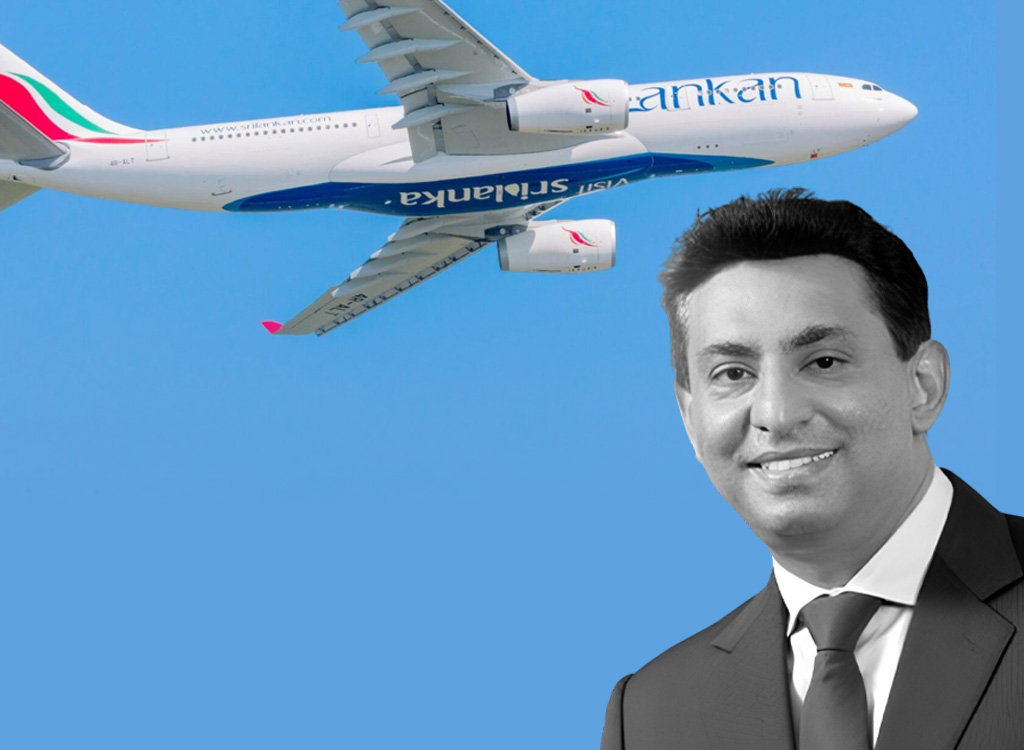
The sudden death of former SriLankan Airlines CEO Kapila Chandrasena on Friday (8) has sent shockwaves through Sri Lanka’s political and aviation sectors, unfolding at a time when investigators were intensifying efforts to unravel one of the country’s largest alleged corruption scandals.
Chandrasena was found dead at a residence in Colpetty, just days after fresh legal developments in the long-running Airbus bribery case that had once again placed him at the center of public scrutiny. Police spokesman ASP F.U. Wootler stated that investigators suspect suicide, while the Colpetty Police have launched further inquiries into the circumstances surrounding the death.
The dramatic development occurred only hours before Chandrasena was reportedly expected to surrender before court.
A lawyer appearing on his behalf has told the media that arrangements had already been made to produce him before court on Friday through a motion filed by his legal team.
“We were planning to file a motion today for him to surrender. After filing that motion, he was supposed to appear before court. It was while we were in the process of doing that that we learned about this incident,” the lawyer said.
The lawyer further claimed another member of the legal team had gone to the location where the incident occurred and could testify that preparations had indeed been underway for Chandrasena’s surrender.
From aviation executive to central figure in corruption probe
An engineer by profession, Chandrasena, rose through the ranks of Sri Lanka’s aviation sector and became one of its most recognizable corporate figures.
He held senior leadership roles at SriLankan Airlines before serving as Chief Executive Officer (CEO) of the state-owned airline. He also headed Mihin Lanka, the now-defunct budget carrier established during the Mahinda Rajapaksa administration.
However, his legacy became overshadowed by allegations surrounding the procurement of Airbus aircraft during his tenure at SriLankan Airlines, a deal that later evolved into an international corruption investigation.
The Airbus scandal
The controversy stems from aircraft purchases made by SriLankan Airlines during the previous Mahinda Rajapaksa administration.
The scandal gained global attention in 2020 after aircraft manufacturer Airbus admitted before a UK court that it had paid massive bribes in multiple countries, including Sri Lanka, to secure lucrative aircraft contracts.
Sri Lankan investigators later alleged that Chandrasena solicited and accepted a $ 2 million bribe linked to those aircraft purchases.
According to investigative material submitted by the Criminal Investigation Department (CID) to the Attorney General’s Department, a Singapore bank account maintained under Biz Solutions – a company allegedly linked to one Priyanka Neomali Wijenayaka – had received $ 2 million in December 2013 from the European Aeronautic Defence and Space Company (EADS), the parent company of Airbus.
Investigators believe the payment, estimated at around Rs. 363 million, was connected to the controversial procurement deal involving SriLankan Airlines.
Chandrasena was first arrested in 2020 and later released on bail. Earlier this year, the Commission to Investigate Allegations of Bribery or Corruption (CIABOC) arrested him again over allegations that he had accepted the bribe in exchange for ensuring Sri Lanka purchased Airbus aircraft at inflated prices.
International attention and U.S. sanctions
The case drew wider international attention in 2023 when the U.S. Department of State imposed sanctions and visa restrictions on Chandrasena under Section 7031(c) for what it described as “significant corruption.”
The U.S. had alleged that he had accepted bribes while serving as CEO of SriLankan Airlines in exchange for facilitating overpriced Airbus purchases. The sanctions extended to his immediate family members, barring them from entering the U.S.
Explosive political allegations
The investigation escalated further in March when CIABOC had informed court that Chandrasena had allegedly claimed portions of the Airbus-related funds had been distributed to senior political figures.
According to court submissions, Chandrasena had allegedly stated that:
- Rs. 60 million had been paid to former President Mahinda Rajapaksa on three separate occasions.
- Rs. 20 million had allegedly been paid to former Civil Aviation Minister Priyankara Jayaratne.
Following those revelations, both Rajapaksa and Jayaratne have been summoned to appear before CIABOC on May 12 to record statements.
However, Chandrasena later withdrew those claims through an affidavit released by his lawyers.
In the affidavit, he had alleged that investigators had obtained his statement under intimidation and pressure. He had claimed officials had threatened him with arrest and compelled him to mention the names of Mahinda Rajapaksa, MP Namal Rajapaksa, and members of his family. He had also alleged he had been denied access to legal counsel while his statement was being recorded.
CIABOC has not publicly responded in detail to those allegations.
Expanding investigation and arrest warrants
The probe widened in recent weeks after the Colombo Magistrate’s Court issued open warrants against:
- Shamindra Rajapaksa, son of former minister Chamal Rajapaksa and a former SriLankan Airlines board member.
- Priyanka Neomali Wijenayaka, who authorities say is absconding.
The warrants were issued after both had failed to appear before court in proceedings linked to the Airbus investigation.
The court had also instructed Sri Lankan airports and immigration authorities to arrest them if they entered the country.
Bail dispute and sudden death
Only days before Chandrasena’s death, another controversy emerged after two individuals were arrested for allegedly appearing in court as fake bail sureties in exchange for Rs. 15,000 each.
Police had informed court that the suspects did not personally know Chandrasena and had allegedly used questionable documentation, including Grama Niladhari certificates, during the bail process.
Both suspects were remanded pending further investigations.
Meanwhile, CIABOC had moved to cancel Chandrasena’s bail, prompting the Colombo Magistrate’s Court to order that he be arrested and produced before court again.
It was against this backdrop of mounting legal pressure, expanding political implications, and intensifying public attention that Chandrasena was found dead on Friday.
His death now adds another layer of uncertainty to an investigation that has already implicated powerful political and corporate figures, while raising fresh questions about the future direction of Sri Lanka’s most consequential aviation corruption probe.






Leave a comment