
By The Pulseline News Desk
The United Nations Children’s Fund (UNICEF) has welcomed Sri Lanka’s decision to adopt the Global Charter for Child Care Reforms, describing the move as an important step toward strengthening child protection systems and improving standards of care for vulnerable children across the country.
The endorsement of the charter comes amid increasing international focus on transforming child care systems away from institutionalisation and toward family- and community-based care models that prioritise the long-term wellbeing of children.
A shift in child care policy
Sri Lanka’s adoption of the global framework signals a broader policy shift toward reforms aimed at safeguarding children’s rights, improving care standards, and ensuring stronger oversight mechanisms within child protection institutions.
UNICEF noted that the charter promotes principles centered on the best interests of the child, including safe family environments, emotional development, education access, and protection from abuse, neglect, and exploitation.
Child rights advocates say the reforms could help modernise Sri Lanka’s child welfare system, particularly at a time when economic hardships and social pressures have increased risks faced by vulnerable children.
Focus on family-based care
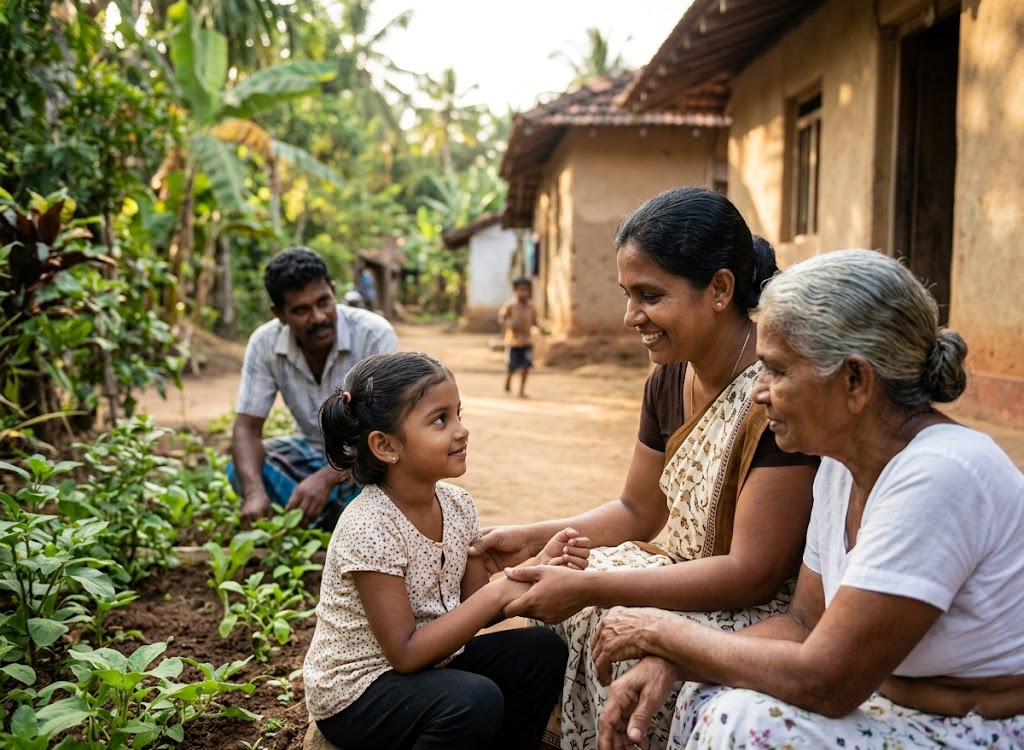
A central feature of the global charter is the emphasis on reducing reliance on long-term institutional care and encouraging family-based alternatives wherever possible.
International child protection experts have increasingly argued that children generally experience better developmental, emotional, and educational outcomes when raised in supportive family environments rather than large institutional settings.
UNICEF officials have repeatedly stressed that institutional care should be used only as a temporary and last-resort measure.
In Sri Lanka, thousands of children remain under institutional or residential care, including children orphaned, abandoned, or separated from families due to poverty, migration, domestic violence, or social instability.
The reforms are expected to encourage stronger foster care systems, kinship care arrangements, and community-based support mechanisms.
Strengthening oversight and accountability
The adoption of the charter also places renewed attention on monitoring standards within childcare institutions.
Over the years, both local and international organisations have raised concerns regarding gaps in regulation, staffing shortages, inconsistent monitoring, and allegations of abuse or neglect in certain child care facilities.
Advocates believe the reform process could improve accountability, staff training, mental health support services, and safeguarding procedures.
UNICEF has indicated that technical support, policy guidance, and collaboration with government institutions will continue as Sri Lanka moves toward implementation of the reforms.
Economic pressures and child vulnerability
The timing of the reforms is particularly significant given the social consequences of Sri Lanka’s economic crisis.
Child welfare organisations have warned that rising living costs, unemployment, migration pressures, and financial instability have increased vulnerabilities among children, especially in low-income communities.
Education disruptions, nutrition insecurity, and family separation risks have also intensified in recent years.
Analysts say stronger child protection policies are increasingly viewed not only as a social welfare issue but also as a long-term investment in national development and social stability.
Regional and global context
Sri Lanka joins a growing number of countries endorsing international child care reform frameworks aligned with the principles of the United Nations Convention on the Rights of the Child.
Globally, child protection agencies are placing greater emphasis on prevention, early intervention, and integrated social services rather than institutional responses alone.
UNICEF officials say meaningful implementation will require sustained political commitment, adequate funding, inter-agency coordination, and public awareness to ensure reforms translate into practical improvements for children and families.
While challenges remain, child rights groups have described Sri Lanka’s endorsement of the charter as a potentially important milestone in reshaping the country’s child care and protection landscape.










Leave a comment