
By The Pulseline News Desk
The International Monetary Fund’s (IMF’s) latest message to Sri Lanka was notable not because it contained new conditions or fresh demands, but because it reiterated an increasingly familiar warning: the country’s greatest risk is no longer simply external shocks, it is reform fatigue.
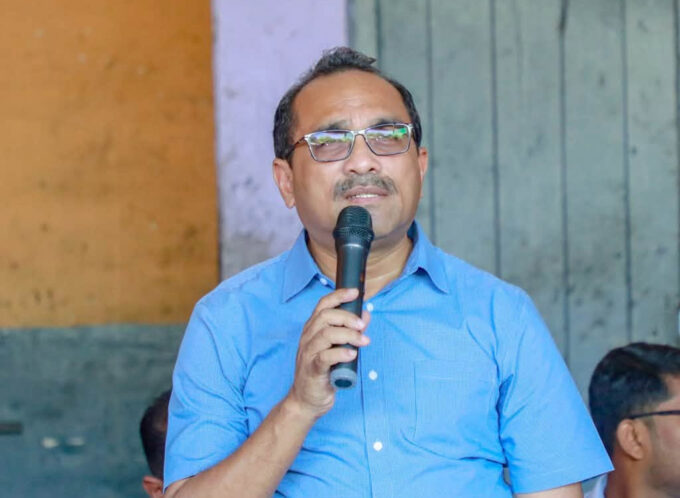
Concluding staff-level discussions in Colombo on Tuesday (June 30), IMF Mission Chief Evan Papageorgiou offered a succinct assessment of Sri Lanka’s immediate challenge.
“Looking ahead, the priority is clear – stay the course and sustain the reform momentum,” he said. The timing of that message is significant.
Sri Lanka is once again confronting an external crisis beyond its control. The escalation of tensions in the Middle East has driven global oil prices sharply higher, pushing domestic fuel costs upward by around 50 percent and threatening to slow economic activity. Recognising those risks, the IMF has already shown flexibility by easing certain programme targets under the country’s $ 3 billion Extended Fund Facility (EFF), acknowledging that higher energy costs and tighter monetary conditions could dampen growth.
That flexibility, however, should not be mistaken for leniency.
Papageorgiou’s central point was that while geopolitical shocks are temporary, policy choices are not. Oil prices may rise and fall. Global conflicts may escalate and subside. But the long-term trajectory of Sri Lanka’s economy will depend largely on whether successive governments continue implementing difficult structural reforms rather than postponing them.
This is where Colombo’s record has become increasingly mixed.
The government has maintained fiscal discipline, strengthened revenue collection, rebuilt foreign reserves and restored a degree of macroeconomic stability that seemed impossible during the 2022 economic collapse. Inflation has fallen dramatically from crisis-era levels, foreign exchange shortages have eased, and the economy has begun to recover.
These achievements are neither accidental nor insignificant. They represent the dividends of painful policy decisions that were politically costly but economically necessary.
Yet the reform agenda has begun to lose momentum precisely where it matters most.
Reform programme
The restructuring of state-owned enterprises (SOEs) remains the clearest example.
For decades, institutions such as SriLankan Airlines, the Ceylon Petroleum Corporation (CPC), and the Ceylon Electricity Board (CEB) have imposed a heavy fiscal burden on taxpayers. Their operational inefficiencies, recurring losses and dependence on government support have repeatedly undermined public finances while limiting investment in sectors that generate broader economic returns.
The IMF programme identified reforming these enterprises as essential – not merely to reduce losses, but to create a more competitive and sustainable economy.
Progress, however, has been uneven.
Political resistance
Privatisation plans have stalled. Restructuring efforts have slowed. Political resistance has once again emerged as governments confront the difficult reality that economic reform often produces immediate political costs while delivering benefits only over the longer term.
That political calculus is understandable but increasingly difficult to justify.
The reforms that remain outstanding are, in many respects, the very reforms that successive administrations have promised for decades. Every government has acknowledged the structural weaknesses of major state enterprises. Few have sustained the political will to address them comprehensively.
The danger is that stabilisation without structural reform produces only temporary recovery.
Economic gains
Sri Lanka’s recent economic gains have been built on restoring confidence among creditors, investors and international financial institutions. That confidence rests not simply on achieving quarterly IMF targets but on demonstrating that the country has fundamentally changed how it manages its public finances and state institutions.
If reforms begin to stall, confidence can weaken just as quickly as it returned.
The IMF’s message therefore extends beyond economics. It is also a political test.
President Anura Kumara Dissanayake’s administration came to office promising cleaner governance, institutional accountability and a break from the policy failures that contributed to the economic crisis. Maintaining momentum on reform will be one of the clearest measures of whether those promises translate into lasting institutional change.
External shocks will continue to test Sri Lanka’s resilience. Global energy prices, geopolitical conflicts, climate events and financial market volatility remain factors over which Colombo has little influence.
What it can control is whether long-delayed domestic reforms continue.
Papageorgiou’s remarks served as a reminder that economic recovery is not a destination but a process. The IMF has signalled that it remains willing to accommodate temporary external disruptions where justified. What it is unlikely to accommodate indefinitely is a slowing of reforms driven by domestic political hesitation.
For Sri Lanka, that distinction may prove decisive.
The crisis of 2022 demonstrated the cost of postponing structural change. The challenge now is ensuring that the recovery does not repeat the same pattern. The next phase of Sri Lanka’s economic story will be shaped less by events abroad than by decisions taken at home.








Leave a comment