
By The Pulseline News Desk
Sri Lanka’s dengue outbreak has intensified, with the number of reported cases surpassing 54,000 amid persistent rainy weather that continues to create favourable breeding conditions for mosquitoes.
The National Dengue Control Unit (NDCU) has said that 54,189 dengue cases have been reported across the country so far this year, highlighting the growing public health challenge as transmission accelerates during the current monsoon period.
Acting Director Dr. Kapila Kannangara has said the country is currently recording between 950 and 1,000 new infections each day, indicating sustained community transmission in several districts.
The latest surveillance data showed that 1,030 new dengue patients were reported during the 24-hour period that ended yesterday (June 30), underscoring the rapid spread of the mosquito-borne viral disease.
Health authorities attribute the surge largely to ongoing rainfall, which has increased the number of stagnant water collections that serve as breeding sites for Aedes mosquitoes — the primary carriers of dengue.
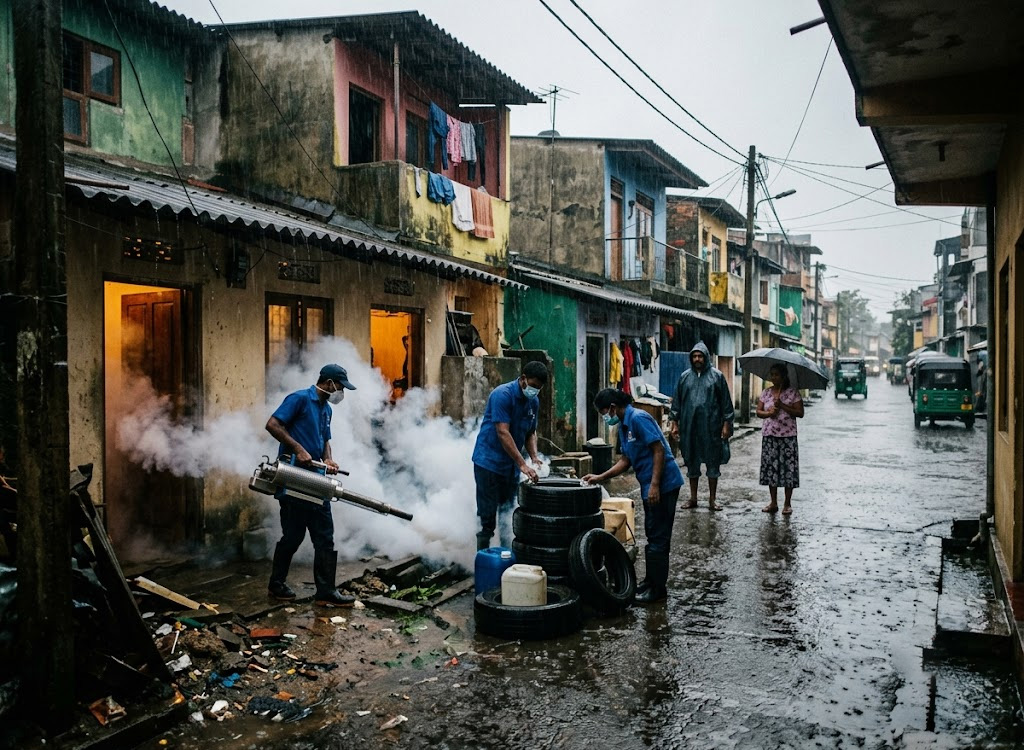
In response to the rising case numbers, the NDCU will conduct a series of dengue prevention and control programmes over the next few days, targeting high-risk areas through inspections, source reduction campaigns, public awareness activities, and vector control measures.
Dr. Kannangara has called on the public to actively support the campaign by inspecting their homes, workplaces, schools, and surrounding environments to eliminate containers and other locations where rainwater can accumulate.
Rainy season fuelling transmission
Sri Lanka typically experiences a rise in dengue cases during periods of heavy rainfall, when increased mosquito breeding leads to higher transmission rates. Urban and densely populated areas are particularly vulnerable, especially where poor waste management and inadequate drainage allow water to collect.
Public health officials have repeatedly stressed that eliminating mosquito breeding sites remains the most effective method of preventing outbreaks, as Aedes mosquitoes can breed in even small amounts of clean, stagnant water found in discarded containers, roof gutters, flowerpots, tyres, and water storage vessels.
Health inspectors continue to conduct inspections in both residential and commercial areas, with legal action possible against premises found to be maintaining mosquito breeding sites.
Public urged to remain vigilant
Medical experts are urging the public to seek immediate medical attention if symptoms such as high fever, severe headache, muscle and joint pain, nausea, vomiting, or unusual bleeding develop, as early diagnosis and proper treatment significantly reduce the risk of severe complications.
Authorities have also reminded the public to adopt personal protective measures, including using mosquito repellents, wearing long-sleeved clothing where possible, and preventing mosquito bites during the daytime, when Aedes mosquitoes are most active.
With daily infections continuing to approach 1,000 cases, health officials warn that sustained public participation in mosquito control efforts will be essential to slowing the spread of dengue in the weeks ahead.












Leave a comment