
By The Pulseline News Desk
Sri Lanka has once again been classified as an Upper Middle-Income Country by the World Bank Group, following a reported 5% real GDP growth in 2025. The upgrade, from Lower Middle-Income status, reflects an improvement in the country’s macroeconomic indicators after emerging from its worst economic crisis in decades.
At first glance, the reclassification appears to signal a strong recovery. The World Bank updates its income classifications annually based on gross national income (GNI) per capita, placing countries into four categories: High Income, Upper Middle Income, Lower Middle Income, and Low Income.
But economists caution that the new status should not be mistaken for evidence that Sri Lanka’s underlying economic vulnerabilities have been resolved.
The concern expressed by some economists is that the income upgrade has come without the structural transformation needed to sustain higher-income status. While economic growth has rebounded from the severe contraction experienced during the crisis, critics argue that the country has yet to achieve export expansion, stronger government revenue, productivity gains, and institutional reforms necessary for long-term stability.
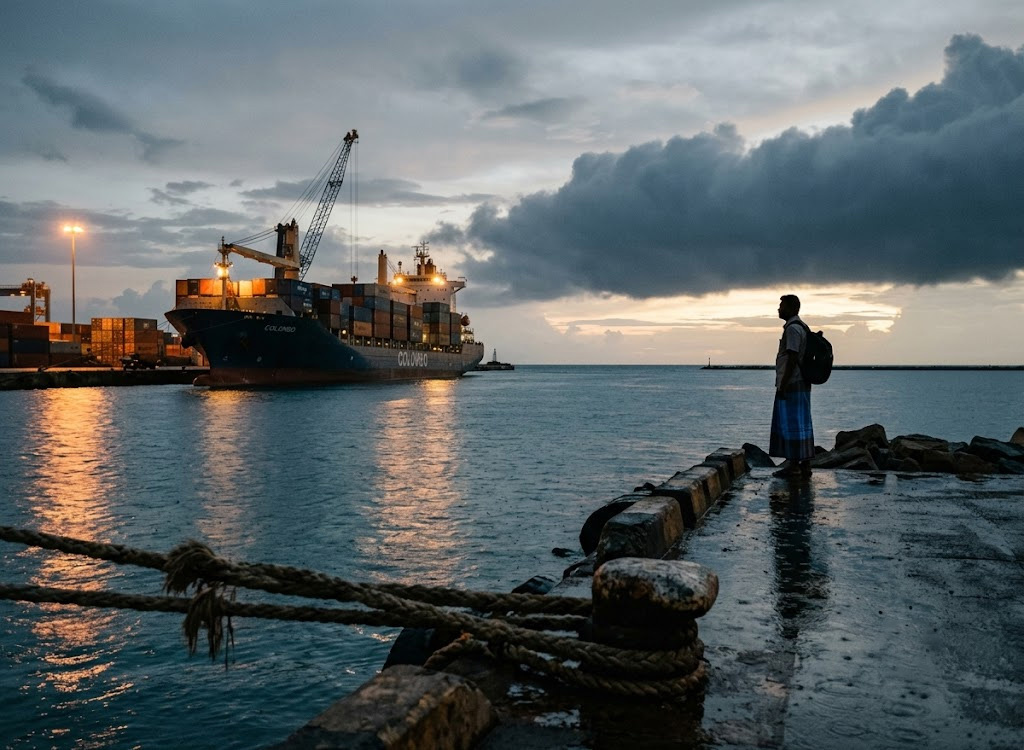
Sri Lanka continues to rely on a narrow export base, while government revenue remains relatively weak despite ongoing tax reforms. The state also faces persistent challenges in strengthening public institutions and improving fiscal capacity – factors considered essential for sustaining economic progress.
The reclassification could also have practical implications for development financing. As countries move up the income ladder, they may gradually lose access to highly concessional financing available to lower-income economies, particularly through the World Bank’s International Development Association (IDA). Although eligibility depends on several factors, including income thresholds and creditworthiness rather than income classification alone, an upper middle-income designation can reduce access to low-interest loans and grants over time, increasing reliance on less concessional borrowing from institutions such as the International Bank for Reconstruction and Development (IBRD) or commercial markets.
For a country still recovering from a sovereign debt default and pursuing fiscal consolidation, access to affordable long-term financing remains an important policy consideration.
Sri Lanka’s recent history also offers a note of caution.
The country was previously classified as an Upper Middle-Income Country by the World Bank in 2018. However, the designation proved short-lived. Sri Lanka was downgraded the following year as income levels declined, and within three years it had entered its first sovereign debt default amid a deep balance-of-payments crisis.
That experience has led some analysts to argue that income classification alone is an incomplete measure of economic health. A higher per-capita income may reflect a cyclical rebound, but without deeper reforms, it does not necessarily indicate that an economy has become more resilient, competitive, or fiscally sustainable.
For policymakers, the latest upgrade is therefore as much a test as an achievement. The challenge now is ensuring that the recovery is built on stronger economic fundamentals rather than temporary growth momentum.
Whether Sri Lanka remains an Upper Middle-Income Country this time will depend less on the classification itself and more on whether it can deliver the structural reforms that eluded it before the last upgrade gave way to one of the country’s worst economic collapses.










Leave a comment