
By The Pulseline News Desk
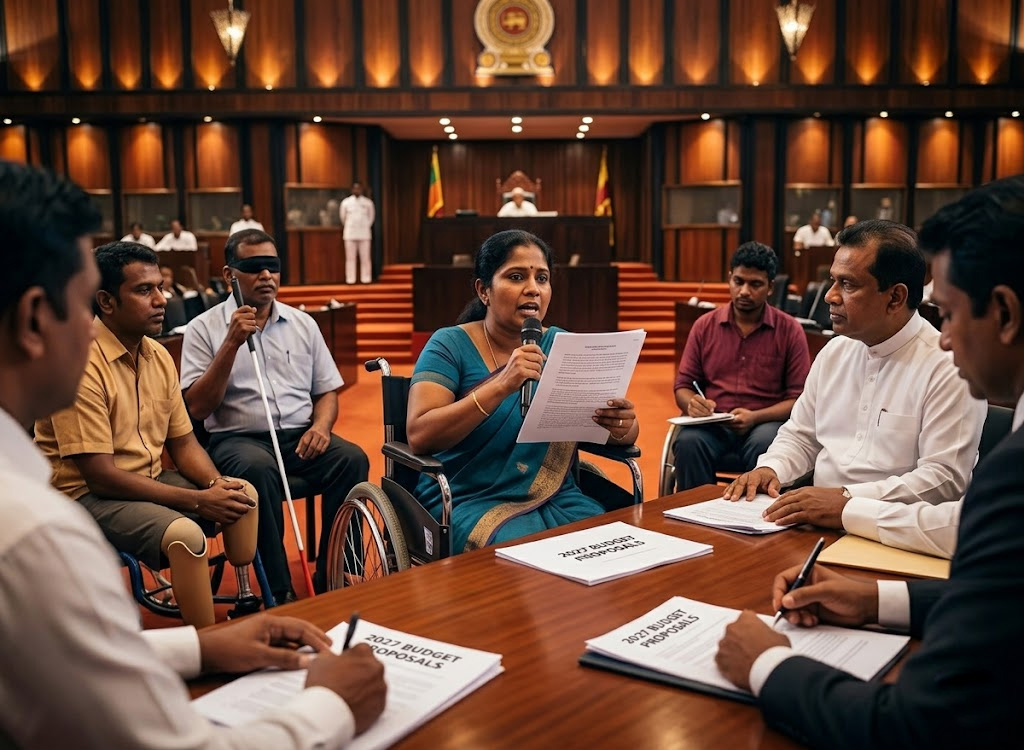
The voices of persons with disabilities are set to play a greater role in shaping the country’s future development agenda as the Parliamentary Caucus for Persons with Disabilities launches a programme to gather proposals for the 2027 national budget.
The initiative reflects a growing recognition that public policies and government spending decisions are most effective when they are informed by the lived experiences of those directly affected. For Sri Lanka’s disability community, it represents an opportunity to move beyond consultation and become active participants in the planning process.
Operating under the government’s national policy vision of creating “an accessible environment and an inclusive society,” the programme seeks to identify practical measures that can improve accessibility, strengthen support services, and expand opportunities for persons with disabilities across the country.
The decision was taken during meetings of the Parliamentary Caucus for Persons with Disabilities held in Parliament under the chairmanship of member of parliament (MP) Sugath Wasantha de Silva.
Beyond accessibility
While discussions about disability often focus on physical accessibility, advocates argue that inclusion extends far beyond ramps, elevators, and accessible buildings.
Persons with disabilities frequently encounter barriers in education, employment, healthcare, transportation, information access, and public services. Many of these challenges limit their ability to participate fully in social, economic, and civic life.
Disability rights organisations have long called for policies that address these barriers through a comprehensive approach that combines infrastructure improvements with social protection measures, assistive technologies, inclusive education programmes, and employment opportunities.
The Parliamentary Caucus has stated that its work aims to identify existing obstacles and develop sustainable solutions that can support long-term inclusion.
A participatory approach
A key feature of the initiative is its emphasis on direct engagement with stakeholders.
Representatives of organisations of persons with disabilities, advocacy groups, and professionals working in the disability sector have been invited to contribute proposals for both the continuation of existing programmes and the introduction of new initiatives.
This collaborative approach is seen as an important step toward ensuring that government resources are allocated to areas of greatest need.
Advocates note that persons with disabilities are often excluded from policy discussions despite being directly affected by the outcomes. By incorporating their perspectives into the budget process, policymakers can gain a better understanding of the practical challenges faced by the community.
Protecting rights through policy
The programme also reflects a broader effort to strengthen the protection of disability rights.
Experts emphasise that inclusion is not simply a matter of welfare assistance but a question of equal rights and opportunities. International frameworks, including the United Nations Convention on the Rights of Persons with Disabilities, encourage governments to adopt policies that enable persons with disabilities to participate fully and effectively in society.
Budget allocations play a critical role in turning these commitments into reality. Without adequate funding, even well-designed policies can struggle to achieve meaningful results.
Supporters of the initiative believe that targeted investments can help address longstanding gaps in accessibility, education, employment, healthcare, and social services.
Building an inclusive future
As Sri Lanka continues to pursue social and economic development, policymakers are increasingly recognising that inclusion must be a central component of national progress.
An accessible society benefits not only persons with disabilities but also older adults, children, caregivers, and others who may face temporary or permanent mobility and communication challenges.
The collection of proposals for the 2027 Budget represents more than a routine administrative exercise. It signals an effort to ensure that development planning reflects the needs of all citizens and that no segment of society is left behind.
The recommendations submitted through this process are expected to contribute to future government programmes aimed at expanding opportunities, reducing barriers, and creating a society where persons with disabilities can participate fully and independently.








Leave a comment