
By The Pulseline News Desk
Sri Lanka’s women parliamentarians are renewing their push to secure a greater voice for women in politics, calling for legal reforms that would guarantee at least 33 percent female representation in Provincial Councils and Local Government institutions.
The proposal, discussed at a recent meeting of the Women Parliamentarians’ Caucus, reflects growing concern that women remain significantly underrepresented in elected office despite making up more than half of the country’s population.
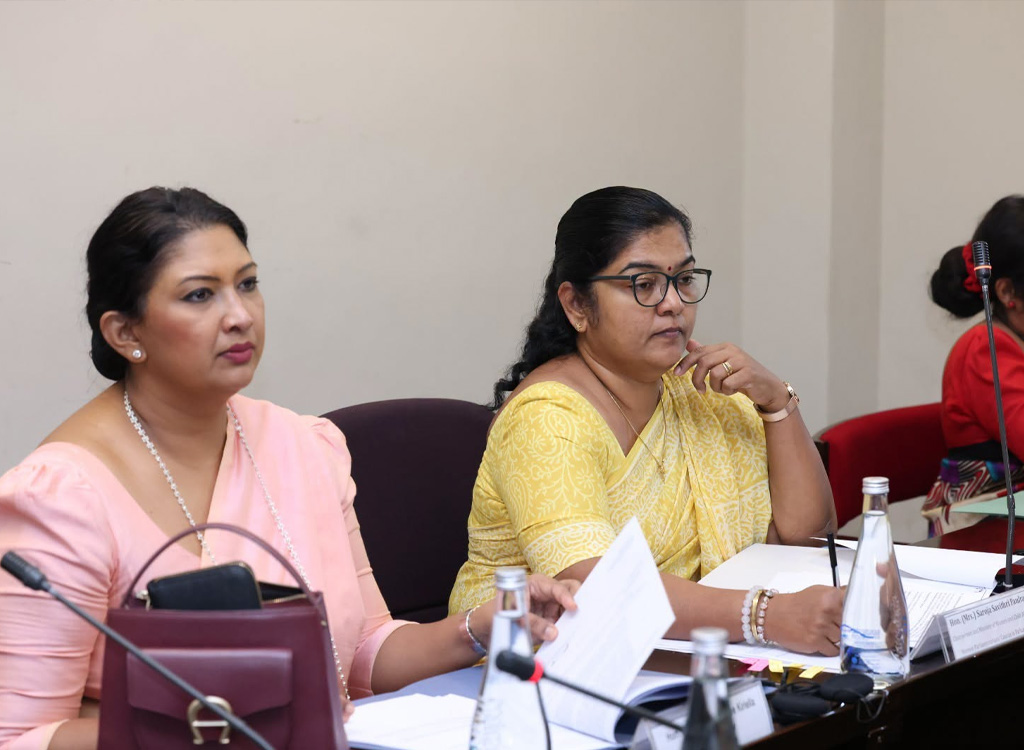
Chaired by Minister of Women and Child Affairs and Caucus Chairperson Saroja Savithri Paulraj, the meeting had focused on introducing legal safeguards that would ensure women comprise at least one-third of both candidate nomination lists and those ultimately elected to Provincial Councils and Local Government bodies.
The move comes as Sri Lanka continues to grapple with one of the lowest levels of female political representation in South Asia. While recent years have seen improvements at the local government level following the introduction of quotas, women’s representation in provincial and national politics remains well below global averages.
Members of the caucus have agreed that voluntary commitments by political parties have not delivered meaningful change and argued that stronger legal provisions are now necessary to ensure women have equal opportunities to contest and win elections.
To advance the proposal, the caucus had decided to begin discussions with the Election Commission of Sri Lanka on possible legislative reforms.
Among the options under consideration are reserving a fixed proportion of seats for women through party nomination lists or incorporating the quota into a mixed electoral system for Provincial Council elections.
Lawmakers have said the objective is not merely to increase the number of women candidates but to ensure that women are elected in meaningful numbers and are able to influence policy and decision-making.
The discussions had also highlighted the structural barriers that continue to discourage women from entering politics.
Members have pointed to entrenched social attitudes, the high financial cost of election campaigns and limited institutional support from political parties as some of the biggest obstacles facing aspiring female candidates.
Many women, they have noted, continue to encounter gender stereotypes that question their suitability for political leadership, while campaign financing and access to party resources remain heavily skewed in favour of male candidates.
Recognising that legislative reform alone may not be enough, the caucus had also called for wider public awareness programmes aimed at challenging cultural perceptions and encouraging greater public acceptance of women in leadership positions.
The meeting had further examined proposals relating to the electoral system for Provincial Council elections, with members formulating recommendations to be submitted to the Parliamentary Select Committee currently reviewing electoral reforms.
The caucus had said strengthening women’s representation is not simply a matter of achieving numerical targets but of improving governance through more inclusive decision-making that reflects the perspectives and experiences of all citizens.
The meeting was attended by several women parliamentarians and deputy ministers, including Kaushalya Ariyaratne, Chamindrani Kiriella and Rohini Kumari Wijeratne, who had reaffirmed their commitment to pursuing legislative and policy reforms aimed at increasing women’s participation in Sri Lanka’s political institutions.
For advocates of gender equality, the proposed 33 percent threshold represents more than a quota, it is an attempt to move women’s political participation from the margins to the mainstream, ensuring that local and provincial decision-making bodies better reflect the communities they serve.








Leave a comment