
By Milinda Moragoda
The global order is entering a harder-edged phase of realism, in which power increasingly rests on the ability to compel rather than the authority to persuade. Across regions, calculations of immediate advantage are steadily displacing commitments to principles and institutions, and concern for the human consequences of power.
Foreign policy is increasingly reduced to immediate instruments of pressure — sanctions, energy access, technological dominance, financial coercion, and military deterrence — while the long-term ethical consequences receive diminishing attention.
This shift is visible across multiple theatres. In Venezuela, recent developments around political power and the country’s oil sector have been viewed by some as a strategic success after years of collapse. Yet the country’s political and economic future remains uncertain, and the episode raises a deeper question that extends beyond Venezuela: when external power reshapes, or seeks to reshape, the internal order of a sovereign state, what ethical framework governs the process, and where are the limits of acceptable intervention?
A similar dynamic is visible in Cuba. Faced with severe economic distress, tightening sanctions, fuel shortages, and internal strain, the country appears acutely vulnerable. Whether or not political transformation follows, the pattern is clear: economic coercion, strategic isolation, and control over financial lifelines are becoming central instruments of 21st century statecraft. The humanitarian consequences of these tools remain far less debated than their strategic utility.
The same logic is evident elsewhere. From the war of attrition in Ukraine to tensions involving Iran and the wider West Asia, from technological containment strategies to the weaponisation of supply chains, international relations are becoming increasingly transactional and technologically driven. States continue to pursue interests, as they always have, but the norms of restraint and accountability that once moderated power are weakening, and with them any sustained concern for its human consequences.
The practice of realpolitik is not new. Great powers have always acted strategically. What is changing is the weakening of restraint and the growing detachment of power from any broader ethical purpose.
Moral purpose of power
For much of the 20th century, despite its contradictions, the United States provided both strategic leadership and a normative framework for international order. Woodrow Wilson’s Fourteen Points introduced the principle of national self-determination into diplomacy. Franklin D. Roosevelt’s Four Freedoms extended the idea that peace depends not only on military balance, but on freedom of speech, worship, want, and fear.
These principles were imperfectly applied, yet they established a key proposition: power, to remain legitimate, requires a moral purpose beyond domination.
That proposition found its modern expression in figures such as Mahatma Gandhi and Nelson Mandela. Gandhi’s confrontation with imperial power demonstrated the political force of non-violent moral resistance, while South Africa’s democratic transition under Mandela showed that reconciliation could coexist with political transformation, and that restraint could itself become a form of strategic strength. Their authority rested not on material power, but on ethical legitimacy.
Today, however, the international system is drifting away from that tradition at the very moment when technological change makes ethical guardrails more necessary than ever.
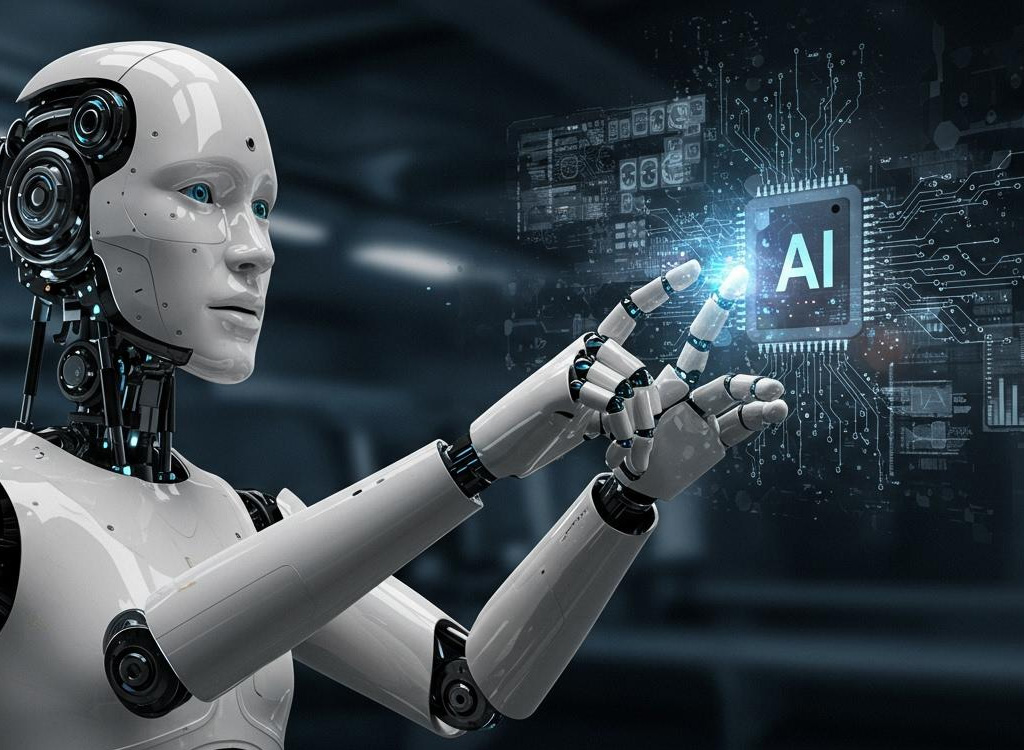
Artificial intelligence is entering core domains of state power — surveillance, cyber operations, autonomous weapons systems, strategic analysis, and target selection. As machine-learning systems begin to influence lethal decisions, the risk is not only technical error but moral detachment. Human judgment, empathy, and proportionality risk being displaced by algorithmic efficiency. Warfare risks becoming more automated, precise, and psychologically distant from its consequences.
This is no longer theoretical. It is the normalisation of systems in which accountability is diffused and moral responsibility obscured behind technological complexity.
At the same time, institutions that historically shaped public morality are weakening. Organised religion commands less authority among younger generations. Political institutions are increasingly mistrusted. Ideological certainties have fractured.
Narrow opportunism
Yet this does not mean that societies have ceased to search for justice and meaning. Climate movements, digital rights campaigns, and youth-led mobilisation across societies suggest that ethical concerns remain powerful. What is being rejected is not morality itself, but the selective invocation of universal values alongside narrow geopolitical opportunism.
This widening gap between technological power and moral responsibility is becoming one of the defining challenges of the century.
This tension is increasingly visible in the Indo-Pacific. Japan’s evolving Free and Open Indo-Pacific approach under Prime Minister Sanae Takaichi links security with technology, supply-chain resilience, and digital infrastructure. Military balance is no longer the only measure of regional strategy. Strategy is now also tied to who controls critical technologies, how digital infrastructure is governed, and whether these systems remain accountable. This evolution, already visible in broader frameworks such as the Quad, opens space for deeper India-Japan cooperation extending beyond conventional security into the ethical rules that should govern AI-enabled state power.
Addressing these challenges requires more than declaratory commitments. It requires a sustained effort to rethink the ethical foundations of global order in an age shaped by AI, economic coercion, and geopolitical fragmentation.
In this context, India and Japan are uniquely positioned to play a convening role.
India brings civilisational depth, democratic legitimacy, and growing influence across the Global South. Its philosophical traditions, including Vasudhaiva Kutumbakam — the world as one family — provide a framework for shared responsibility in a fractured world.
Japan brings a complementary experience: a post-war political culture shaped by the consequences of conflict, combined with leadership in advanced technology and innovation. Few countries are better placed to engage with the ethical questions surrounding artificial intelligence.
Together, New Delhi and Tokyo could initiate a sustained international dialogue on ethics, technology, and global statecraft. This must be practical rather than rhetorical: developing norms for military AI, establishing humanitarian principles for sanctions and coercion, and ensuring technological competition does not eclipse human accountability.
The 21st century will remain intensely competitive. Great-power rivalry will not disappear. But a world governed solely by transactional logic and machine-driven efficiency will become more unstable, not less.
Power without legitimacy rarely sustains order for long. Technology without ethics risks producing a form of geopolitical automation in which human judgment is displaced by systems, algorithms, and strategic habit.
The challenge, therefore, is not only to manage power transitions or technological disruption. It is to recover the moral imagination needed to ensure that power remains answerable to human beings, not merely to machines.
(Milinda Moragoda is the founder of the Pathfinder Foundation, and can be contacted via [email protected])
Disclaimer: The views and opinions expressed in this article are those of the writer and do not necessarily reflect the official position of this publication.











Leave a comment