
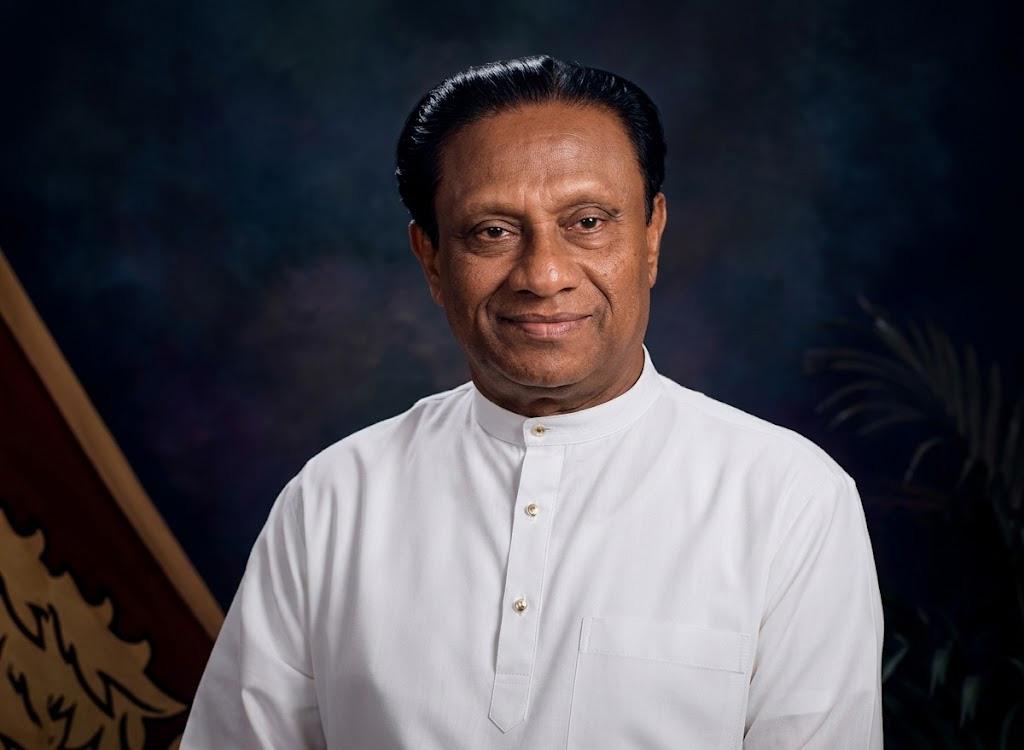
Remembering President Ranasinghe Premadasa on his 102nd birth anniversary
By Prasanna Perera
On June 23, 1924, a child was born in Dias Place, Keselwatte, in a modest dwelling located in the heart of Colombo Central. Later, this child would go on to re-invent the very idea of a Sri Lankan leader. Ranasinghe Premadasa was not from the elite class or traditional aristocracy. He originated among the masses. He devoted every chapter of his remarkable life to the people, right up until his sudden and violent death on a May Day morning in 1993.
Sri Lanka today commemorates the 102nd birthday of the late President Premadasa. This is an appropriate moment to reflect not just on the man, but on the extraordinary burdens he bore and what those who lead today might still learn from him.
From the streets of Colombo to the pinnacle of power
President Premadasa earned his political reputation, every inch of it, in the alleys and flats of Colombo. His father rented rickshaws to make a living. However, the young Premadasa was gifted with an extraordinary relentlessness and an intuitive understanding of the poor. Starting in 1946, he embarked on a life of public service associated with the Labour movement and was elected a Municipal Councillor of Colombo in 1950. Despite some early setbacks, he eventually joined the United National Party (UNP). He was Minister of Local Government, then Minister of Housing, then Prime Minister under President J.R. Jayewardene (1978–1988). When he won the presidency at the December 1988 election against Sirimavo Bandaranaike, he became the first true ‘commoner’ to lead the Sri Lankan state. Power was not bestowed upon him. He built it from the ground up, with his own hands.
Leading Sri Lanka through a turbulent era
Premadasa built his legacy as a pillar of stability in one of Sri Lanka’s most politically and economically unstable periods of time.
The Janatha Vimukthi Peramuna (JVP) had locked down the South through widespread violence and fear, multiple para-military groups, while the Indian Peace Keeping Force (IPKF), deployed under the 1987 Indo-Sri Lanka Accord, terrorised the North and East. The LTTE was simultaneously assassinating Tamil politicians in Colombo and preparing for further war. The Chief Minister of the North and East of that time, who later escaped to India by helicopter, had even declared Eelam as an independent state.
During Premadasa’s time, an era of violence consumed the country, but he did not cower or retreat. He successfully brought the JVP violence to a close in 1989, and he got the IPKF withdrawn in 1990, something once thought impossible.
Of course, this peace was temporary. The Iraq invasion of Kuwait in August 1990 caused a worldwide oil price shock, the prices doubling overnight. At the time, Sri Lanka had almost 100,000 workers in Kuwait and Iraq, with Kuwait being the largest source of foreign remittances. Premadasa quickly supported his citizens by contacting the Saudi leaders in order to get aircrafts for repatriation. With their support he created welfare centres for stranded Sri Lankans. He made use of the diplomatic capital he had built with some Arab rulers, especially with the earlier closure of the Israeli embassy, to secure arrangements for preferential supply of oil. Such actions led to the crisis having no major impact on the Sri Lankan economy. By 1993, GDP growth had still reached 6.9 per cent.
“I was not handed a country, but a torch burning at both ends.” President Ranasinghe Premadasa in his Inaugural Speech, 1989.
Rebuilding a broken country
Amidst everything, Premadasa began three economically significant programmes. The village reawakening movement, known as Gam Udawa, developed the infrastructure and civic services of rural communities that had long since lost faith in the state to see to their needs. Annually, on the 23rd of June, his birth date, the programme would be launched in a different district.
The poverty alleviation programme, Janasaviya, provided families below the poverty line a monthly allowance and investment: a little seed capital to establish small enterprises, cultivate land, or educate their children. Premadasa encouraged farmers to be in control of their personal economies, because he believed that the poor and the struggling should be given genuine opportunities to grow and develop instead of directionless charity. Today’s Samurdhi programmes are the lasting effect of the Janasaviya programme
Premadasa’s most visionary programme was the 200 Garment Factories initiative. Instead of centralising the garment industry to the already industrial Colombo, he expanded the industry island-wide, making a significant impact in rural communities. Each and every electorate had a garment factory, and rural women found economic emancipation within it. These women, who had never set foot in a factory, began producing export-grade products, with their markets lying in the United States (US) and Europe. The expansion of the garment industry boosted Sri Lanka’s economy beyond belief, and for the foreseeable future, it would remain the biggest export earner for the Sri Lankan economy.
To take a leaf out of Premadasa’s book
The rise in oil prices due to the Iran-Israel-US conflict, disruptions to shipping lanes, currency depreciation, and the overall global economic environment make the present moment more volatile than at any time in history. The government of today faces much external pressure and strife, and their challenges deserve practical responses and solutions.
Premadasa, too, led the country during a great period of instability; the JVP insurgency, the Civil War, the interference of the IPKF and the oil price shock and remittance loss during the Gulf conflict that displaced over 100,000 Sri Lankan workers abroad made the rebuilding of an economy already shattered by years of internal and external conflict an immense task. Yet he persevered, because he understood that he could not wait around for an ideal situation the same way that the people of Sri Lanka could not wait around for development, betterment and the delivering of promises.
The point is not that today’s challenges are without weight. It is that great leadership does not wait for perfect conditions. History has shown, time and again, that the foundations of a better future are laid precisely in the hardest of times.
A vision we need once again
Ranasinghe Premadasa was assassinated on 1 May 1993, at a May Day rally in Colombo. Sri Lanka lost that day a leader who had given his life to one cause above all others, building a country where no citizen would be left without dignity or opportunity.
Yet that vision did not die with him. It lives on in his son, Opposition Leader Sajith Premadasa. In his words, in the causes he fights for, and in the urgency, he brings to everything he does, the father is unmistakably present in the son.
102 years after his birth, Ranasinghe Premadasa remains one of the most impactful and underappreciated leaders of the island. As an all-consuming geopolitical conflict once again threatens to force Sri Lanka into economic instability and collapse, his example stands as both an inspiration and a challenge. He governed through crisis after crisis, and he still built. The leaders of today can and should do the very same.
(The writer is a senior professor in Economics, Head, Department of Economics and Statistics, University of Peradeniya)
Disclaimer: The views and opinions expressed in this article are those of the writer and do not necessarily reflect the official position of this publication.






Leave a comment