
By Prof. Prasanna Perera
Official Position versus ground reality
The President maintains that there is no funding shortage and that sufficient funds are available to rebuild the economy devastated by Cyclone Ditwah. According to the Prime Minister, the government will not alter its targets or decisions due to this disaster.
However, recent surveys and field visits reveal a different story. When speaking to affected communities in Delthota, Doluwa, Sarasavigama, and surrounding areas where I reside, living conditions have not yet recovered to pre-cyclone levels.
1. Many individuals have not received adequate funds to restore their livelihoods or repair their homes.
2. Although the government claims to provide Rs. 500,000, without a prior assessment, visits to these areas reveal considerable difficulty in locating recipients or locations where such disbursements have been made.
3. The daily lives of the elderly, persons with disabilities, and women have been reduced to distressing conditions that demand urgent attention.
4. Affected individuals are pawning gold jewellery or borrowing from local moneylenders at high interest rates to meet their daily expenses. This indicates rising debt stress among these communities.
5. Our findings indicate that affected individuals are being sent from one office to another due to inadequate coordination among government agencies, causing further hardship to already vulnerable populations.
Reconstruction challenge
The reconstruction process requires building homes and roads that are more resilient to natural disasters than before. However, current reconstruction efforts lack such a vision. Media reports indicate quality concerns with roads being constructed. This is either a result of negligence or insufficient funding for proper completion. My reading is that the primary cause is the inadequacy of funds.
According to World Bank calculations, the direct damage to our economy amounts to approximately 4% of GDP, equivalent to US$4.1 billion. Some analysts suggest total losses could reach US$ 6 billion to US$ 7 billion.
For example, the government states that full restoration of the Colombo to Kandy to Ella railway line will take another year to eighteen months. The impact on the tourism industry and related indirect employment during this period has not yet been calculated. Therefore, when these indirect costs are factored in, total economic losses will be considerably higher.
It is evident that a significant funding gap exists for a reconstruction process of this magnitude. Based on current guesstimates, the funding requirement stands at approximately US$ 7 billion to US$ 8 billion, equivalent to 7% of GDP. This represents the minimum value for comprehensive post-disaster reconstruction.
Budget allocation gap
The government has attempted to allocate Rs. 500 billion through Supplementary Budget passed in 2025 and 2026 Budget estimates. However, this amount is clearly insufficient to complete the reconstruction process, and properly advancing the reconstruction effort will prove difficult.
The government plans to spend Rs. 250 billion on infrastructure, Rs. 100 billion on housing reconstruction, and Rs. 150 billion on agriculture and other business sectors in 2026 from this Rs. 500 billion allocations.
Sri Lanka has already received some disaster-related assistance: approximately US$200 million from the International Monetary Fund, US$120 million from the World Bank, and US$200 million from the Asian Development Bank. It should be noted that these funds have largely been channeled through existing projects rather than as new disaster-specific allocations.
Proposal for an international aid summit
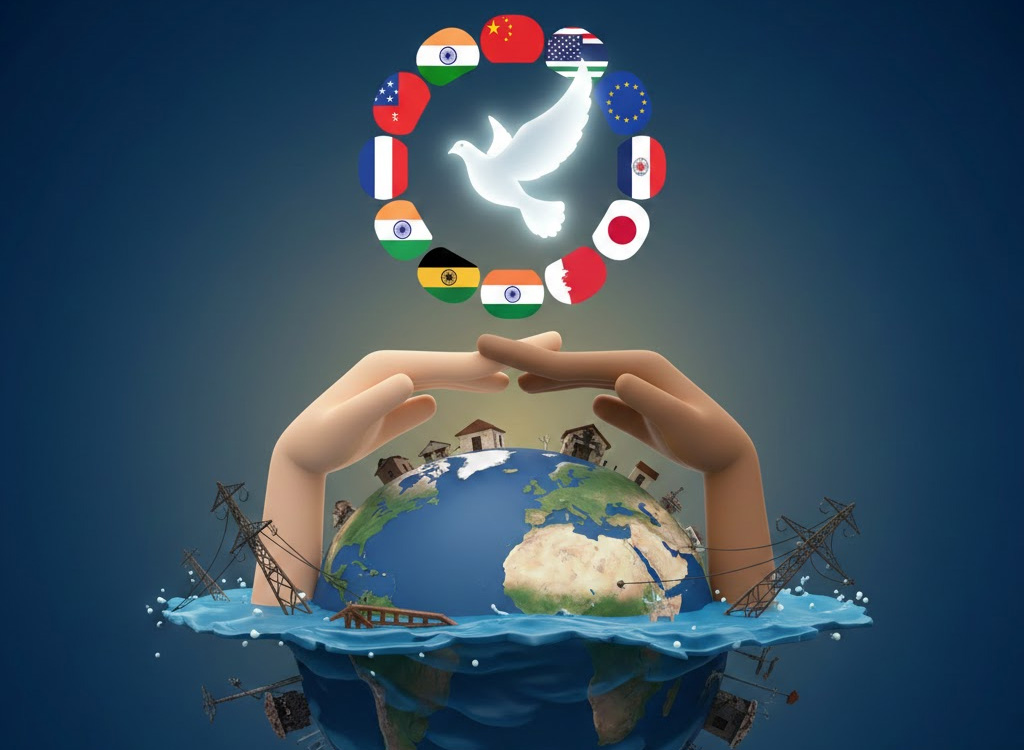
Opposition Leader Sajith Premadasa has proposed convening an international aid summit to mobilize support for post-disaster reconstruction. Speaking in Parliament on December 3, 2025, he drew attention to this necessity and called upon the government and Parliament to act decisively. His proposal is informed by global experiences and development patterns observed in countries recovering from natural disasters.
Let us briefly examine international experiences with aid summits in disaster-affected countries, including South Asia. Following the 2004 tsunami, Sri Lanka held an international aid conference in Kandy, expecting to receive US$2.2 billion but ultimately securing only US$1.1 billion. Various factors contributed to this shortfall, and we must learn from these experiences to ensure better outcomes this time.
Pakistan case study
In October 2022, the Pakistani government, together with the Asian Development Bank, World Bank, European Union, and United Nations, conducted a Post-Disaster Needs Assessment following devastating floods.
The assessment calculated total damage at $14.9 billion, equivalent to PKR 3.91 trillion. Total economic losses amounted to $15.2 billion (PKR 3.99 trillion), with combined losses reaching approximately $30.1 billion. The estimated reconstruction requirement was calculated at $16.3 billion.
However, a separate assessment by the World Bank and Pakistan Climate Change Council estimated total damage and losses at approximately US$40 billion.
Following the 2022 floods, Pakistan held an international aid summit and received pledges totaling $10.98 billion. Of this amount, $10.44 billion was in the form of loans, while only $546 million was offered as grants. By August 2025, only $4.69 billion had actually been disbursed, representing approximately 43% of total pledges.
Lessons for Sri Lanka
Both Sri Lanka’s post-tsunami experience and Pakistan’s post-flood recovery demonstrate that countries have consistently struggled to secure the full amounts pledged at international aid summits. Approximately 90% of pledges came as project loans rather than grants.
Sri Lanka must therefore prepare a more careful and detailed estimate of total funding requirements, going beyond World Bank calculations to include indirect costs. I ask the government: What is this estimate that should be presented before the international community?
A comprehensive national dialogue on these matters is essential. Following the development of an all-party consensus, the total aid requirement should be presented at an international aid summit with a unified national voice.
Countries facing such natural disasters present specific frameworks at international aid summits. Sri Lanka must also prepare a framework that incorporates four essential elements: Resilience (capacity to withstand future crises), Recovery (restoration of livelihoods), Rehabilitation (institutional reconstruction), and Reconstruction (physical rebuilding). Global and South Asian experiences attest to this necessity. Whether the government has prepared such a comprehensive framework remains unclear.
A call for responsible action
We remind the government that this grave situation demands a responsible and systematic response. Acting according to a credible and unified national policy is essential for its success. This is a fundamental lesson that global experiences teach us.
We expect the government to convene an all-party summit with participation from all political parties to build national consensus. This summit should lay the foundation for organizing an international aid conference. Such a conference should invite multilateral institutions, including the United Nations, World Bank, International Monetary Fund, and Asian Development Bank, as well as bilaterally important partner countries. India and China, in particular, must be engaged in this endeavour.
Given the seriousness of the situation we face, we call upon this government to move beyond petty arguments about whether the Alternative Leader proposed this idea first or who deserves recognition if his approach is adopted. Rather, the government should bring all parties together and convene the international aid summit as soon as possible to accelerate the national reconstruction process.
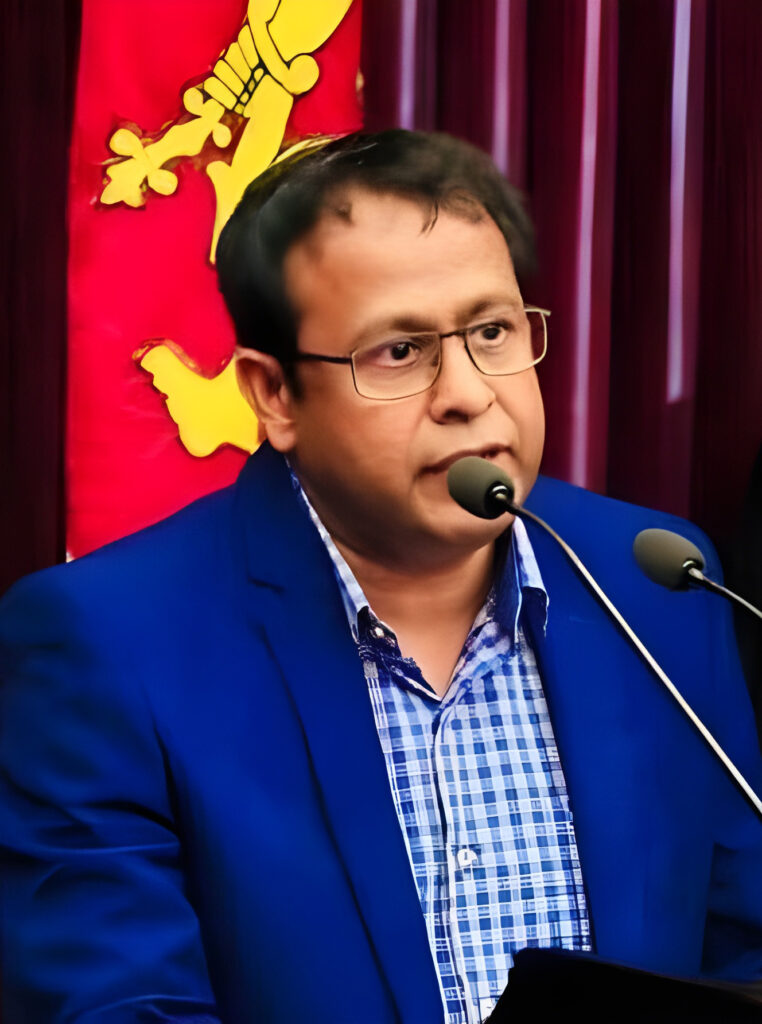
(Senior Professor Prasanna Perera is the Head of the Department of Economics and Statistics at the University of Peradeniya)
Disclaimer: The views and opinions expressed in this article are those of the writer and do not necessarily reflect the official position of this publication.











Leave a comment