
By Vox Civis
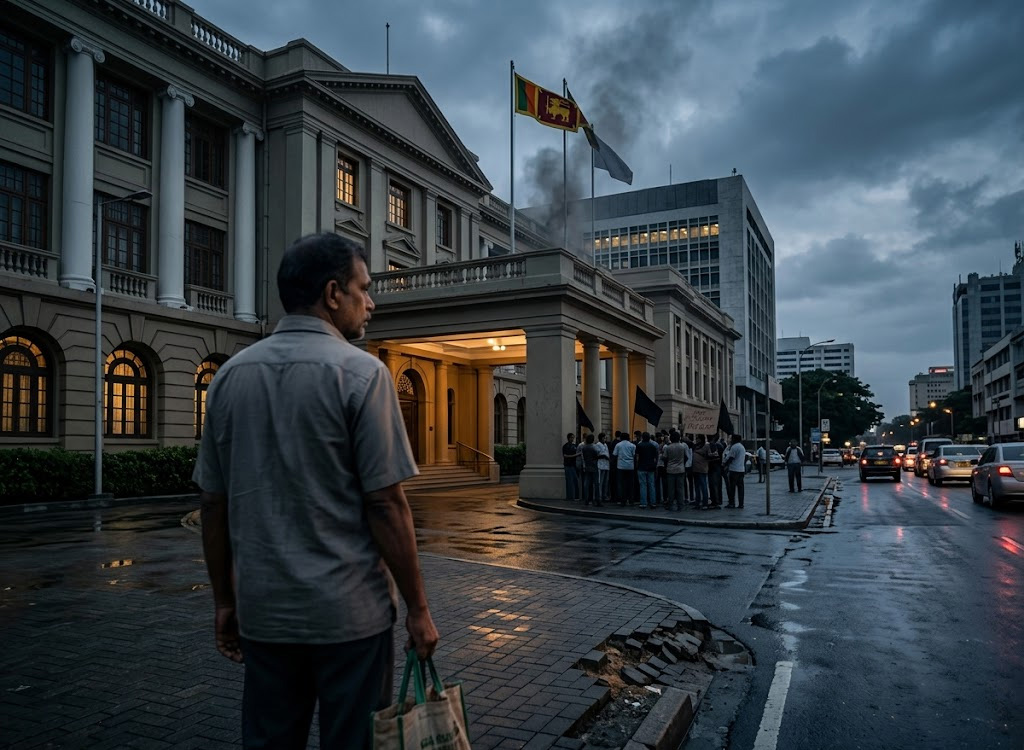
The crisis confronting Sri Lanka today is not merely economic, it is increasingly becoming a crisis of credibility. That distinction matters because economies, especially fragile post-default economies like Sri Lanka’s, do not recover through numbers alone. They recover through trust, discipline, confidence, and competent governance. Once those begin to erode, even improving macroeconomic indicators tend to lose their stabilising power.
That is why the political mood of the country appears to be shifting despite the government’s attempts to project normalcy through diplomatic engagements and international visibility. The high-profile visits of the leaders of the Maldives and Vietnam in the span of a single week should ordinarily have dominated headlines as signs of growing regional engagement and geopolitical relevance. Instead, public attention has been consumed by the far darker and more worrying domestic narrative.
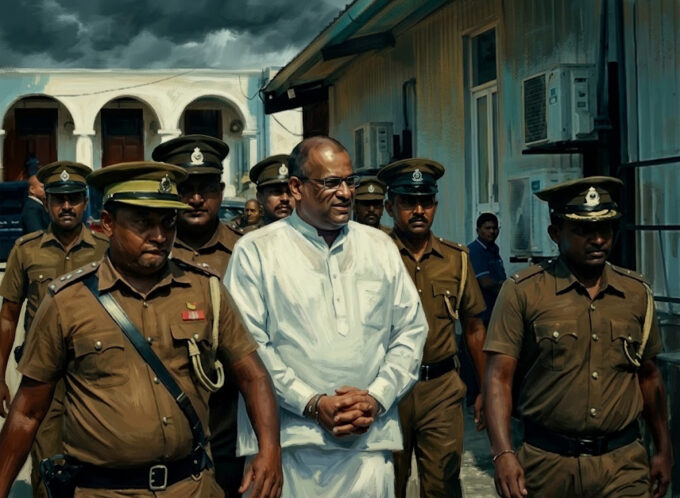
The supposed suicide of the main suspect connected to the multi-million-dollar Airbus scandal, which generated international headlines and embarrassed Sri Lanka on the global stage, has once again reopened uncomfortable questions about accountability, transparency, and the mysterious fate of individuals linked to major corruption controversies. The shock was compounded by the similar supposed suicide of the supposed whistleblower connected to the Treasury scandal involving the disappearance of USD 2.5 million just a week ago.
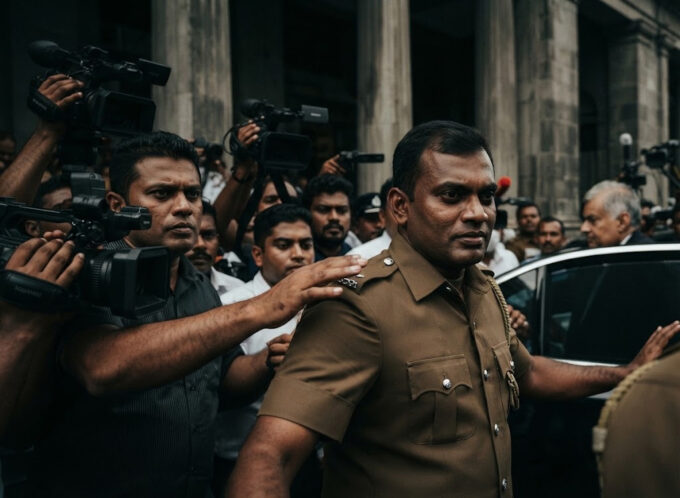
Individually, these incidents would have raised suspicion and concern, but collectively, they have created an atmosphere thick with distrust and speculation. Social media has become flooded with theories, allegations, and insinuations regarding who or what may lie behind these and other such suspicious deaths in the recent past. The problem for the government is not merely the existence of conspiracy theories, but that public confidence in institutions has weakened to such an extent that it has come to a point where many citizens no longer instinctively believe official narratives.
A dubious pattern
The pattern has only intensified those doubts. Just months before, the whistleblower connected to the controversial release of 323 shipping containers was also killed by unidentified gunmen under circumstances that remain unresolved. Meanwhile, a former stalwart of the Janatha Vimukthi Peramuna (JVP) who reportedly threatened to expose sensitive information involving the current Head of the Commission to Investigate Allegations of Bribery or Corruption (CIABOC), similarly met an untimely death. Whether these events are connected or not may ultimately be determined by investigators, but politically, the damage is already done. In the public imagination, the accumulation of unexplained deaths surrounding corruption scandals has created a perception of a system that is either unable or unwilling to guarantee truth, justice, or accountability.
This perception is trending at possibly the worst time for a government that rose to power promising moral superiority over the political establishment it condemned for decades. The ruling National People’s Power (NPP) and its ideological core, the JVP, built much of their political legitimacy on the claim that they represented a clean break from the corruption, patronage, waste, and abuse associated with successive administrations. Yet increasingly, the distinction they drew between themselves, and the old political class appears to be fast disappearing in a backdrop of mounting allegations and governance failures, that are now being termed as ‘mistakes.’
The accusations themselves are serious enough. Allegations surrounding the importation of substandard coal, inflated fuel procurement costs, fertiliser importation controversies, and questionable financial management have steadily chipped away at the government’s carefully cultivated image of incorruptibility. Now even the lower tiers of governance appear infected by the same culture the ruling movement solemnly promised to eradicate.
Symbolically devastating
The arrest of the Deputy Mayor of the Kurunegala Municipal Council has become symbolically devastating for the administration. According to investigators, the Deputy Mayor was arrested while allegedly accepting a Rs. 3 million bribe linked to the awarding of a sanitary services tender involving the cleaning of public toilets and the main bus stand in Kurunegala town. Authorities allege that in addition to the initial bribe, a recurring monthly payment of Rs. 500,000 had also been demanded.
The political optics are no doubt, deeply damaging. The Deputy Mayor had initially entered the council through the All-Ceylon Makkal Congress (ACMC) and later supported the NPP during formation of the council’s governing party. The symbolism cannot be ignored because the very movement that promised to dismantle corruption is now confronting bribery allegations involving even municipal-level governance under its political umbrella.
The cumulative effect of these scandals is slowly but surely reshaping public perception. Increasingly, many citizens appear to be concluding that the promise of a morally distinct political culture was more myth than reality. The perception growing across the country is that the ‘new political class’ may simply be reproducing the same habits, practices, and culture of governance associated with the old one. Afterall, it is not for nothing that it is often said, power corrupts, and absolute power corrupts, absolutely.
Compounding this political deterioration is an increasingly embarrassing series of administrative mishaps that have imposed direct financial costs on the state. The organisation Free Lawyers has raised alarms over reports suggesting that nearly Rs. 500 million may have been improperly disbursed through the Welfare Benefits Board to Aswesuma beneficiaries during April. The organisation has formally requested a parliamentary investigation, arguing that the absence of adequate checks and balances in the management of public funds potentially constitutes corruption, fraud, and criminal misuse of state resources.
Deeper concern
Their intervention is significant because it highlights a deeper structural concern. Article 148 of the Constitution grants Parliament control over public finance precisely to prevent arbitrary or unaccountable use of taxpayer funds. If institutions appear incapable of maintaining proper oversight over welfare disbursements during a period of economic hardship and fiscal austerity, then the state’s broader claims of financial discipline are bound to lack credibility.
Taken together, these incidents create a picture not simply of isolated ‘mistakes’ as the regime prefers to put it, but of governance that increasingly appears reactive, poorly coordinated, and administratively fragile. That perception is especially dangerous given the context in which Sri Lanka finds itself in these days.
If one needs a reminder, the country is not functioning under ordinary economic conditions. For all intents and purposes, Sri Lanka remains under an International Monetary Fund (IMF)-supported recovery framework that demands extraordinary levels of fiscal discipline, transparency, institutional accountability, and policy consistency. After sovereign default, governance standards are not merely political aspirations but become essential conditions for economic survival.
Against that backdrop, it is hardly surprising that two consecutive tranches of the IMF bailout package have reportedly remained undisbursed since December last year. International lenders and creditors do not merely examine spreadsheets and deficit targets, they vigorously assess governance credibility, institutional strength, procurement transparency, and policy predictability. Repeated controversies and governance failures inevitably weaken confidence.
The consequences are already visible in Sri Lanka’s external financial position. Official reserve assets held by the Central Bank of Sri Lanka (CBSL) have once again fallen below the USD 7 billion mark by the end of April 2026. After reserves climbed above USD 7 billion for the first time in more than five years in February, the country has now recorded two consecutive monthly declines.
Declining reserves
Foreign exchange reserves, the most critical component of the reserve base, have also declined notably. Gold reserves have fallen as well. These in no way can be considered as mere technical fluctuations. For a country that only recently emerged from the trauma of fuel queues, import shortages, currency collapse, and sovereign default, reserve stability carries immense psychological and economic importance.
Simultaneously, ordinary citizens are once again being crushed by a sharply escalating cost of living. Electricity tariffs have surged dramatically within the span of a couple of months; a 25% increase in April has now been followed by an additional 18% increase for certain consumer categories. While the Public Utilities Commission of Sri Lanka (PUCSL) has exempted households consuming below 180 units, businesses and commercial users will inevitably pass rising costs onto consumers through higher prices.
This is occurring alongside the continuing rupee depreciation – nearly 10 percent – which has already made imports significantly more expensive compared to only a few months ago. The result is a cascading inflationary effect across manufacturing, agriculture, retail, transport, and household consumption.
The pressure on industry is becoming particularly severe. Sri Lanka’s manufacturing and production sectors were already struggling with weak demand, high borrowing costs, energy instability, and tax burdens. Now rising fuel and electricity costs are compounding those difficulties. Producers across sectors increasingly face the impossible task of maintaining competitiveness while operating costs surge relentlessly.
At the same time, the government’s latest tax reforms threaten to generate new economic shocks, particularly within the digital economy. The decision to expand the VAT net to cover digital platforms and electronic services from July 1 may satisfy revenue targets demanded under fiscal consolidation efforts, but the broader economic implications appear insufficiently considered. Under the new framework, international platforms such as Uber, Booking.com, Airbnb, Agoda, eBay, Amazon, Netflix etc., will be required to impose VAT on Sri Lankan users. For sectors such as tourism, hospitality marketing, and online commerce, this introduces additional cost burdens during an already fragile recovery.
Profound impact
The most profound impact, however, may fall upon the digital and information technology sectors. Sri Lanka has been promoting IT and BPO services as crucial future growth engines capable of generating export earnings, skilled employment, and foreign exchange inflows. Yet new VAT layers on digital services, cloud platforms, software subscriptions, and cross-border online tools threaten to undermine precisely the sectors the country most needs to expand.
Industry stakeholders warn that rising digital costs could weaken Sri Lanka’s competitiveness against regional rivals such as India and Vietnam. Smaller outsourcing firms dependent on affordable global software ecosystems may struggle to absorb additional costs. Consumers may face higher internet costs, more expensive mobile devices, and reduced access to digital services. There are fears that some international digital platforms may simply withdraw from the Sri Lankan market rather than navigate complex local VAT compliance systems. If that occurs, consumer choice, tourism promotion, and digital integration will likely suffer further setbacks. In a country attempting to modernise its economy while simultaneously confronting youth unemployment, outward migration, and declining educational opportunity, raising barriers to digital access appears strategically contradictory.
Under the proposed new tax reforms, the reduction of the VAT registration threshold from Rs. 60 million to Rs. 36 million annually has also generated anxiety among small and medium enterprises (SMEs). Many SMEs lack sufficient input VAT mechanisms to offset the tax burden, meaning significant portions of turnover could effectively disappear into tax obligations. Since VAT is ultimately transferred to end consumers, prices across the economy are likely to rise further. The central question increasingly being asked is whether policymakers have genuinely thought through the social and economic implications of these reforms or whether they are simply implementing IMF-compatible measures mechanically without sufficient strategic planning.
Meanwhile, opposition criticism regarding the politicisation of economic institutions is adding another layer of concern. Comparisons are now being drawn between the previous administration’s appointment of Ajith Nivard Cabraal as Central Bank Governor and the current government’s appointment of former Deputy Minister Harshana Suriyapperuma as Treasury Secretary.
Politicisation then and now
During the parliamentary debate surrounding the Treasury scandal, MP Mujibur Rahman argued that the current administration had abandoned principles it fiercely defended while in opposition. Traditionally, Treasury Secretaries emerged from the senior-most ranks of the Sri Lanka Administrative Service with deep institutional knowledge in public finance and debt management. The appointment of a politically affiliated figure to such a sensitive position has therefore fuelled accusations that the government is replicating the very politicisation it vehemently condemned.
These concerns matter because post-crisis recovery depends heavily on institutional credibility. Markets, lenders, and investors monitor whether key economic institutions function independently, professionally, and predictably. Perceived politicisation undermines that confidence. This is the fundamental reality confronting Sri Lanka today. An institutionally resilient country can sometimes survive administrative incompetence because it possesses buffers such as deep reserves, strong institutions, fiscal flexibility, diversified markets, and high state capacity but Sri Lanka possesses almost none of those protections anymore.
After default and economic collapse, the margin for error has become dangerously thin. One serious policy mistake could potentially destabilise the entire recovery effort just as one governance scandal can weaken investor confidence and one poorly handled crisis can trigger social anger. Equally, one credibility shock can place renewed pressure on the currency.
Under these conditions, “mistakes” no longer appear politically tolerable. Public expectations have shifted dramatically toward professionalism, accountability, and competent execution. This is especially true because the public has already paid an enormous price for economic stabilisation through tax increases, inflation, austerity, declining purchasing power, and years of hardship. In essence, citizens accepted pain in exchange for the promise of better governance. If governance itself now appears weak, disorganised, or ethically compromised, public patience will erode rapidly.
Credibility the key
At the center of this evolving crisis lies one word: credibility. Countries recovering from collapse operate heavily on confidence. Confidence from citizens. Confidence from businesses. Confidence from creditors. Confidence from investors. Confidence from international institutions. Once repeated governance failures steadily chip away at that confidence, economic recovery becomes vulnerable regardless of headline indicators.
This is why perception in fragile economies carries enormous economic consequences. Investors will choose to wait and see while consumers reduce spending, skilled workers emigrate, businesses avoid long-term commitments and international partners are compelled to be cautious. That is why governance is no longer merely a political issue for Sri Lanka: it is an economic necessity.
The last administration ultimately fell victim to an economic time bomb it failed to deactivate before it exploded. The current administration increasingly appears unaware that it may already be assembling another device of similar destructive potential through carelessness toward the basic principles of good governance and the growing perception of corruption across both high-level procurements and lower-level state administration.
Sri Lanka has travelled this road before. The warning signs are becoming visible once again. The danger is that by the time the political establishment fully recognises them, the damage may already be irreversible.
Disclaimer: The views and opinions expressed in this article are those of the writer and do not necessarily reflect the official position of this publication.










Leave a comment