
By Vox Civis
The most revealing political lesson of recent months may not have come from Colombo at all, but from a magazine cover in the West. Last month, The Economist carried a line attributed to Napoleon Bonaparte: “Never interrupt your enemy when he is making a mistake.” The cover referred to Chinese President Xi Jinping and the growing perception that while America under Donald Trump became increasingly erratic and internally divided, Beijing was quietly benefiting from Washington’s self-inflicted wounds. The quiet one in the room, as the saying goes, is often the one winning.
That same principle appears to explain the curious silence of Sri Lanka’s opposition today. Across the country, many citizens are asking why the opposition has not more aggressively taken up the mounting economic difficulties confronting the people. While the rhetoric is of being a ‘responsible opposition,’ the bottom line is that, “politics is the art of the possible,” as famously noted by 19th-century German statesman, Otto von Bismarck. To be too ‘responsible,’ is to therefore risk the ire of the very vote base it seeks to capture, because a hungry man is an angry man.
But, then again, the strategy may be simpler than many assume. The government itself is becoming its own opposition. The administration’s errors, contradictions, and growing inability to manage the state are speaking louder than any speech an opposition politician could deliver. In politics, there are moments when attacking an adversary becomes unnecessary because the adversary is already facing the consequences of its own decisions.
Never imagined
When Sri Lankans voted during the presidential and parliamentary elections of 2024, very few imagined that another serious economic crisis could emerge in less than two years. Even many critics of the National People’s Power (NPP) government assumed that, in a worst-case scenario, the country would stagnate without meaningful progress. Others expected the much-advertised “professional governance” model to at least ensure macroeconomic stability. Yet today, all those assumptions appear increasingly doubtful.
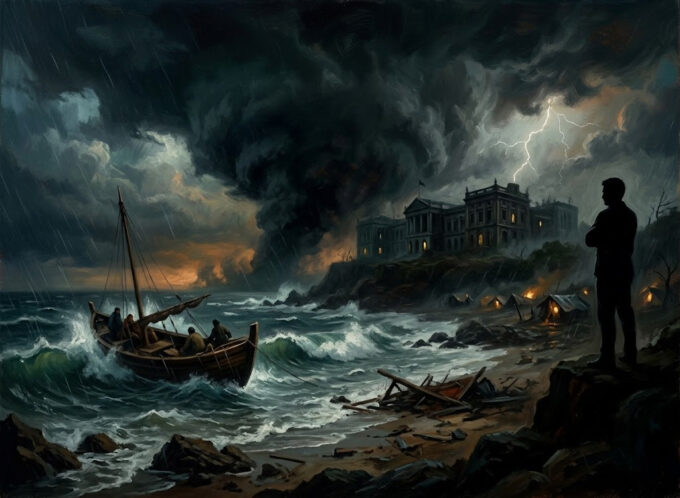
Today, Sri Lanka once again stands at a dangerous and familiar crossroads. The atmosphere across the country increasingly resembles the uneasy months preceding the 2022 collapse, and that fear is no longer abstract. It is visible in exchange rates, prices, reserves, and public sentiment. The sense of instability seems to be returning faster than anyone anticipated, because the data itself is beginning to point toward deterioration.
The most alarming signal is the depreciation of the rupee. When President Anura Kumara Dissanayake assumed office in September 2024, the US dollar traded at approximately Rs. 293. Last Friday (15), the dollar had crossed Rs. 334, reflecting a depreciation of nearly 12 percent within just one year and seven months. The euro has performed even more dramatically against the rupee. In September 2024, the euro traded around Rs. 305. Today it exceeds Rs. 385, representing a depreciation of almost 25 percent.
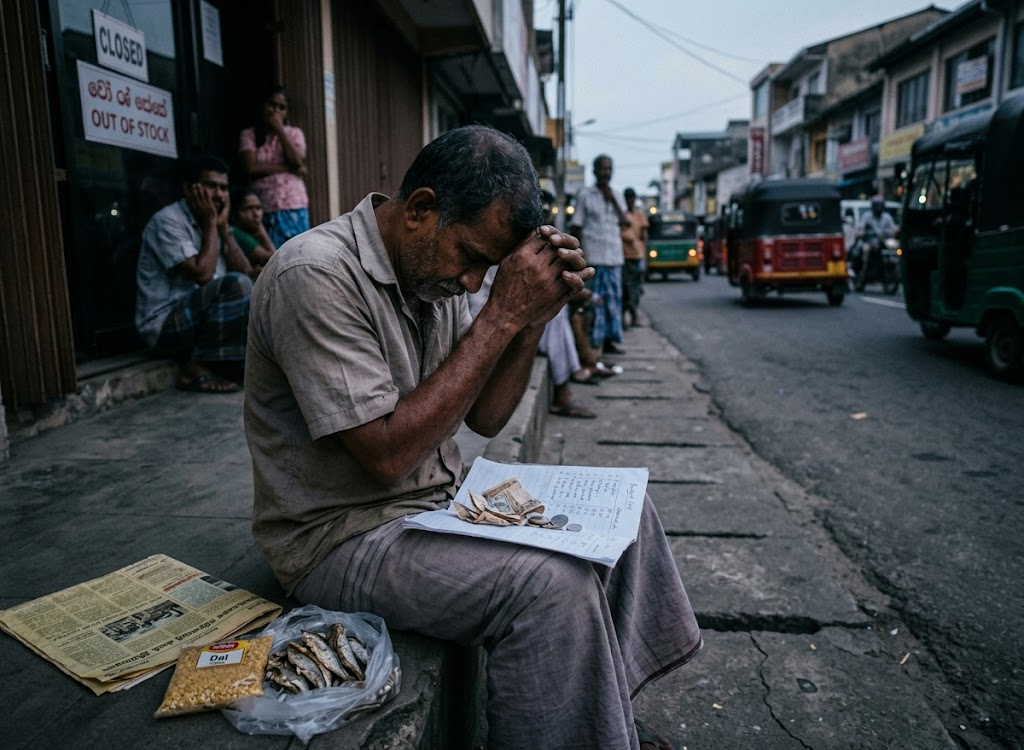
These are not merely technical currency fluctuations that matter only to economists or bankers. Currency depreciation in Sri Lanka affects the daily lives of ordinary people with brutal speed. A weaker rupee means higher fuel prices, more expensive imports, rising transport costs, increased electricity tariffs, costlier medicine, and growing pressure on food prices. In a country that is still recovering from an economic catastrophe, such developments tend to be deeply destabilising.
The weakening rupee is not occurring in isolation. Sri Lanka’s official foreign reserves are also shrinking. Foreign exchange reserves fell from approximately USD 6.8 billion to USD 6.505 billion during April alone. Total reserve assets have also declined from USD 7.026 billion at the end of March 2026 to USD 6.759 billion by the end of April. Even the Central Bank’s gold reserves have marginally declined in value.
Weakening revenue
At the same time, foreign currency inflows are weakening and tourism earnings during the first quarter of 2026 reportedly fell to approximately USD 950 million compared to USD 1.05 billion during the same period in 2025. While worker remittances remain vulnerable and export diversification remains weak, Sri Lanka continues to depend heavily on the same traditional sectors that existed decades ago – tea, garments, tourism, and remittances still form the backbone of the economy. Contrary to what the NPP promised, the country has failed to create any new export industries capable of generating sustainable dollar inflows.
Meanwhile, import demand remains dangerously high because the government’s own policies appear to have aggravated the problem. It is difficult to speak credibly about protecting dollar reserves while simultaneously spending billions on import-heavy consumption. The reopening of vehicle imports has become one of the clearest examples of this contradiction. The government reportedly spent around USD 2.6 billion on vehicle imports while proudly announcing massive increases in rupee revenue through taxation. In 2025 alone, vehicle import taxes reportedly generated Rs. 904 billion for the Treasury, accounting for a substantial portion of the government’s claimed revenue.
But this is not economic magic – the state strengthened its rupee position while weakening its dollar position. It filled Treasury books in local currency by draining scarce foreign exchange reserves. The consequences of that strategy may not become fully visible immediately, but by the end of next year when the country is obligated to repay its loans, it could pay a severe price. Sri Lanka cannot tax its way into stability while simultaneously exhausting the very foreign currency needed to sustain imports, debt repayments, and investor confidence.
On the subject of debt obligations, Sri Lanka is expected to repay approximately USD 2.5 billion in foreign debt and interest payments throughout 2026. These obligations continue regardless of domestic political slogans or ideological narratives. International creditors are not interested in revolutionary rhetoric, they expect repayments, stability, and predictable policy direction.
Reactive, not strategic
Investor confidence, meanwhile, appears increasingly fragile. There remains no coherent national strategy to attract major foreign investment. Competing Asian economies such as Vietnam, Thailand, Malaysia, and Cambodia continue positioning themselves aggressively as investment destinations while Sri Lanka, by contrast, increasingly appears reactive rather than strategic.
Meanwhile the NPP government’s taxation policy, appears to be further complicating matters. Sri Lanka’s corporate tax rate stands around 30 percent, significantly above the broader Asian average. Investors compare Sri Lanka not with giant economies like India or Australia, but with emerging regional competitors. India can sustain higher tax structures because of its enormous domestic market, but little Sri Lanka possesses no such advantage. Excessive taxation without efficiency, infrastructure, or policy consistency only discourages investment.
The government’s recent decision to impose a temporary 50 percent surcharge on selected motor vehicle import duties reflects the increasingly reactive nature of policymaking. One week the state encourages imports to raise tax revenue and the next week it attempts to suppress imports to reduce pressure on reserves. Such inconsistency signals uncertainty rather than confidence.
What makes the current crisis especially remarkable is not merely the economic deterioration itself, but the political circumstances surrounding it. Sri Lanka has witnessed political crossovers between government and opposition MPs throughout history. Politicians have switched sides to preserve parliamentary majorities, secure two-thirds power, settle internal party disputes, or destabilise governments during extraordinary moments. Yet none of those conditions truly apply today because the current government already commands an overwhelming parliamentary majority.
Embarrassing problem
Yet reports continue to emerge suggesting discussions are underway to bring opposition MPs into government for what should appear to be a rather embarrassing problem: the NPP’s lack of expertise and administrative capability. If true, this would represent something unprecedented in modern Sri Lankan politics where a government with overwhelming parliamentary dominance is seeking outside talent because it cannot effectively govern using its own ranks.
Gone is the bombastic pre-election talk of having the best brains in the country within its ranks that could tackle any problem, giving credibility to the opposition’s consistent claim that handing over governance to the NPP risked putting the economy in renewed danger. That prophesy appears to have come to pass given the urgency with which the NPP seems to be scouting for opposition expertise.
That reality exposes perhaps the central weakness of the current administration. The NPP spent decades mastering the politics of protest, agitation, union activism, strikes, and criticism. It excelled at opposing governments. But running a state demands an entirely different skill set. Governance requires competence, administrative discipline, economic literacy, negotiation skills, institutional understanding, and professional management, among many other critical attributes. Organising rallies and running ministries are not even remotely the same exercise.
The proportional representation system and the National List mechanism were specifically designed to bring critically needed expertise into Parliament. Yet the NPP failed to utilise this mechanism for that purpose and the present crisis suggests the government entered office without any serious governing blueprint. To make matters worse, many of the appointments to crucial ministries and institutions appear driven more by political loyalty than technical competence starting with the head of the Treasury. Consequently, key state institutions increasingly appear paralysed by indecision, inexperience, and administrative confusion.
The consequences are becoming visible everywhere. Even the most basic of functions like making routine fund transfers seem to have become a challenging process while on the flip side, procurement controversies continue to emerge. Questions are being raised about tender procedures and controversies over fuel purchasing decisions have intensified public suspicion regarding competence and oversight. The deeper concern is not a single scandal or mistake, but the growing impression that the machinery of government itself is in a state of confusion and paralysis.
Lack of expertise
Interestingly, the symbolism of the situation is equally damaging. If a government with a massive two third majority in parliament is desperately seeking assistance from opposition figures through the back door, what message does that send to the 159 government MPs elected with overwhelming public enthusiasm? The implicit message is that the ruling coalition lacks sufficient capable individuals to run the country effectively.
It also sends another uncomfortable message to voters. Many citizens who voted for systemic change did so believing they were electing a more competent alternative to the traditional political establishment. Instead, they are being made to confront the reality that they may have replaced what was, with inexperience and inefficiency.
This is the tragedy confronting Sri Lanka today. The country is not merely suffering from economic weakness but also from a crisis of governance. The issue extends beyond ideology because a government can be left-wing, right-wing, nationalist, socialist, liberal, or conservative, but none of that matters if it lacks administrative capability.
Countries and economies do not collapse overnight. Collapse occurs gradually through accumulated policy failures, institutional decay, indecision, and erosion of public confidence. And, that gradual process is still fresh in the mind of most Sri Lankans: first the currency weakens, then reserves decline, inflation rises, investor confidence falls, citizens lose faith and eventually, the entire system becomes vulnerable.
That is why the rapidly evolving scenario feels so dangerous. Sri Lanka already experienced one catastrophic collapse, and the public is well aware of how quickly a seemingly manageable situation can spiral into shortages, protests, instability, and social unrest. Inflation is another looming threat. If inflation rises significantly above current levels, the social consequences could become severe because around a quarter of Sri Lanka’s population remains below the poverty line, while many more remain economically vulnerable. Families earning between Rs. 70,000 and Rs. 100,000 per month already struggle to maintain middle-class living standards and another major inflationary shock could devastate household stability.
Rising prices
The irony is that even if corruption has reduced in some areas, ordinary citizens still feel little relief in their daily lives. Prices continue rising, utilities remain expensive, taxes continue increasing, and the middle class feels squeezed from every direction. People were willing to accept sacrifices if they believed competent long-term reforms were underway, but that clearly does not appear to be the case.
This frustration is intensified by the perception that economic policy making itself lacks coherent strategic thinking. Sri Lanka increasingly appears governed by accounting logic rather than economic vision. Revenue collection has become the obsession. Taxation has become the primary instrument. Yet taxation alone cannot create growth.
The core problem facing Sri Lanka is the imbalance between dollar demand and dollar generation. Import-heavy consumption continues placing pressure on reserves and the exchange rate. Yet instead of designing intelligent long-term industrial, export, and investment policies, the state continues reacting through short-term taxation measures.
A more sophisticated strategy would focus simultaneously on reducing non-essential imports, encouraging production, lowering certain operational costs for small and medium enterprises, supporting exporters, and building new foreign exchange earning industries. Countries such as China and India succeeded not simply because they taxed efficiently, but because they developed coherent long-term economic visions driven by technocratic expertise.
Sri Lanka, by contrast, increasingly appears trapped in outdated thinking. The country still debates symptoms while ignoring structural weaknesses. Exchange rates, fuel prices, remittances, tourism income, and inflation remain the key indicators to watch because they reveal the underlying health of the economy. When all of them begin moving negatively at once, alarm becomes unavoidable.
Revealing statement
Perhaps the most politically revealing statement came not from critics of the government, but from within the ruling party itself. JVP General Secretary Tilvin Silva recently acknowledged that the present government did not come to power merely to appoint party loyalists to every position and that capable individuals would be appointed regardless of political affiliation – a complete 360-degree turn from the party’s previous rhetoric.
While that statement may sound pragmatic, politically, it amounts to an extraordinary admission. The same political class that condemned traditional parties as the architects of 76 years of corruption and failure are now busy luring the biggest names in those parties while the revolutionary alternative rhetoric has been effectively consigned to the dustbin of history. It is indeed amazing how quickly parties of even the most revolutionary kind, change when confronted by the realities of governing a fragile economy.
Sri Lanka today resembles a country suspended between hope and anxiety. The optimism that accompanied the 2024 elections is gradually giving way to uncertainty. The public still wants stability, reform and competent governance. But words alone cannot stabilise currencies, attract investment, reduce inflation, or build functioning institutions.
The central lesson of the current crisis is brutally simple. States are not sustained by slogans, revolutionary romanticism, or political mythology; they survive through competence, discipline, professionalism, and sound decision-making. Without those foundations, even overwhelming electoral victories become meaningless. Therefore, the danger is not merely that the current government could fail politically – governments come and go and elections change leaders – but that Sri Lanka itself may once again slide toward systemic instability before fully recovering from its previous collapse.
People are watching more carefully now. They recognise the warning signs because they have experienced them before; the falling rupee, shrinking reserves, rising costs, weakening institutions, confused policymaking, and growing public frustration all form part of a familiar pattern. And this time, the margin for error may be far smaller than before.
Disclaimer: The views and opinions expressed in this article are those of the writer and do not necessarily reflect the official position of this publication.








Leave a comment