
By The Pulseline News Desk
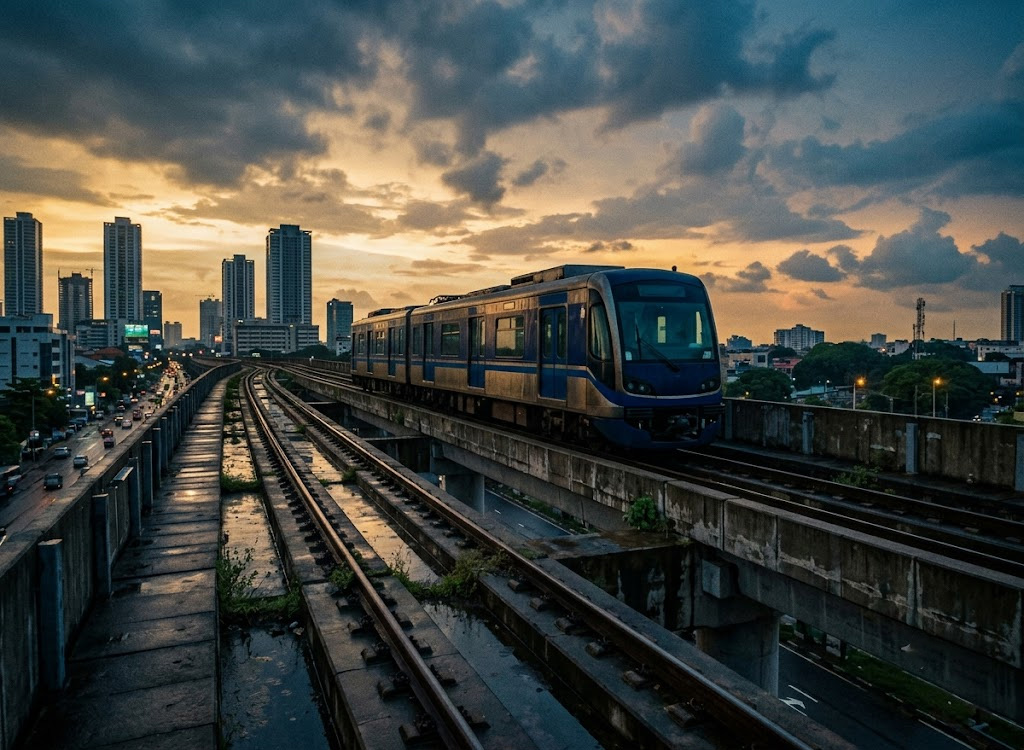
Nearly six years after Sri Lanka cancelled its Japan-funded Light Rail Transit (LRT) project, the financial fallout is still not fully settled. Parliament heard this week that Tokyo is now pressing Colombo for interest on compensation payments it says arrived late — a fresh complication in a saga that has already cost the country tens of millions of dollars.
New bill on an old cancellation
Transport, Highways and Urban Development Minister Bimal Ratnayake has told the House that Japan has formally requested interest on the compensation disbursed over the LRT project’s termination, arguing that the payments were not made within the required timeframe. The Minister was responding to a question from Samagi Jana Balawegaya (SJB) member of parliament (MP) Chaminda Wijesiri.
According to Ratnayake, the government appointed a committee to examine Japan’s request, and as things stand, no interest has yet been paid. The request adds a new layer to a compensation process that many had assumed was largely closed out after 2024.
What Sri Lanka has already paid
Ratnayake has laid out the record of payments made to the Japanese side following the project’s cancellation. Sri Lanka settled its compensation obligations in three separate installments in 2024: 189.7 million Japanese yen on August 23, $1.031 million on August 27, and Rs. 108.7 million on September 24. Those three payments, spread across different currencies and made within roughly a month of each other, were intended to close out claims from Japanese contractors and consultants tied to the project.
It is the timing of those settlements — years after the project was cancelled — that appears to be at the heart of Japan’s current demand. Tokyo’s position, as described by the Minister, is that the delay itself carries a cost, and that Sri Lanka should compensate for it accordingly.
How the project collapsed
To explain how the country arrived at this point, Ratnayake has walked Parliament through the project’s cancellation. The LRT scheme, designed to ease chronic traffic congestion in the Colombo metropolitan area, was terminated by Cabinet decision on September 24, 2020.
That decision did not emerge in isolation. It had followed an assessment by the Director General of the Overseas Assets Management Division, delivered during discussions on September 18, 2020, which had concluded that the project was not cost-effective. Three days later, on September 21, 2020, the Presidential Secretary had issued a letter recommending cancellation, citing the project’s high cost and the judgment that it was not the most economical way to address Colombo’s urban transport problems.
An unfinished chapter
The LRT’s cancellation triggered a wave of compensation claims from the Japanese contractors and consultants who had already been engaged on the project — claims that took years, and multiple currencies, to work through. Japan’s latest request for interest suggests that even with the principal payments made, the financial reckoning over the scrapped project is not yet complete.
For now, the matter sits with the government committee tasked with reviewing Tokyo’s claim, leaving open the question of whether Sri Lanka will face a further payout on a project that never broke ground.








Leave a comment