
By The Pulseline News Desk
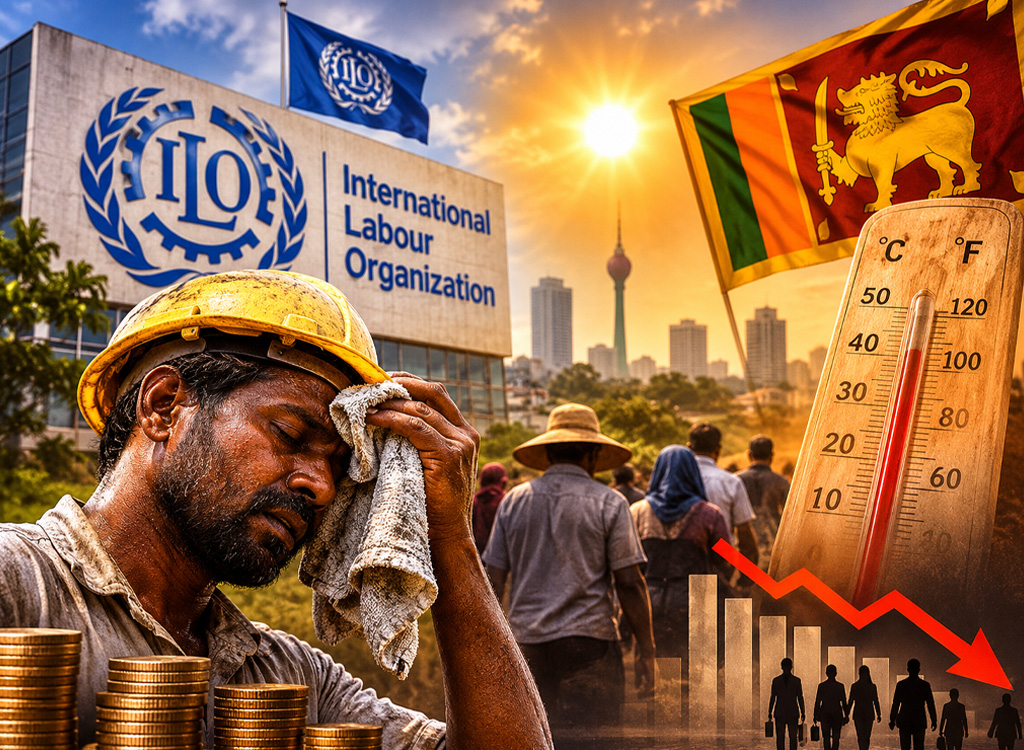
Sri Lanka lost the equivalent of more than 120,000 full-time jobs in 2023 due to rising workplace heat stress, while the associated economic losses reached an estimated US$6.5 billion, according to a new report by the International Labour Organization (ILO).
The report, titled Impacts of Heat Stress on Jobs and Productivity in Sri Lanka, has compared the 2023 losses with the average conditions recorded during the historical baseline period from 1985 to 2014, highlighting the growing economic consequences of climate change for the country’s workforce.
Agriculture has accounted for the largest share of employment losses, representing 48% of the estimated full-time equivalent jobs affected by heat stress. The services sector has accounted for 22%, followed by manufacturing at 13%, construction at 11%, and transport and trade at 6%.
The impact was particularly pronounced during the second quarter of 2023, which has accounted for 35% of the estimated job losses, coinciding with some of the country’s most intense seasonal heat conditions.
The ILO has estimated employment losses based on working hours lost because of excessive workplace temperatures, rather than the number of workers who permanently lost their jobs.
The report has noted that Sri Lanka’s average temperature has increased by approximately 1°C since the 1960s, while rainfall patterns have become increasingly unpredictable.
Climate data from the past three decades has also pointed to an accelerating warming trend, with extreme heat events becoming more frequent and intense.
Rising economic risks
The ILO has warned that the consequences of heat stress for employment and economic productivity could become considerably more severe over the coming decades.
By 2040, Sri Lanka could lose the equivalent of between 145,000 and 221,000 full-time jobs annually due to rising temperatures, depending on future greenhouse gas emission levels.
The projections become more concerning towards 2060, when annual employment losses could reach between 158,000 and 349,000 full-time equivalent jobs.
Under the highest-emissions scenario, the country’s annual economic output could decline by as much as 15.2% compared to the historical baseline.
Agriculture and construction workers are identified as particularly vulnerable because of their prolonged exposure to high temperatures and physically demanding working conditions.
Workplace adaptation needed
To minimise the impact, the ILO has called for stronger workplace protection measures and climate adaptation strategies.
Its recommendations include regulated work-and-rest schedules, access to adequate drinking water, improved workplace ventilation, cooling facilities and adjustments to working hours to reduce workers’ exposure to extreme temperatures.
The report has emphasised that rising heat stress is not merely an environmental concern but an increasingly significant threat to employment, labour productivity and national economic performance.
It has warned that without effective adaptation measures, Sri Lanka could face mounting economic losses while placing an increasing burden on workers, particularly those employed in outdoor and labour-intensive industries.











Leave a comment