
By The Pulseline News Desk
The Department of Wildlife Conservation (DWC) has launched a comprehensive assessment of coral reef ecosystems in the Kayankerni Marine Sanctuary and the adjoining Pasikuda coastal waters, in a move aimed at strengthening marine conservation while promoting sustainable tourism along Sri Lanka’s eastern coast.
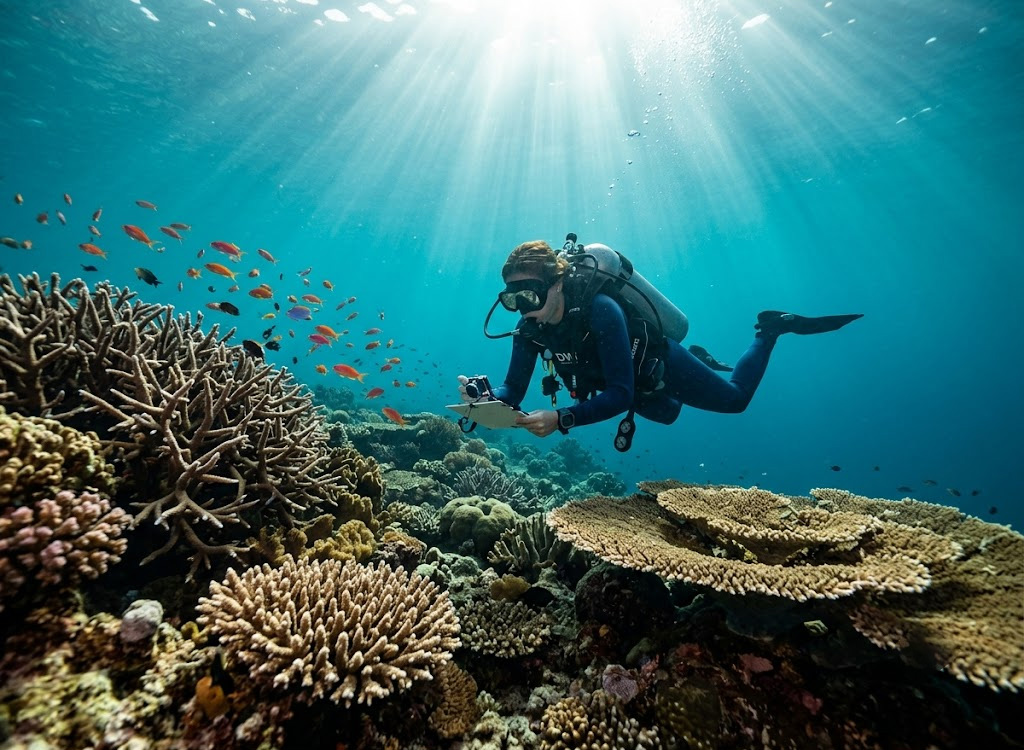
The survey, conducted by the department’s Marine Unit, examined the condition of coral reefs both within the protected marine sanctuary and in nearby unprotected waters to better understand the health of one of the country’s most valuable marine ecosystems.
According to the DWC, the assessment also focused on identifying natural and human-induced threats to coral reefs while collecting scientific data that will guide future conservation, restoration and management initiatives.
The findings are expected to provide a crucial baseline for long-term policy decisions as authorities seek to protect fragile reef habitats that support marine biodiversity and coastal livelihoods.
The department noted that corals are protected under Sri Lanka’s Fauna and Flora Protection Ordinance, recognising their ecological significance. Reef-building corals, which live in a symbiotic relationship with microscopic algae known as zooxanthellae, create complex underwater structures that support thousands of marine species.
Often described as the “rainforests of the sea,” coral reefs serve multiple ecological and economic functions. They provide breeding, feeding and shelter for countless fish and marine organisms, protect coastlines from wave action and erosion, sustain fisheries that support coastal communities, and form the backbone of marine tourism in many parts of the country.
However, coral reefs are increasingly under pressure from climate change, rising sea temperatures, pollution, destructive fishing practices and unregulated coastal development, making regular scientific monitoring essential for their protection.
The DWC said information gathered during the survey will help shape future conservation strategies in collaboration with relevant stakeholders and researchers.
Authorities also intend to explore ways of expanding sustainable marine tourism in the area, ensuring that growing visitor interest in destinations such as Pasikuda does not come at the expense of sensitive reef ecosystems.
With Sri Lanka seeking to position itself as a leading eco-tourism destination, officials say protecting marine habitats such as the Kayankerni Marine Sanctuary will be critical to preserving both the country’s biodiversity and the economic benefits derived from its coastal resources.













Leave a comment