
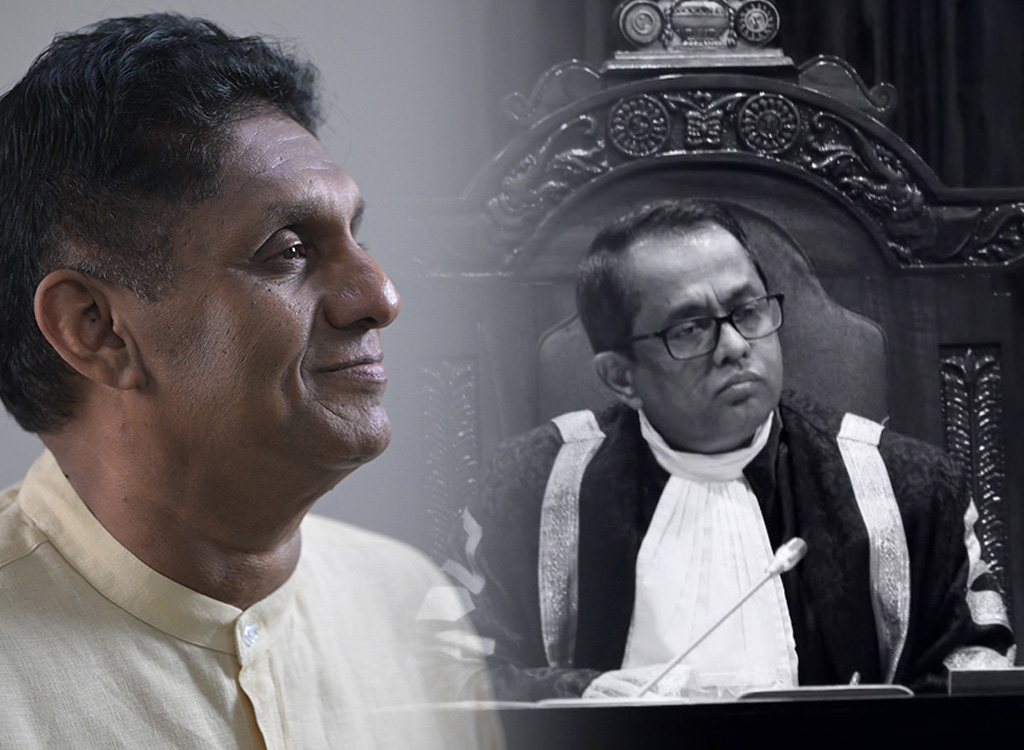
Sajith Premadasa, the leader of Sri Lanka’s main opposition party, the Samagi Jana Balawegaya (SJB), slammed Speaker Dr. Jagath Wickramaratne in Parliament, denouncing his rejection of a no-confidence motion against the Deputy Minister of Defence as “flawed in law and logic.”
Premadasa said that the Speaker’s rationale was undermined by the very documents cited to support it.
He pointed to a report from the Parliament Secretariat confirming that a deputy minister is a public officeholder — a status that, he argued, permits the moving of a no-confidence motion under existing parliamentary norms.
“Even the Attorney General’s Department has confirmed that there is no legal barrier to such a motion being brought,” he said.
Invoking parliamentary tradition and precedent, Premadasa cited Erskine May, the authoritative guide on Westminster-style procedure, to reinforce his position.
“If collective no-confidence motions can be brought against a government, individual ministers are certainly not immune,” he said, questioning whether the Speaker had properly consulted the text before issuing his ruling.
Drawing parallels with neighbouring India, Premadasa noted that no-confidence motions are routinely used there to hold both constitutional officials and ministers accountable.
He accused the Sri Lankan government of selectively invoking precedents, including those from former Speaker Anura Bandaranaike, only when politically expedient.
Premadasa condemned the government’s mockery of Opposition MPs, including Chief Opposition Whip Gayantha Karunathilaka and MP Ajith P. Perera, who had defended the motion. He noted the irony of the government discussing child rights one day and dismissing opposition MPs as “talking like children” the next.
The confrontation adds fresh tension to an already charged parliamentary atmosphere, with questions now mounting over the interpretation — and perhaps manipulation — of procedural rules in the chamber.
The responsive management has already sounded alarm that they will not be able to











Leave a comment